São Paulo. Image via Visualhunt.com. CC0 1.0 Universal (CC0 1.0) Public Domain Dedication
In June, the Federal Government released the publication Urbanized Areas of Brazil 2015, produced by the Brazilian Institute of Geography and Statistics (IBGE) using images from the RapidEye satellite captured between 2011 and 2014. The mapping shows that the largest urbanized areas in the country are São Paulo, Rio de Janeiro, Brasília, Curitiba, and Goiânia. Together, these five urban agglomerations cover more than 2,500 km².
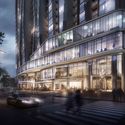
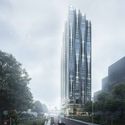
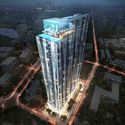
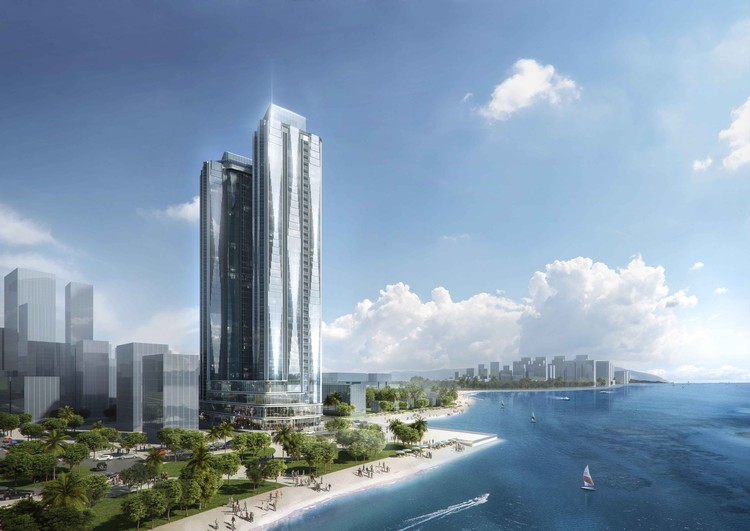
Aedas has unveiled its design for Alacarte Halong Bay Condotel, a new development in Vietnam's renowned coastal destination. Famous for its thousands of towering limestone karsts, Ha Long Bay is a UNESCO World Heritage Site. Occupying a prime beachfront plot, the Alacarte Condotel is designed to offer unobstructed views of this spectacular natural heritage.
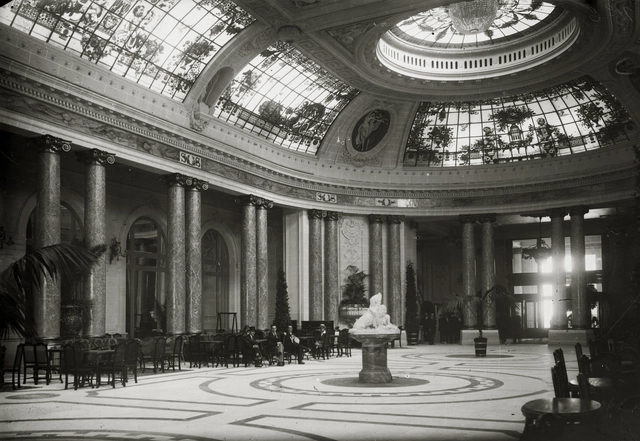
Interior de Kursaal. Image Cortesía de MUGAK Bienal de Arquitectura
On Friday, December 22, 2017, the inaugural MUGAK Basque Country International Architecture Biennial opened the exhibition "The City We Lost: Urban Heritage Management in San Sebastián, 1950-2017" at the Santa Teresa Convent in San Sebastián, Spain. The exhibition showcases recognizable local buildings that have disappeared over the last few decades.
Curated by the Áncora association, the exhibition traverses San Sebastián's neighborhoods to examine a city that now exists only in collective memory—specifically, buildings lost over the past seven decades. Stretching from Martutene to Igeldo, and including Alza, Amara, El Antiguo, and Ibaeta, the survey goes beyond the city's iconic heritage, looking past San Sebastián's most prominent areas to highlight other architectural works.
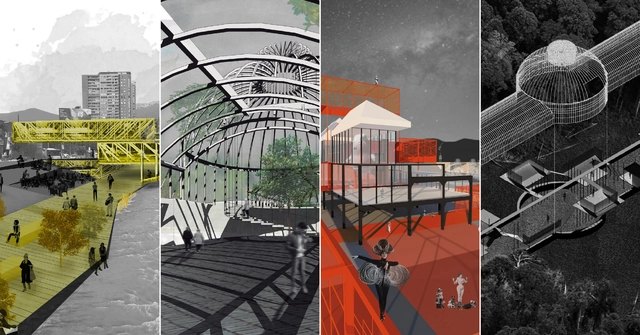
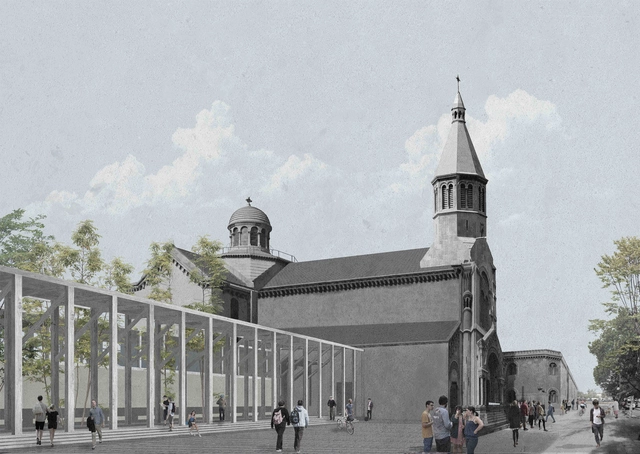
Designed by Camila Chaler, the project Cloister Typology as an Opportunity for Urban Reintegration was selected as one of the ten winners in the Thesis Project category of the 2018 Arquitectura Caliente Competition (CAC 2018), a Chilean awards program organized by Grupo Arquitectura Caliente and funded by the Ministry of Cultures, Arts, and Heritage.
Santiago's urban fabric is home to numerous religious orders. These properties (convents and monasteries) are currently facing obsolescence because they operate under outdated models. This is due to two main factors: their urban incongruity, which isolates them as inward-facing cloisters within the city, and their programmatic obsolescence relative to the scale of the buildings, driven by a decline in religious vocations.
Looking specifically at Latin America, the list shows some changes compared to the previous year, with a Mexican university returning to the top three. Regarding Brazilian institutions, however, the same four from last year—USP, UFRJ, Unicamp, and UFRGS—remain on the list.
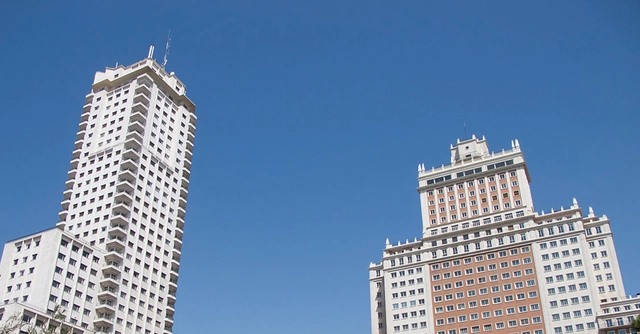
Architect Antonio Miranda, writing for the ARKRIT Collective, invites us to reflect in this article on romantic subjectivism in criticism, presenting a simple example in defense of the objective criticism of the object, which speaks to us much more honestly and sincerely than the author of the work themselves. He puts this assertion to the test by comparing two famous buildings in Madrid's Plaza de España: the Edificio España and the Torre de Madrid.
https://www.archdaily.com/1114195/false-criticisms-edificio-espana-versus-torre-de-madridAntonio Miranda
What does the Swiss architect, urban planner, and Bauhaus director Hannes Meyer have to do with the eccentricity and ostentatiousness of US President Donald Trump? This article, written by the Arkrit Collective, reflects on this connection.
Today, July 25, Sérgio Ferro celebrates his 80th birthday. Born in Curitiba, he graduated in Architecture and Urbanism from the University of São Paulo (FAU-USP) in 1962, where he was invited by João Batista Vilanova Artigas to join the faculty between 1962 and 1970, teaching Art History. In academia, he also taught at the University of Brasília (UnB) from 1969 to 1970. A multidisciplinary intellectual, architecture is only one of his many facets; he is also an accomplished visual artist.
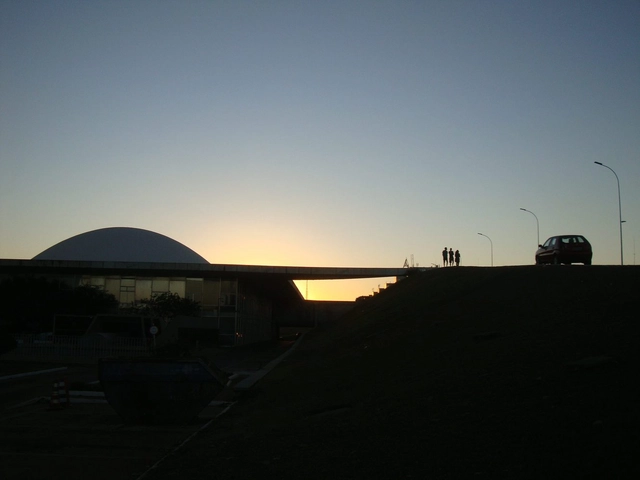
Whenever I cross the imaginary line on the Monumental Axis connecting the National Congress to the Itamaraty Palace, catching a glimpse of the Three Powers Plaza from the top of the ramp leading into it, I am overcome by a genuine emotion that never fades with repetition. This privileged view of the plaza as a whole, flanked by its three main buildings and framed by the perspective of the Itamaraty Palace on the right, is an image comparable only to the great iconic urban spaces of the world.
The Three Powers Plaza is a contemporary construction that evokes classical urban planning tradition, whether that of the "people's Versailles," as Lucio Costa envisioned, or the ancient Greek agora. Yet, there are also references to the "plazas mayores" or "plazas de armas" of Iberian and Spanish-American cities, as well as the plazas of the Brazilian colonial period. This mix of influences could have resulted in a postmodern pastiche of styles were it not for Lucio Costa's genius in translating it into the clear, elegant synthesis of a modernist design, complemented by Niemeyer's architecture, which has already been so widely discussed and praised.
How can we foster data-driven discussions during elections and ensure urban mobility indicators are integrated into planning agendas to be implemented once elected officials take office? With this question in mind, the team at the Institute for Transportation and Development Policy (ITDP Brasil), in partnership with Purpose Climate Lab, has been working to influence campaigns in the cities of São Paulo, Rio de Janeiro, and Recife.
The strategy is to foster collaboration among local organizations and social movements active in mobility and sustainability agendas. Equipped with indicators compiled and made available on the MobiliDADOS platform, these organizations gain critical resources to influence the electoral debate. The tool presents illustrated, contextualized data on transportation realities across various cities and metropolitan areas, offering the necessary insights to challenge proposals from executive and legislative candidates.
https://www.archdaily.com/1114335/mobilidados-urban-mobility-policies-in-the-2018-electionsITDP Brasil
In every architectural project, the goal is always to maximize productivity during construction. However, this speed can be counterproductive if there is no assurance that every aspect of the project is being executed optimally.
When working with concrete, choosing the right constructive solution is key to achieving efficiency during execution. This becomes even more critical when trying to prevent productivity from compromising the correct structural and formal execution of the original architectural design.
How do you build a concrete house in a single day? Are productivity and good design compatible when using this material? We compared the performance of traditional concrete with Producret, a highly fluid and cohesive concrete, drawing seven conclusions that allow us to answer these questions affirmatively.
Based on pageview data, we have compiled a list of the 20 most popular architectural projects published on ArchDaily this year, both locally and internationally.
https://www.archdaily.com/1114333/the-20-most-popular-buildings-of-2017-based-on-pageviews韩爽 - HAN Shuang
Located in the eastern sector of the city, the former Parque Intercomunal de La Reina is Santiago's second-largest urban park—after the Metropolitan Park—covering a total area of approximately 500,000 square meters.
The project originated from a joint effort to create green spaces by the Mayors' Board of Providencia, Las Condes, and La Reina (established in 1967), who purchased part of the Santa Rosa de lo Coo estate to develop the park. Today, it is considered a vital green lung for Santiago, offering a diverse range of activities that bring residents together.
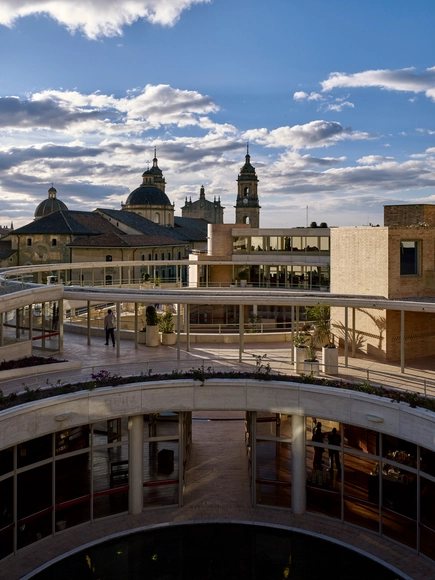
Declared an Asset of Cultural Interest at the district level by Resolution 626 of December 2017, the García Márquez Cultural Center in Bogotá is the last project by Rogelio Salmona, who passed away in 2007, a year before its inauguration. Below, the Rogelio Salmona Foundation shares the words written by the Colombian architect himself about his project in the heart of Bogotá.
Being invited to design the building for the headquarters of Mexico's Fondo de Cultura Económica in the heart of Bogotá was, for me, not only a privilege but also an enormous intellectual, professional, and urban responsibility.
"To create strong, modern pieces influenced by one's own heritage" is how industrial designer Emiliana Gonzalez and conceptual artist Jessie Young introduce their multidisciplinary studio, Persona.
Originally from Montevideo, Uruguay—though currently based in Los Angeles, CA—their focus centers on furniture design, with a material production distinguished by its austerity and continuity.
The renowned Spanish architect Sáenz de Oiza [1918 - 2000] was a devoted cyclist. As he himself confessed, his life changed completely after moving from Navarre to Madrid with his family to begin his studies at the Escuela Técnica Superior de Arquitectura de Madrid [E.T.S.A.M.]—a move set against the backdrop of a Spain in political and social turmoil following the outbreak of the Civil War in 1936. In 1938, his father passed away, leaving him to take on, to some extent, the responsibility of supporting his family. These memories of emotional and financial hardship during his early years meant that, following his subsequent success as an architect, he spent a portion of his accumulated wealth on material indulgences he had been deprived of in his youth: high-end cars and bicycles, which he loved to collect.
Another memorable anecdote of his dates back to a spontaneous race against a stranger on the ride back from La Granja to Madrid. Near Puerta de Hierro, the stranger turned to him and asked, “Hey... what team do you ride for?” It turned out his unknown opponent was none other than Federico Ezquerra, a legendary Basque cyclist. That moment must have brought him great joy.
Cortesía de Pasto Arquitectos & Carballo- Errasti Arquitectos
On July 9, 2018, the National Ideas Competition for the San Juan Judicial City was launched. The goal was to generate ideas for its physical realization, addressing the exponential growth of institutional structures in recent years and the proliferation of their offices, which has led to fragmentation due to the lack of a single space to house them.
Unidad Social / Benjamín Sierra + Mack Riffo. Image Cortesía de Arquitectura Caliente
After evaluating 94 undergraduate student projects from 20 architecture schools across 8 regions of Chile, the jury of the 2018 Arquitectura Caliente Competition has announced the winning projects of its latest edition.
These projects span the entire country and encompass various typologies, ranging from urban planning to student housing, landscape designs, and emergency structural initiatives.
Below, we present the projects honored with regional distinctions:
The Fundación Arquia Blog shares an article reflecting on personal experience to show why memory must not be approached in an austere, detached manner. Technical and typological studies of architectural heritage, or the mere recognition of a site's characteristics, customs, and history, are not enough. Memory is emotional; consequently, we must grasp the true meaning of a place and the value of its architecture beyond the material.
The team consisting of Francisca Méndez, Francisca Campos, and Lucero Arce (Universidad Mayor) has been awarded second place in the XXXII CAP Chile Competition. Designed for Punta Arenas, the project—known as María Behety Park—aims to “bring Chile to Punta Arenas,” an idea that seeks to introduce various plant species from across the country to the city as a tourist attraction, according to the authors.
The competition jury praised the project as one “that takes a bold stance through clear and powerful elements to generate wide spans, where the steel pieces shine to create three volumes that emerge like icebergs along the park. And it is precisely this clarity that demands a high level of structural resolution, which is perfectly adjustable.”
How to build a business in social architecture? CAU has compiled ten valuable tips for architects looking to work in one of the most rewarding areas of our field.
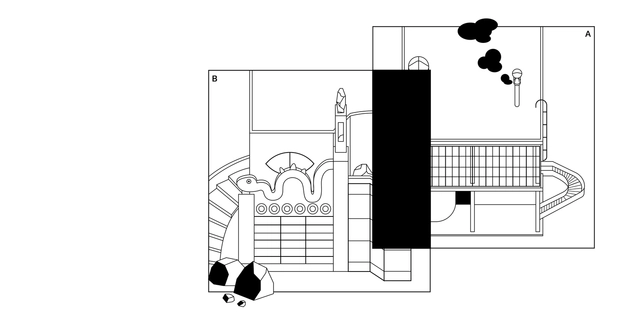
This project, combining architecture and illustration, grounds its research in archives, publications, and photographs detailing the history of modern construction in Mexico. It offers a graphic narrative of the continuities and transformations of key 20th-century works, explored through the synthesis, interpretation, and juxtaposition of their ideals. These pairings confront thought and form through deductive inference, where the sum of the parts hints at deeper meanings and critical motifs in architecture for its future reconstruction.
https://www.archdaily.com/1114176/syllogisms-ogorman-house-plus-cave-houseJuan José Kochen + Ximena Rios-Zertuche
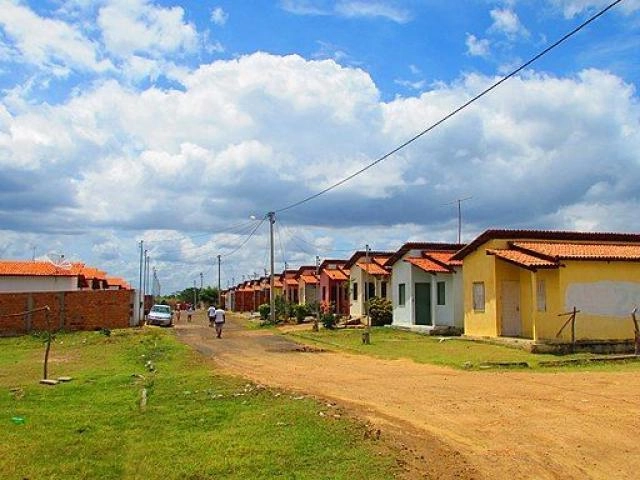
Houses of a Minha Casa, Minha Vida housing development in Antônio Cardoso, Bahia. Photo: Paulomedford/Wikimedia Commons
About three billion people, or 40% of the global population, will need new housing by 2030. This will require building approximately 21 million new homes per year worldwide.
Several of the fastest-growing countries have ambitious targets to meet this need. The Indian government aims to build 20 million low-cost homes by 2022. Nigeria targets one million homes built per year over the next decade. Indonesia's president has launched the One Million Houses program to serve low-income citizens.
https://www.archdaily.com/1114296/can-housing-be-considered-low-cost-if-it-is-not-efficientHenrique Evers, Catalina Demidchuk e Eric Mackres
As part of Semana UTEM 2018 in Chile, the **Infraestructuras en Obsolescencia** (Obsolete Infrastructures - WIO) workshop brought together 21 teams from the Faculty of Architecture at the Universidad Tecnológica Metropolitana (UTEM). These teams developed design proposals to intervene in seven obsolete structures in Santiago, ranging from a currently closed pedestrian bridge to a dilapidated train station.
Featuring international guests Luis Tombé (Colectivo720, Colombia) and Walter Leone (Leone Arquitectura, Venezuela) —who also participated in the CONTRAPOSICIONES lecture series and delivered keynote addresses at the Colegio de Arquitectos de Chile—, each team comprised seven students from different years of the architecture program, guided by two faculty advisors.
















.jpg?1517761545)