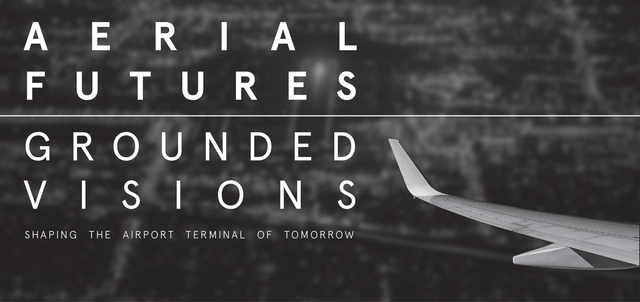
The Aerial Futures symposium explores the current state of airport design and the future of this rapidly evolving architectural typology. The symposium brings thinkers and practitioners to Venice for two days, and is open to the general public.

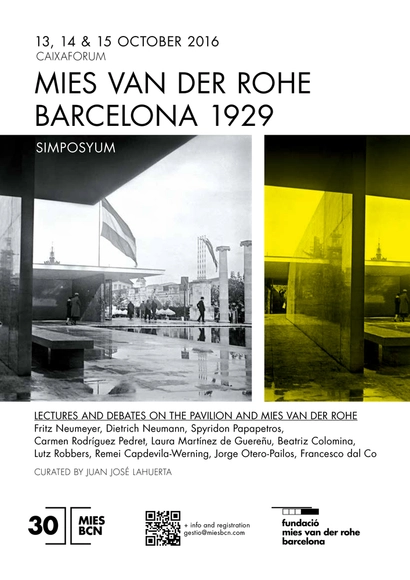
On the occasion of the thirtieth anniversary of the reconstruction of the Barcelona Pavilion, the Fundació Mies van der Rohe has organised a symposium, presided over by Juan José Lahuerta, on the figure of Mies van der Rohe and the German Pavilion for the 1929 Barcelona International Exhibition.
The symposium entitled "MIES VAN DER ROHE – BARCELONA, 1929, “Lectures and debates on the Pavilion and Mies van der Rohe” will be held on October 13, 14 and 15 at the Barcelona CaixaForum and will constitute a point of encounter for discussions and knowledge exchange.

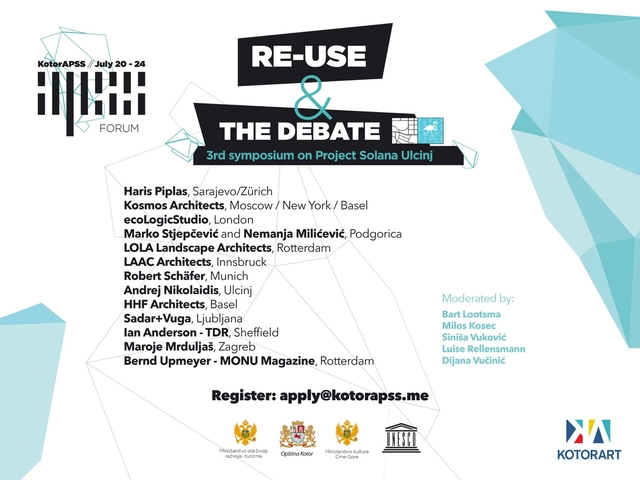
With its upcoming double symposium KotorAPSS further establishes a small Montenegrin town as an international hot spot for architectural thinking and advances the debate on decaying places of the recent past and their possible futures.
Boka Kotorska Bay cuts the Adriatic Montenegrin coast like a Norwegian Fjord. Once a hideout for pirates and smugglers it also was an important commercial trade hub and naval base.
The region once belonged to the Illyrian Kingdom, the Roman Empire and later to the Byzantine Empire. The Venetians ruled until the late 18th century, followed by the Austrians, and troops of Napoleon. From here Mediterranean cultures spread into the Balkan. Especially since UNESCO declared the natural and culture-historical region Kotor a world heritage site in 1979 the city and the bay have become an increasingly popular daytrip location for cruise ship tourism along the Adriatic coast.

Since infrastructure is the embodiment of long-term investments, its impact in determining the organization of flows extends well into the future, both for developed and developing countries. Whereas the former are confronted with the need to maintain and renew highways, electrical grids, sewage systems, and the like, the latter are scrambling to meet the needs of their own expanding populations. In both cases, massive investments for retrofitting or for new infrastructure are key to sustaining the human habitat. This topic: “Infrastructure Space” will be the focus of the 5th International Forum for Sustainable Construction in Detroit, USA from April 7 to April 9, 2016.

“Extreme Heat: Hot Cities – Adapting to a Hotter World” is a unique, day-long symposium. A broad constituency involved in building and urban design, science, research, policy, innovation, mitigation, and adaptation will come together to discuss how to address this growing risk through planning, design, and construction.
“Extreme Heat” invites architects and landscape architects, planners, engineers, and allied professionals, government, foundations, scientists, researchers, and students – in fact, all interested stakeholders – to discuss essential information and insights. The symposium will cover topics ranging from urban climatology to building materials, case studies, and recommendations for the future. It will revisit prior extreme heat events such as the 1995 Chicago and 2003 Paris category-defining heat waves, and what has changed since then.