1. ArchDaily
  2. Panel Discussion

Panel Discussion

AERIAL FUTURES: The Next Frontier

A public event will be held to kick off World Space Week at AIA Houston on the evening of Thursday, Oct 4 as part of the AERIAL FUTURES: The Next Frontier think tank taking place in Houston between Oct 4-5, 2018.

Expanding Houston’s reputation as Space City, USA, Ellington Airport’s conversion into the Houston Spaceport will reiterate the city’s role as a front-runner in the space race of the 21st Century. As the most urban-centered commercial spaceport to date – Houston Spaceport is within a 15-minute drive of the central business district – this development will serve as a detonator in
Borders and Territories II: Spatial Representations of Connections and Disconnections

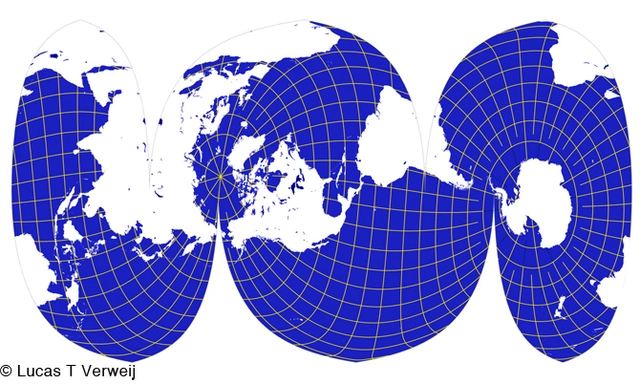
The second symposium in the ANCB programme Borders and Territories: Identity in Place with Nadine Godehardt, Malkit Shoshan, and Lucas Verweij. After the kick-off event in March 2018, this second symposium in the series will deal with Spatial Representations of Connections and Disconnections and the transfer of geopolitical and socio-cultural imaginaries of the world. Each world map reveals a particular worldview with its deposited moral, political, or economical convictions. But maps can also be instruments to analyse contested political situations. Our speakers will bring together artistic, planning, and political persepectives: Lucas Verweij will look into how maps construct our worldview and

SOM: Art + Engineering + Architecture

The MAK Center for Art and Architecture in Los Angeles, in partnership with Skidmore, Owings & Merrill LLP (SOM), is hosting a panel discussion on the intersection of art, engineering, and architecture. Set in the beautiful outdoor courtyard of the historic Schindler House in West Hollywood, the event brings together a variety of experts to discuss historical and contemporary positions regarding this theme. 

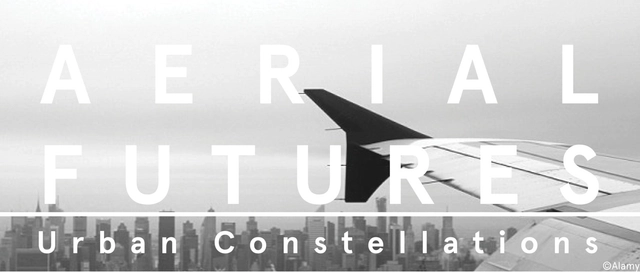
AERIAL FUTURES: Urban Constellations

Multiple-airport cities present new challenges for passengers and urban dwellers who often struggle to navigate their aerial infrastructure. The fragmentation of airports in a single city, frequently owned and operated by different governing bodies, can lead to unpredictable and even confusing experiences. With seven airports in its metro area, New York City offers a perfect case study to reimagine airports as a choreographed urban ecosystem, which relies as much on architecture and urban planning as it does on technology and data-driven design. A panel of experts will discuss challenges and opportunities for the future of New York City’s aerial infrastructure,

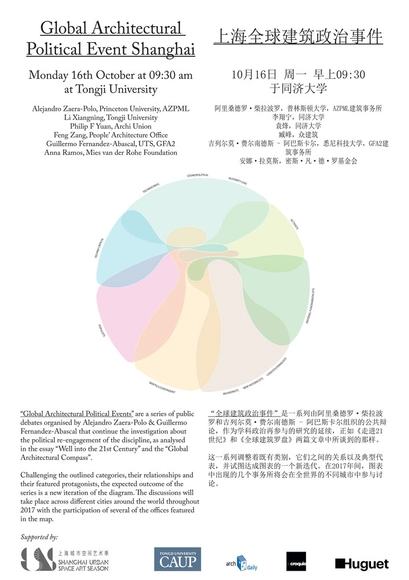
Global Architectural Political Event Shanghai

“Global Architectural Political Events” are a series of public debates organised by Alejandro Zaera-Polo & Guillermo Fernandez-Abascal that continue the investigation about the political re-engagement of the discipline, as analysed in the essay “Well into the 21st Century” and the “Global Architectural Compass”.

Challenging the outlined categories, their relationships and their featured protagonists, the expected outcome of the series is a new iteration of the diagram. The discussions will take place across different cities around the world throughout 2017 with the participation of several of the offices featured in the map.

Panel Discussion: Future Urbanisms, Genetic Cities

With Thom Mayne and Wolf D. Prix, on the occasion of the exhibition Houston: Genetic City. Envisioning a Future Post-Industry, Post-Oil, Post-Sprawl at Aedes Architecture Forum.

Turncoats NYC Debate: "Buildings Don't Matter"

The irreverent architecture debate Turncoats launches in New York City.

Venice: A Provocative Paradox

Moderator: Louise Braverman, FAIA
Panel: Cynthia Davidson, James Biber, FAIA, Max Levy, FAIA
Often the first reaction to Venice is one of feeling overwhelmed by the astonishing beauty of her existence. Yet if we dig a bit deeper inherent contradictions begin to appear. How do we make rational sense of a city that floats on water? What are the features that contribute to our incredulity, and what can we learn from them? From the original muddy wilderness of the 5th century to a beguiling built environment, Venice remains 1,500 years later, a provocative paradox of visceral and visual inspiration.

"Architecture and the Art Museum" Panel Discussion

What is the place of the museum in the modern city? What role does architecture play? How can these buildings be effectively interpreted?

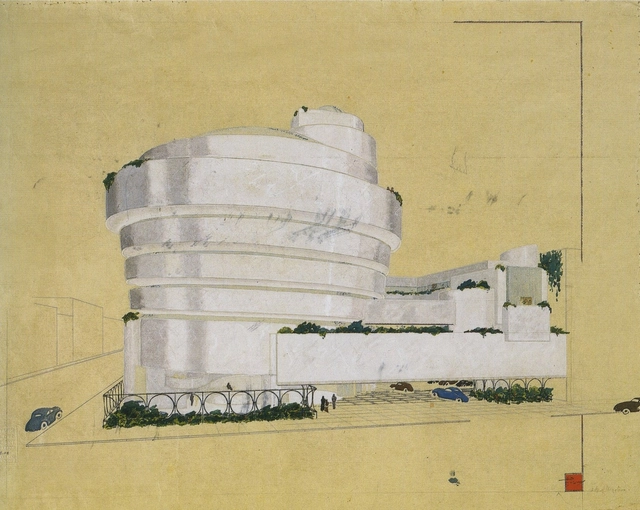
Frank Lloyd Wright’s design for the Guggenheim Museum in Manhattan broke with all existing conventions, setting a new standard for the postwar art museum and, together with the Museum of Modern Art, firmly establishing the city of New York as the cultural capital of the 20th century.

Architects Across Generations

In celebration of Women's History Month, The National Building Museum features a special program, Architects Across Generations. Beverly Willis, artist, architecture and philanthropist, joins architect and CEO of Marshall Moya Design, Paola Moya, for a cross-generational conversation on how architecture has evolved in the past half-century, what lies ahead, and the pressing issues practicing architects and design entrepreneurs face today.

Designing Boston: Parochialism vs. Production

How can market-rate housing be built that meets the needs of real Bostonians? Without abandoning the small, historic scale of Boston neighborhoods, how can new housing projects both optimize construction costs and meet unit goals for a growing population?

The ninth in the Designing Boston series, this panel will be a discussion with Boston City Councilors about housing creation. This conversation will unpack enduring issues such as tensions between policymakers and community members and challenges posed by codes, as it also highlights successful examples of housing creation.

Part III: Manifesto Series: The Sharing Movement

The expansion of non-stop processes of twenty-first-century capitalism has accelerated the proliferation of digital sharing platforms for the exchange of goods, information, and spaces. Today, apartments, cars, work-spaces, and all kinds of services can be exchanged, opening the possibilities for new understandings of the city. But the promises of the so-called “sharing economies” come along with controversies around the unequal consequences of such a process.

Book Launch: Centre Pompidou: Renzo Piano, Richard Rogers, and the Making of a Modern Monument

Completed in January 1977, Richard Rogers’s and Renzo Piano’s Centre Georges Pompidou was initially received skeptically by critics, but the public soon embraced Beaubourg as an essential—and well loved—Paris institution. Francesco Dal Co’s lively intellectual biography, Centre Pompidou: Renzo Piano, Richard Rogers, and the Making of a Modern Monument (Nov. 29, Yale University Press) explores the Pompidou’s history and the reasons for its success, from its genesis as a politically calculated response to the turbulent 1968 student protests to the role played by architects in its construction, as well as the historical influences and the engineering solutions that inform its design. 

Reading Images Series: Beyond the City

Transnational projects for resource extraction have motivated the development of massive infrastructural corridors. The strategic siting of mining towns, petrochemical encampments, and industrial developments aims to integrate vast geographical and political entities. These experiments promise to advance economic development on a national scale, but their influence on regional and urban constructs tests the agency of architecture and planning at smaller scales.

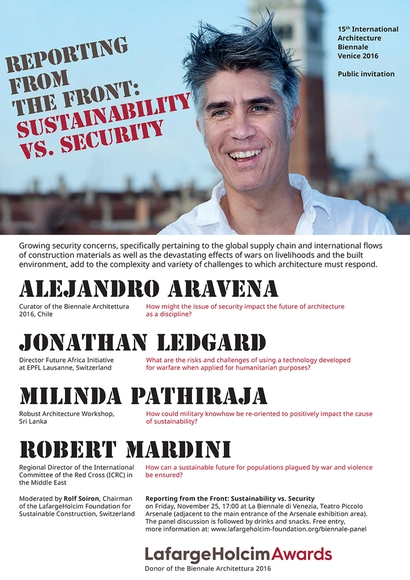
Reporting From The Front: Sustainability vs. Security

Based on his experience in curating the 15th International Architecture Exhibition of La Biennale di Venezia 2016 in Venice, the Chilean architect Alejandro Aravena inspired the LafargeHolcim Foundation for Sustainable Construction to organize a debate on sustainability and security. Framed as one of this year Architecture Biennale’s discussions, the event will foreground topics that were raised in the context of the exhibition “Reporting from the Front” and expose them to “real life reports” from the forefront of architecture and related disciplines.

Growing security concerns, specifically pertaining to the world supply chain and global flows of construction materials as well as the

Augmented Reality Beyond Pokemon Go

Curious to know how AR is used for more than just gaming? Join Augment, Blippar and Samsung Accelerator Wednesday, November 2nd for a panel discussion on AR Beyond Pokemon Go!

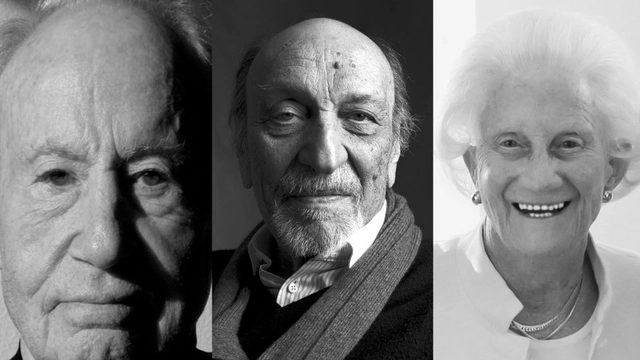
The Consequence of Design: Ralph Caplan, Milton Glaser, and Beverly Willis in Conversation

Chee Pearlman, journalist, conference creator, and design curator at TED Conferences moderates a conversation between design critic Ralph Caplan, graphic designer Milton Glaser, and architect Beverly Willis on the heritage of the design profession and its eventual legacy within the ecological, social, and service spheres, at the Solomon R. Guggenheim Museum.

The event is in celebration of the publication of "Twenty Over Eighty: Conversations on a Lifetime in Architecture and Design," a collection of insightful, intimate, and often irreverent interviews with twenty architecture and design legends over the age of eighty. The book’s authors, Aileen Kwun and Bryn Smith, will

Monocle 24 Radio Live Debate Series – Section D

Join us at Midori House in London’s Marylebone for this live edition of Section D, Monocle 24’s weekly design radio show. Opinionated guests from the worlds of typography, graphic design, journalism and architecture join Section D host Josh Fehnert to reflect on their careers and London’s status as a design city and offer some resolution on that age-old question: "What is good design?"