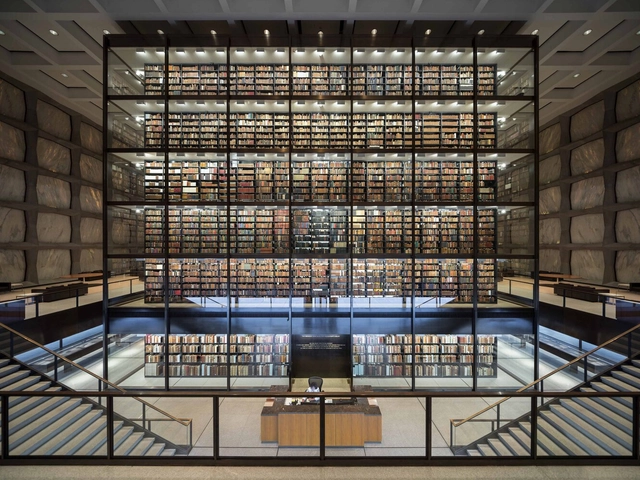
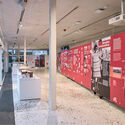
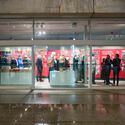
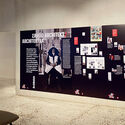
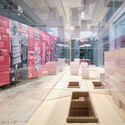
The School of Architecture Urban Planning Construction Engineering of Politecnico di Milano opens the renovated exhibition space by displaying some of the most significant projects designed by Kazuyo Sejima, founder with Ryūe Nishizawa of SANAA in 1995, Pritzker Prize in 2010, and Professor at Politecnico di Milano since 2015.
Utilities seeks to excavate and document the multilayers of Beirut’s economic collapse, and employs an ethnographic lens to explore the material manifestations of the crisis across the city’s urban fabric. The project unearths the material infrastructural apparatus that is emerging as a response to socioeconomic conditions; solar panels, water tanks, private generators, and prison-like façades of banks are all elementary fragments of this apparatus.
Iwan Baan is one of today’s leading photographers of architecture and urban design. His images document the growth of global megacities and portray buildings by prominent contemporary architects including Herzog & de Meuron, Rem Koolhaas, and Zaha Hadid. The first large retrospective of the Dutch photographer’s work will open at the Vitra Design Museum in autumn 2023. Baan’s vibrant realism puts the focus on people and their relationship to the built environment. His observant eye presents architecture not as an abstract ideal, but as the setting of everyday life, an organic part of the urban fabric – be it suburban sprawl or the booming metropoles of Africa and Asia. The exhibition will include a number of Baan’s iconic works, many of which are familiar from magazines and books, as well as photographs of vernacular and informal architecture all around the world, from the round Tulou of southern China to the rock-hewn churches of Ethiopia. Thanks to the great scope of his vision, Baan’s works offer a broad panorama of human building that impressively demonstrates the existential importance of architecture and urban design.
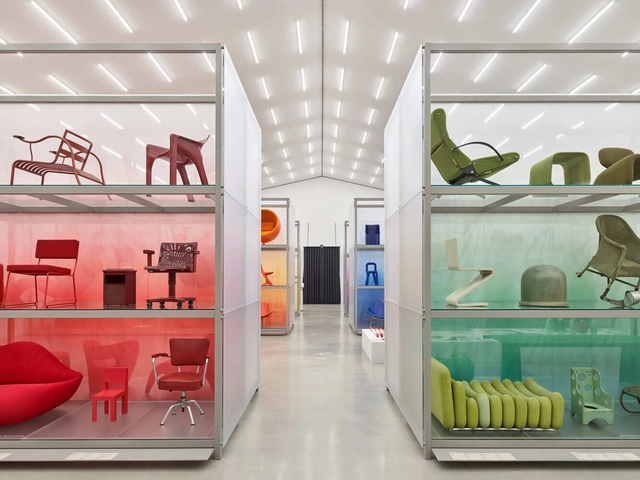
The new focus topic of the Vitra Schaudepot, which will be on display from May 2022 to May 2024, is wholly devoted to colour. Following an invitation from the Vitra Design Museum, Dutch designer Sabine Marcelis has transformed the Schaudepot in one simple, sweeping gesture by sorting its roughly four hundred exhibits by colour. The installation shows the collection from new perspectives and produces fascinating cross-references between periods and styles, at the same time providing visitors with an overwhelming immersive experience. The presentation is complemented by historical and contemporary objects and documents from the museum archives that illustrate how designers from different eras approached the subject.
This daytime roundtable uniting urban scholars, designers, planners, community developers and policy specialists will explore how to take some of the ideas of the Housing Multitudes exhibition forward. Discussion will be especially focused on what is being forgotten or ignored in the proposed “solutions” to housing shortages and affordability that Ontario’s Bill 23, and Toronto’s Housing Action Plan, seek to address.
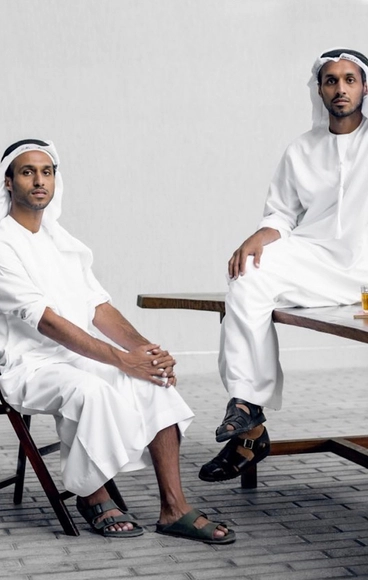
Rashid and Ahmed bin Shabib, Photo: Alex Wolfe for Kinfolk
As the effects of climate change make themselves felt, cities need to adapt to the global rise of temperatures. The exhibition »Hot Cities« will look at the metropoles of the Arab-speaking world to learn how they and their inhabitants cope with the region’s harsh climate, and whether the architectural and urban design solutions found there might help us make our own environments more climate resilient. »Hot Cities« shows how architects combine traditional vernaculars and modern technologies to respond to the challenges of the future. The exhibition presents urban case studies that provide answers to many questions now raised by climate change.
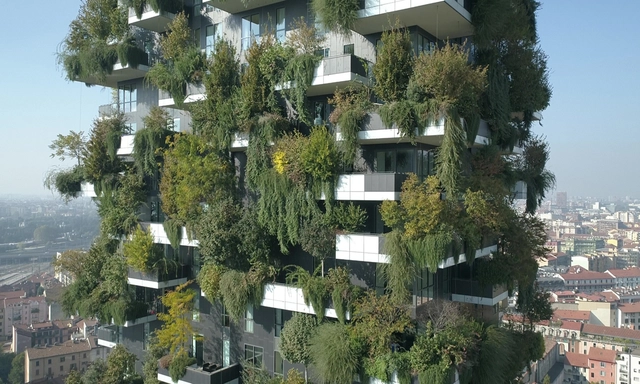
Stefano Boeri, Bosco Verticale, Milano, Italy, 2014. Courtesy Stefano Boeri Architetti, Photo: The Blink Fish (2018)
Gardens reflect identities, dreams, and visions; they are deeply rooted in our culture. Recent years have seen a resurgence of interest in the garden – not only as a romantic idyll, but as a field of experimentation for concepts related to social justice, climate change, biodiversity, and a sustainable future. Gardens have become places of the avant-garde. Designed by the Italian studio Formafantasma, the exhibition »Garden Futures« at the Vitra Design Museum will be the first to explore the history and future of the modern garden. Which movements and theories have influenced our contemporary garden ideals? How can horticulture contribute to a more sustainable future and a good life for everyone? The exhibition addresses these and similar questions using examples from design, everyday culture, and landscape architecture – from contemporary community gardens to green façades and vertical urban farms, from deckchairs to gardens created by designers and artists like Roberto Burle Marx, Mien Ruys, and Derek Jarman.
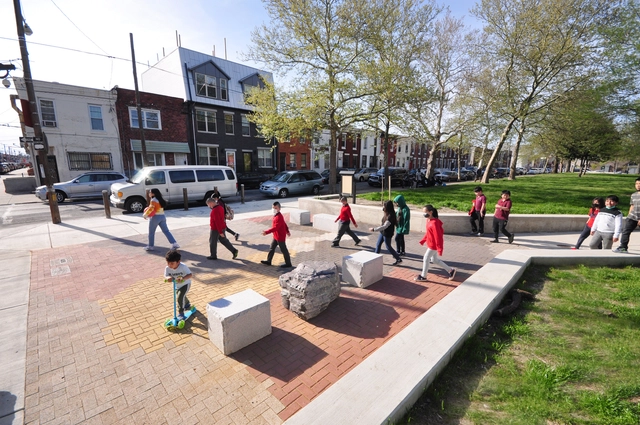
With questions such as Where do roads come from?, popular educators in the US Black Freedom Movement like Septima Clark have long used discussions about architecture and the built environment to unpack ideas of citizenship, politics and power. People’s observations and analyses of built form offer insights into the surroundings we share and opportunities for collective action to change it. In this lecture, Jae Shin and Damon Rich of HECTOR urban design will share stories from their attempts to learn from this tradition of popular education as a resource for architecture, urban design and planning.
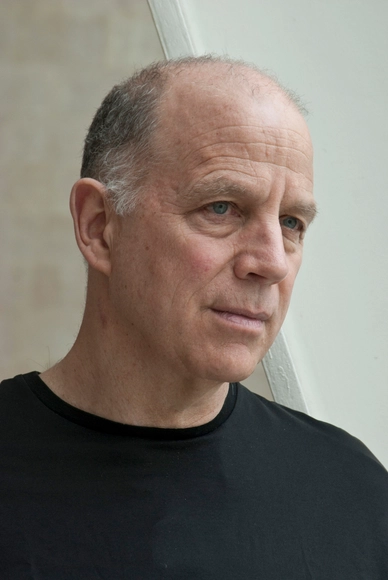
Tod Williams is a Founding Partner of Tod Williams Billie Tsien Architects | Partners. Their practice is known for their humanistic approach to architecture primarily for institutional clients such as museums, schools, and nonprofits. Prioritizing experience above all, their designs choreograph light, texture, solidity, and a deep sensitivity to the places for which they’re built. While the work has grown in scale, the foundational principles of the practice remain intact: “to serve, to make good marks on the earth, to acknowledge the work comes from not just two hands, but many hands, and, fundamentally, architecture is an act of profound optimism.”
Videos
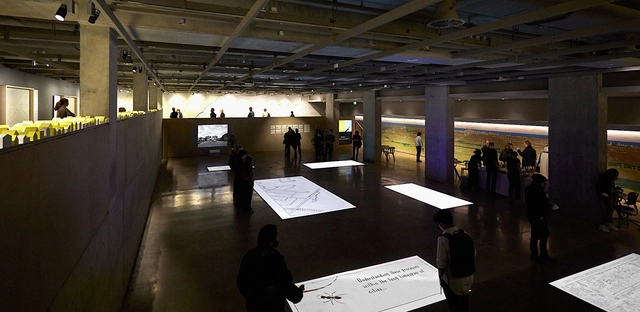
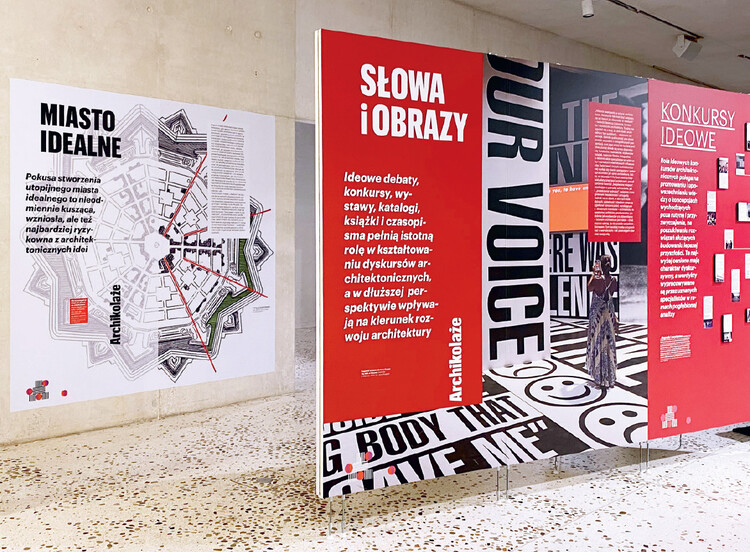
Fragment of the exhibition; photo by Jerzy Porębski
Exhibition concept: "Architecture requires knowledge. Broad, humanistic knowledge – necessary for the concept creation, as well as exacting, technical knowledge – necessary for the construction process. It also requires openness, a certain mindfulness, and intuition – to be able to perceive and understand the changes taking place in the world. Collage opens the path of knowledge to the promptings of intuition. That is why I like to use it as a working technique, which this exhibition suggests: here photographs, testimonies and documents merge with fleeting and open forms (still not obvious to architectural criticism, but known, for instance, from social media) – to emphasize the complexity and multidimensionality of critical engagement. # Archicollages. What is the exhibition about? It is about values. It is about architecture being first and foremost a place to live, rather than a clever and fashionable fetish – which it may at times become, and which some circles believe it to be." Ewa P. Porębska
Empirically gauging human experience of architecture in real time. Photo by Grey Matter.
Can we use today's and future empirical means to raise our understanding of the phenomenological effect of sacred spaces and structures, particularly as they relate to spirituality and faith? The work and thought of late neuroscientist Francisco Varela loom large here, but much has occurred since his passing, and a whole new world in neuroscience is unfolding. We will consider the science behind what has been termed 'aesthetic cognitivism' by some philosophers and latest empirical insights coming from theological aesthetics.
SMA Head Office, Cooma North snow scene, 1954. Courtesy of National Archive.
An interdisciplinary team from The University of Melbourne, Deakin University, The University of Tasmania and The Australian National University have collaborated on a new exhibition exploring the significant relationship between mass migration and the modernisation of Australia post-WWII.
International Wastewater, Water Quality, Environmental Services, chemical treatment and Sanitation industries
The biggest trade show of its kind in Nigeria and West Africa has created an avenue to expand the frontiers of the Nigerian Water and Hvac environment with an enlightened Workshop and also had strong supported presence of various Engineering bodies.
The Unbuilt Gallery of Architecture is an experimental gallery that exhibits contemporary architecture designed for the virtual medium. Viewers will inhabit an immersive, social space to experience the architecture together.
Saudi Design Festival 2023 (SDF 2023) will be held in Riyadh, Saudi Arabia, from January 12-23, 2023. The edition will see the growth of design both in breadth and depth, adapting a new format that will activate various design destinations throughout the city. Kicking off this new program is a design forum happening on the festival's first weekend, alongside exhibitions, followed by a series of public realm interventions, and community-led events, under the festival’s calendar.