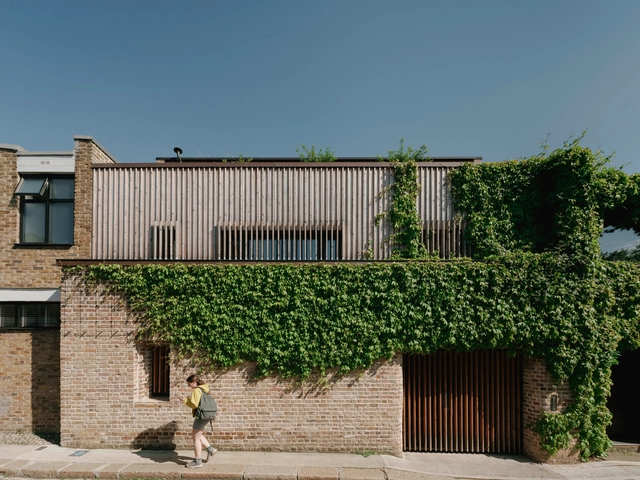
Max Fordham is pleased to announce a special exhibition celebrating the life and work of its founder, Max.


Max Fordham is pleased to announce a special exhibition celebrating the life and work of its founder, Max.

IAAC Lecture Series – Aldo Sollazzo

The WAPW Academic Association together with the Faculty of Architecture of the Warsaw University of Technology invite you to the next lecture in the "About Architecture" series. Our guests will be architects Małgorzata Kuciewicz and Simone De Iacobis from the CENTRALA studio.
The studio was founded in 2001. It changed for years and today it is created by Małgorzata Kuciewicz and Simone de Iacobis. The goal of the studio is to initiate a debate on architecture, inspire interdisciplinary activities related to architecture and design, and to create artistic projects inviting you to discuss the condition of urban design in Poland.
More information can be found at https://fb.me/e/2jNiZEmK7
The lecture will take place on Tuesday, February 28th at 6:00 pm at the Faculty of Architecture.
More information will follow soon, so stay tuned!

Svetlana Kana Radević’s architecture is a radical act of mediation. Rising to prominence in post-war Yugoslavia, her buildings speak on all scales, engaging geo-political and social complexities. Drawing from knowledge of materiality and vernacular traditions within her native Montenegro (formerly Yugoslavia), her work filters modernism’s globalized forces through an intimate, place-based lens. Radević’s civic spaces re-centered provincial knowledge and facilitated a socially-progressive public sphere within the Yugoslav socialist state.
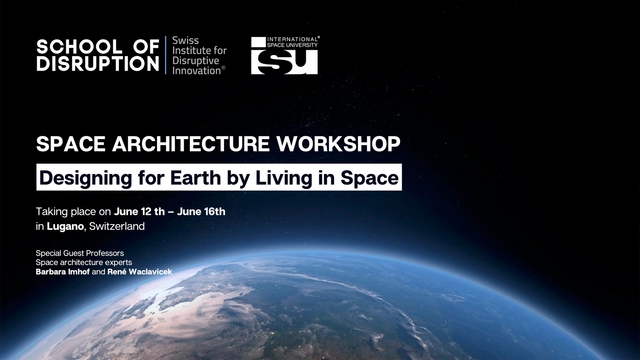
Spaceships and space environments can be seen as analogues of modern, high-density, technology-driven cities. Design, ideas and technologies for space can have an immediate positive impact on the development of cities and homes on earth.
We have to think of a new relationship between humans, their habitats, transport methods and the environment.
This valuable know-how can be applied to design our homes and cities on earth and thus create a more sustainable world.
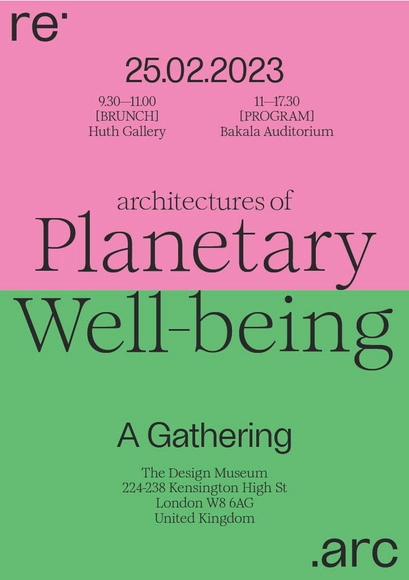
re:arc institute presents architectures of planetary well-being, an in-person gathering, at the London Design Museum, on Saturday, February 25, 2023.

Building on the success of the previous two virtual Spring Conferences, the themes of AIAISC'23 will be Detail & Storytelling. Presenters will focus on describing a project through the evolution of key Details, or Storytelling as part of the design process.

Since Japan and the West began exchanging ideas in the mid-19th century, Japanese design sensibilities—from elaborate kimono garments and meticulously raked gardens to lavish compositions of ukiyo-e woodblock prints—have had wide appeal across Europe and the United States. Often ornate yet minimalistic, Japanese design embodies numerous visual approaches underpinning the notion of “just right” or “just enough,” known as hodo-hodo. While no single element characterizes the entirety of Japanese design culture, many scholars attribute the spectrum of Japanese design to cultural, social and spiritual practices deeply grounded in Japan’s history that continue to be observed in Japanese design practices today. Featuring a discussion with Taku Satoh, one of Japan’s most critically acclaimed contemporary designers, alongside two internationally recognized authorities on Japanese design sensibilities, Linda Hoaglund (bilingual filmmaker and cultural producer) and Sarah Teasley (Professor of Design, RMIT University), this live webinar will explore the underlying aesthetic and cultural roots essential for understanding the essence of Japanese design.

Linvisibile is pleased to announce the opening of its first American showroom, in the exclusive Miami Design District.
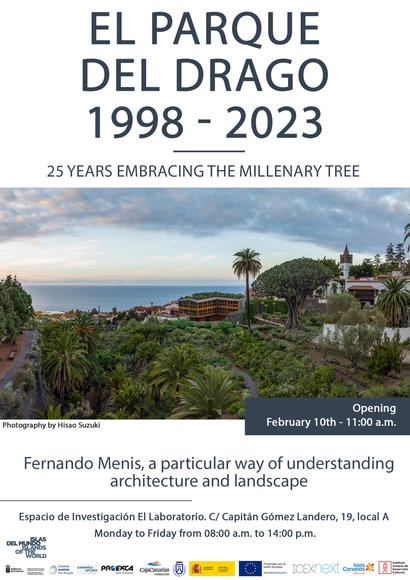
The Dragon Tree of Icod de los Vinos, in Tenerife, is the oldest specimen of Dracaena Drago, which is preserved in the Atlantic archipelago, a tree 16 m high with a 20 m circumference at the base. An endemic species of the Canary Islands, with a slow growth, the dragon tree has a strong symbolism since, in the past, it was considered the protector of the islands, but, at the beginning of the 1980s, the one who needed protection was precisely the dragon tree. Visitors - about 1 million a year - flocked to visit it, and the intense activity that tourism brought around it put its life in danger. It was necessary to stop the visits and find solutions so that the drago tree did not die of success.

/// ONLINE TRAINING ///

Karel Klein is an architect and educator who has been working with various AI technologies since 2016. Her ongoing project is an investigation into crossbred image-objects produced using atypically trained GANs (generative adversarial networks) and their capacity for contemporary myth-making in architecture. In the same way that imaginative vocabulary and metaphoric style were primary, if literary instruments for the invention of new mythologies for the Surrealists, the strange and idiosyncratic qualities of images produced using AI are similarly a kind of matter metaphor-ed and made visible by the cyborg imagination. With these tools, Karel is interested in the re-enchantment of the architectural body—one that both foments and succumbs to sensual perceptions, and one that discovers new and unexpected relations to the world beyond the realm of the rational. Her work in this realm has been exhibited at the 2021 Venice Biennale; the FRAC Institute, Orleans, France; Des Lee Gallery, St. Louis; and SCI-Arc Gallery, Los Angeles. Recent essays in pursuit of this work include “Verto Pellis” in Offramp, issue 17; “Machines are Braver than Art” in “Rendering Fiction,” Paprika!, volume 7, issue 8; and “Machines À Rechercher,” in Log 55, summer 2022. Karel teaches currently at Washington University, University of Pennsylvania, UCLA, and the Southern California Institute of Architecture (SCI-Arc).

Designed directly by the internal Research & Development office, the new showroom becomes the focal point of Linvisibile’s presence in the Piedmont area.

IAAC Lecture Series – Philip F. Yuan

IAAC Lecture Series – Xavier De Kestelier

Join editor Alissa North of the John H. Daniels Faculty of Architecture, Landscape, and Design as she discusses her new book Innate Terrain: Canadian Landscape Architecture, a collection of papers written by Canadian scholars and practitioners in the field of landscape architecture. Concerned with the practice and theories of landscape architecture in Canada, the book documents the breadth of contemporary practice from across the country, with each chapter author using works of landscape architecture to theorize a distinct approach practiced by Canadians in their national context. The book’s central argument is that Canadian landscape architecture is distinct because of the unique qualities of the Canadian terrain and the particular relationship that Canadians have with the landscapes of our nation.
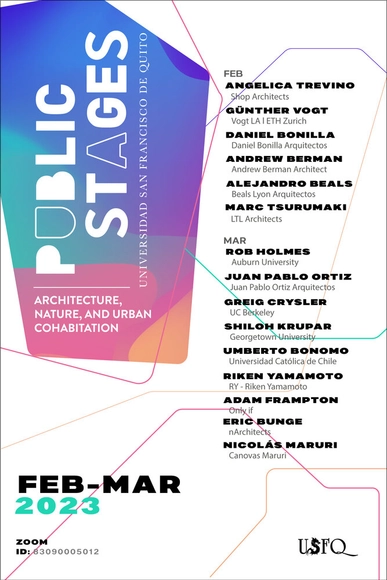
Since the end of the nineteenth century, the planning of cities has been understood as the discipline that establishes guidelines to project architecture for human occupation, with a focus on rationality and functionalism. Nevertheless, the city is a system of many layers and folds, constructed through the interaction of natural, cultural,socioeconomic,and political forces. This choreography, with a variety of purposes and different degrees of synchronization, creates architecture that serves both as shelter and context.Architecture, therefore,does not limit itself to the production of objects but rather appears as a field of study between and through disciplines, called upon to contribute to the organization of those forces that composepublic stages, the space where collective itineraries meet and intertwine.These stages have existed historically.
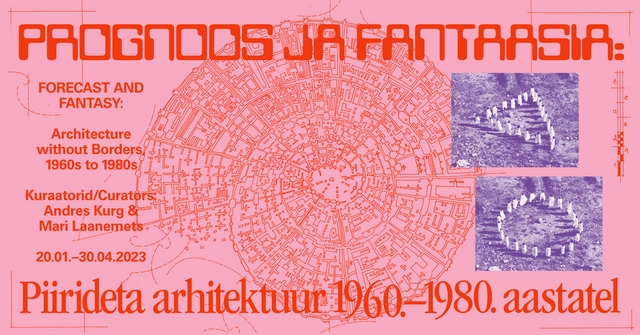
This exhibition stages a meeting point for scientific predictions and futuristic fantasies that were manifested in architecture and art from the 1960s to the 1980s. Bringing together authors from Eastern Europe and the West, the exhibition will display works that emerged from the new technological reality that followed the Second World War, and which took it along unexpected paths: foreseeing the replacement of work with games and collective pleasures in computerised societies, turning away from the overarching machine logic and replacing it with myths and romantic ideas of the human being, or looking for traces of other civilizations from space, instead of conquering it. A utopia of quantification and of scientific planning, of the separation of life and work, was replaced by a striving towards harmony between the machine and nature, the mind and the body. These projects are extensions of a technologicised world, ironic and absurd situations that present a critique of rationalism and speak of the contradictions of late modern society, demonstrating at the same time both its intellectual horizons and the limits of its utopian fantasies.