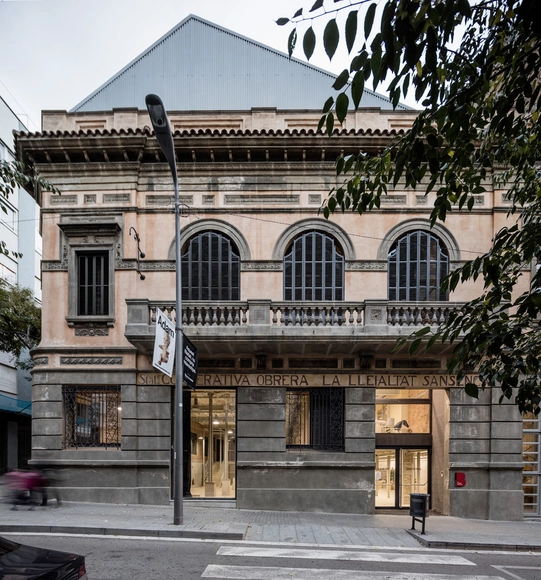
Twelve finalist projects, one honorable mention, and five winning works were announced yesterday in Barcelona, marking the results of the 4th edition of the AADIPA European Award for Architectural Heritage Intervention.
Twelve finalist projects, one honorable mention, and five winning works were announced yesterday in Barcelona, marking the results of the 4th edition of the AADIPA European Award for Architectural Heritage Intervention.

Through the Urban Development Corporation (EDU) and the Colombian Association of Architects (SCA), Medellín launched an international competition to design a space of memory and reflection on the period between 1983 and 1994, one of the most violent eras in the Colombian city. The competition jury awarded first prize to the design team of Taller Alterno, Pequeña Escala Arquitectura, and Luis Felipe Zapata Flórez.
Read more about the project below, in the words of its designers.
Inflection. Def. A change of direction in a process or movement / A bend or angle in a flat or straight object

From September 30 to October 7, Madrid will be the featured capital of the 16th Architecture Week 2019, organized by the Official Association of Architects of Madrid (COAM) through the COAM Architecture Foundation.
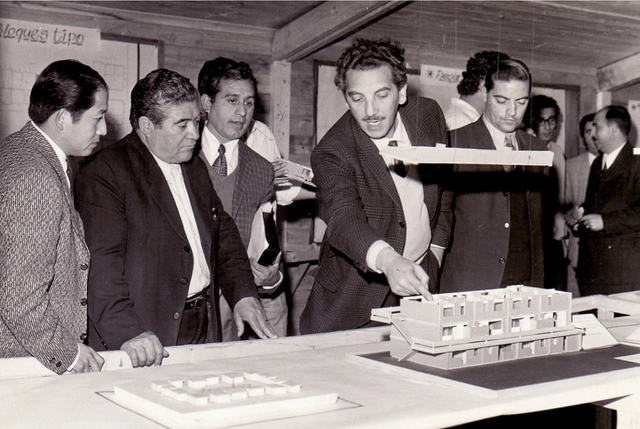
Today, Friday, April 5, the National Board of the Chilean Association of Architects (Chile) announced Miguel Lawner as the winner of the 2019 National Architecture Prize—the highest honor an architect can receive in the country, previously awarded to other renowned figures in past editions such as Germán del Sol, Enrique Browne, Teodoro Fernández Larrañaga, and Edward Rojas Vega.
Lawner served as the executive director of the Urban Improvement Corporation (CORMU) until the 1973 Chilean coup d'état, during which he was detained in concentration camps before being exiled to Denmark. Both from abroad and following his return, he has been recognized for his social housing projects, as well as his research and advocacy exposing human rights violations.

This year, 2019, marks 170 years since French architect Claude Brunet de Baines established the first architecture chair in Chile, which would eventually become the School of Architecture at the University of Chile. Fermín Vivaceta, designer of the Central Market and co-designer of the university's central campus building (Casa Central), was part of its inaugural graduating class.
This year also marks the 75th anniversary of the founding of the university's Faculty of Architecture and Urbanism (FAU). To celebrate this double milestone, Dean Manuel Amaya—through the Strategic Projects Center directed by Guillermo Crovari—commissioned architect Domingo Arancibia to design a pavilion commemorating these two historic landmarks in Chilean architectural education.

As part of its annual awards program, Interceramic, a leading Mexican manufacturer and distributor of ceramic floor and wall tiles, celebrated the eighth edition of the Interceramic Architecture and Interior Design Award on October 17, 2019, at the Salón de las Artes of the JW Marriott Santa Fe Hotel in Mexico City. The awards aim to promote and recognize projects that best reflect contemporary design and express the current state of architecture and interior design, while also celebrating creativity in the use of Interceramic ceramic materials.

As part of the 12th edition of the ColorLife TRENDS program, this October, the brand Comex revealed the trends and the color of the year that will dominate in 2020. The program aims to promote the use of color across all industries and unlock its power as a visual tool to improve the environment, protecting and enhancing the lives of Mexicans. These trends were developed by 14 renowned creatives from various industries, including design, gastronomy, architecture, and fashion.
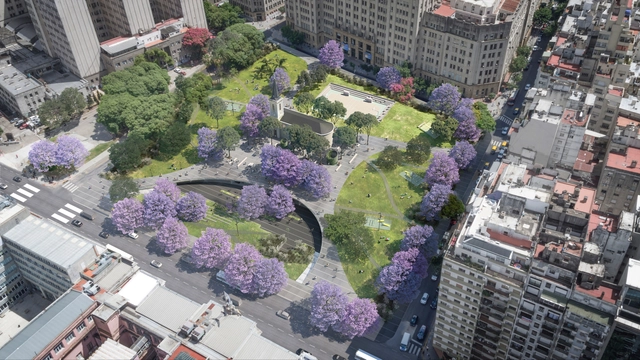
The spire of the San Lucas Parish rises serenely over an expansive green canopy of blooming jacarandas and tipu trees. Behind it, the massive School of Medicine of the University of Buenos Aires and a dense cluster of gray buildings contrast with this permeable green lung. A paved plaza climbs from the street, navigating the site's topography with winding paths, underground connections, parking, and a cultural center: this is the new project for Plaza Houssay, currently under construction.

As part of INFONAVIT's Housing Research and Practical Experimentation Laboratory project—which involved designing and developing a series of prototype homes to deepen the analysis of social housing and improve residents' quality of life—32 world-renowned architects gathered in the city of Apan, in the state of Hidalgo, Mexico. There, they tested, evaluated, and validated these prototype homes to improve the users' quality of life and promote better practices among developers, demonstrating that high-quality housing can be built at costs comparable to current market rates.

Open House, the international festival that invites people to visit landmark sites in cities like London, New York, Barcelona, and Buenos Aires, returns for its second edition in Mexico City. Iconic buildings will participate in OHCDMX, opening to the public on September 28 and 29.

Alberto Campo Baeza, one of today's most internationally renowned architects, has been selected for Honorary Fellowship in the American Institute of Architects [AIA]. Founded in 1857, the organization represents the interests of American architects, much like the CSCA (Superior Council of Colleges of Architects) does in Spain. It currently has more than 90,000 members, of whom only a select few are chosen to join the Institute's ‘College of Fellows’ with the title of FAIA.
Campo Baeza joins the exclusive roster of Honorary Fellows of the American Institute of Architects. In doing so, he joins fellow Spanish architects such as Rafael Moneo, Juan Navarro Baldeweg, Enrique Sobejano, and Fuensanta Nieto, alongside other equally renowned European architects like Álvaro Siza, Eduardo Souto de Moura, and David Chipperfield.
.jpg?1571676447&format=webp&width=640&height=580)
An unexpected social uprising in Chile reached its peak this weekend following the declaration of a constitutional state of emergency across several regions and the first curfews imposed in Santiago since 1987. In response to the crisis in the South American country, the XXI Chilean Biennial of Architecture and Urbanism has decided to "pause" all event activities, as announced by the curatorial team on October 19.
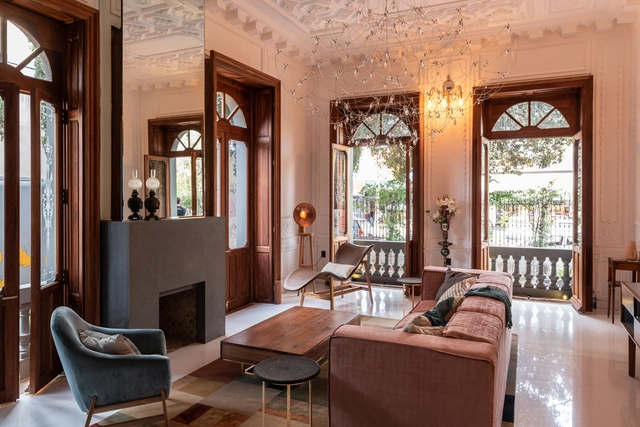
Casa Besign is a temporary project born out of the need to showcase the talent of interior designers, mostly from Puebla, as part of Besign México—a platform created to honor Puebla's 2015 designation as a “Design Capital” by UNESCO, connecting disciplines, key players, and companies in the fields of design, creativity, and innovation.
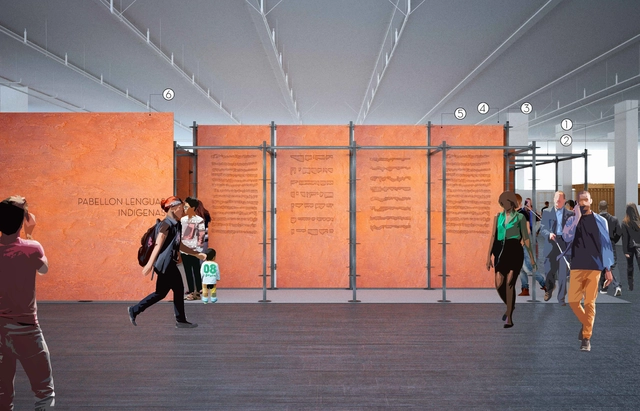
The Ministry of Culture, through the National Institute of Indigenous Languages, invited multidisciplinary teams, communities, and groups of graphic and industrial designers, architects, curators, exhibition designers, artists, and engineers, among other disciplines, to submit individual or co-authored conceptual design proposals for the Indigenous Languages Pavilion at the 2019 Oaxaca and Guadalajara International Book Fairs. This year, the Ministry of Culture's participation in these prominent international book fairs will not focus on book sales—which will be managed by the relevant institutions—but will instead align with the country's cultural policy.
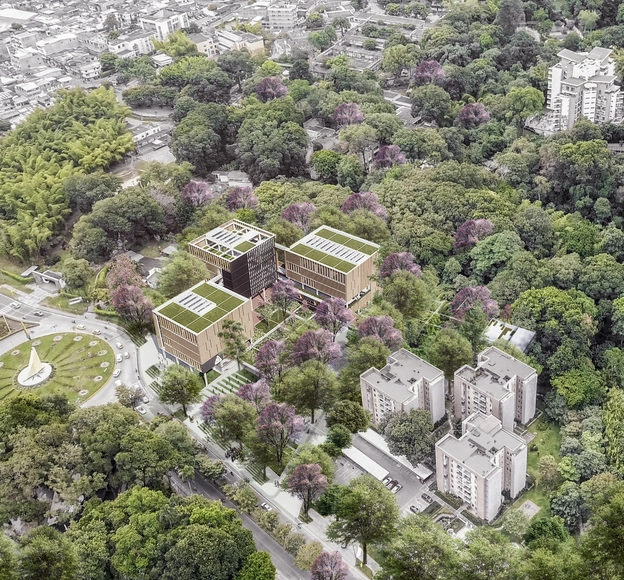
This month, DARP (De Arquitectura y Paisaje) was announced as the winning team of the public competition for the preliminary architectural design of Building A, part of the Physical Development Plan of the University of Ibagué. The project places the university within the contemporary academic architecture landscape that characterizes the national scene.
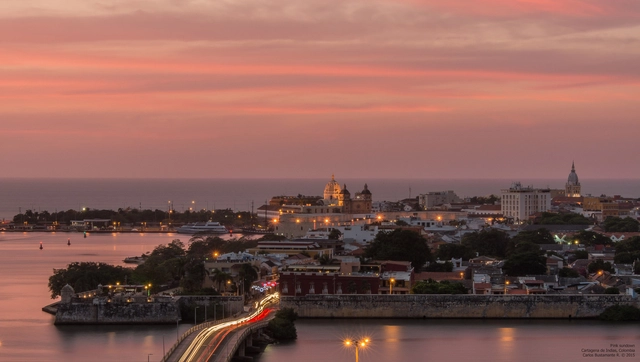
The degree to which heritage is crucial for the tourism and commercial value of cities like Cartagena is highly debated. As this value rises, the real estate sector invests more heavily in buildings that clash with the historic urban landscape. Especially since Cartagena is a warm, Caribbean, coastal vacation city, massive high-rise developments like Miami are often used as benchmarks. How far can real estate ambition go?
The answer is likely: until the city's long-term interests override those of private developers. This is the case of the controversial Aquarela building, whose already advanced construction was halted following a statement by UNESCO warning that they would remove the walled city of Cartagena from the World Heritage list. Consequently, the mayor of Cartagena reaffirmed his commitment to demolishing the unfinished structure.

Under the theme 'Factory of Ideas and Innovation,' the 33rd CAP Steel Design Competition for architecture students awarded first place to the team from Universidad Central, composed of students Hugo Valenzuela and Diego Lacazette, guided by professors Ricardo Atanasio and Álvaro Herrera, for their proposal "Biome and Seed Research Center."
The student team's proposal consists of "a controlled space for experimentation and observation of crop species in the face of desertification," as explained in the official project description.
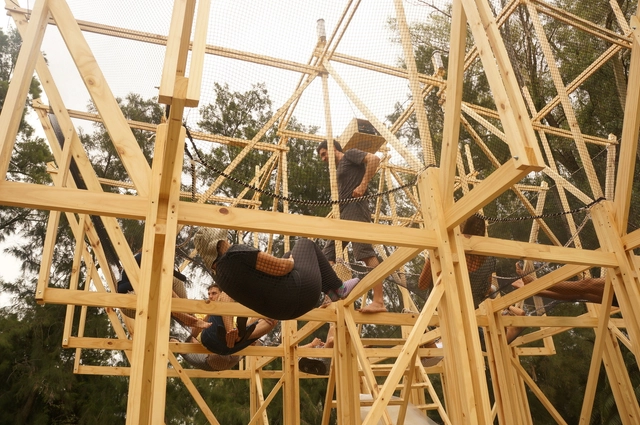
Hello Wood Argentina, the creative, professional, and social program focused on teaching how to "think with your hands" and learn through experience, has opened its open call for students. It invites university students and recent graduates of Architecture, Design, and Art programs—as well as anyone who simply wants to be part of Hello Wood—to join the festival's fourth edition, which will take place in March 2020 in the Municipality of Ceibas, Entre Ríos Province.















.jpg?1570822093 "Courtesy of Hugo Valenzuela and Diego Lacazette")