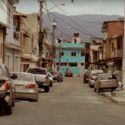
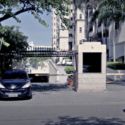
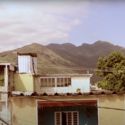
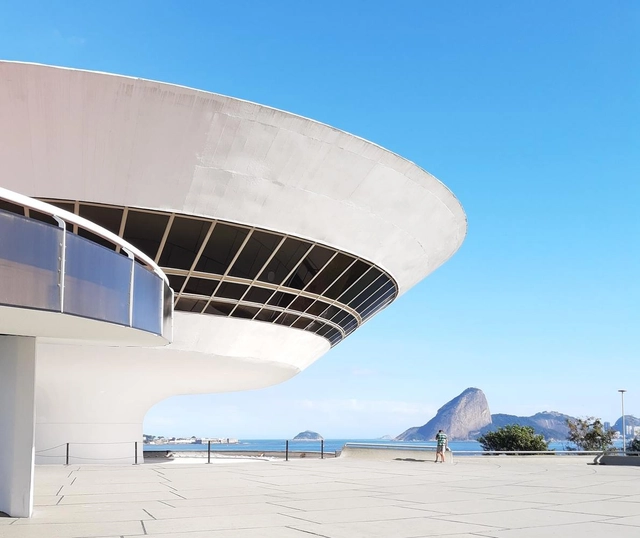
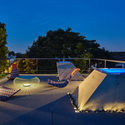
Rocinha Sports Complex and Footbridge | Authors: Mayerhofer & Toledo Arquitetura and Oscar Niemeyer | Date: 2010 | São Conrado. Via Arqguia Colorir
Arqguia Colorir is a digital coloring book that invites everyone to visually reinterpret the main architectural landmarks of Rio de Janeiro. Available for free download in both English and Portuguese, the drawings feature QR codes providing direct access to descriptions of each work on the online architecture guide ArqGuia Rio.
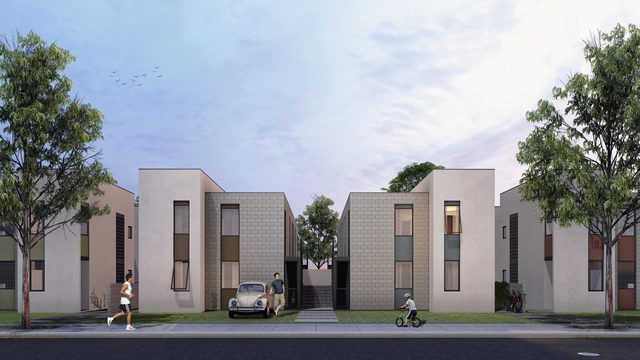
First Place. Courtesy of Oficina Urbana de Arquitetura
The Council of Architecture and Urbanism of Goiás (CAU/GO) has announced the results of the National Design Competition for Social Interest Housing, which aimed to select the best proposal for constructing homes for low-income families as part of the housing projects of the Goiana Housing Agency (AGEHAB).
In 2003, João Filgueiras Lima, known as Lelé, visited Escola da Cidade for a five-lecture series. The institution is broadcasting the fourth session, in which he discusses the industrialization of reinforced concrete in the urbanization of Salvador's favelas, as well as his partnership with Lina Bo Bardi.
In one of the country's hardest-hit cities by the Covid-19 pandemic – São Paulo – and in the face of the suffocating socio-environmental crisis plaguing our world and our time, how can architects and urban planners take a stand and effectively act against widespread asphyxiation and for the fundamental right to breathe, to exist, and to inhabit the Earth?
The Institutional Security Office (GSI) has signed a R$ 2.49 million contract for a drone detection and "neutralization" system that includes installing antennas up to 20 meters tall atop the Planalto, Alvorada, and Jaburu Palaces to protect the President of the Republic and the executive branch leadership. However, despite the urgency claimed for the project by the agency led by General Augusto Heleno, the National Institute of Historic and Artistic Heritage (IPHAN) is blocking the work.
Sesc São Paulo has made a series of catalogs, educational materials, and booklets produced for the institution's exhibitions available for free on its website. Fittingly, several of these themes intersect with thinking on architecture and the city.
The 13th São Paulo International Architecture Biennial has adopted reconstruction as the central theme for its 2022 edition. As a preparatory activity for the co-curatorship competition, IABsp organized three debates that promote a discussion on the very essence of art and architecture exhibitions, while also inviting us to reflect on the role of architects, urban planners, and many other professionals in building more just and democratic cities.
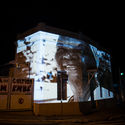
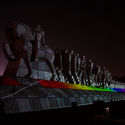
Other bodies, spaces, and languages that have been rendered invisible or simply do not seem to fit into present-day São Paulo are being projected onto its landscape. "Voices Against Racism" is an exhibition and proposition that introduces new imaginaries to a city where narratives are constantly contested. Running until August 24, the event transforms streets from mere transit areas into spaces for art, buildings into canvases, and monuments into backdrops for artistic expressions that showcase paths usually obscured by history.
The Institute of Architects of Brazil – São Paulo Department has reactivated its educational platform. In line with the 2020-2022 administration's program, particularly regarding the promotion and consolidation of a space for debate on pressing issues in the training of architects and urban planners, the Institute has undergone a complete restructuring that deepens and strengthens the democratizing spirit of past experiences.
During a talk at Escola da Cidade, as part of the Seminar on Contemporary Culture and Reality course coordinated by Professor José Guilherme Pereira Leite, philosopher, sociologist, and playwright José Fernando Peixoto draws on two events from 1968—the murder of high school student Edson Luís in Rio de Janeiro and the assassination of Martin Luther King Jr.—to discuss logics surrounding the Black body and how they manifest in urban dynamics of control and oppression.
https://www.archdaily.com/1124175/the-trigger-and-the-storm-a-conversation-with-jose-fernando-peixoto-on-violence-against-black-bodies-and-the-dynamics-of-the-cityEscola da Cidade
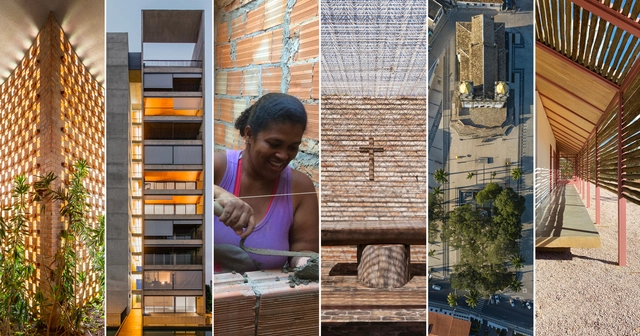
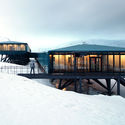
The Instituto Tomie Ohtake and AkzoNobel have announced the 13 projects selected for the seventh edition of the Instituto Tomie Ohtake AkzoNobel Architecture Prize. The finalists include works located in Amazonas, Bahia, Ceará, Goiás, Minas Gerais, Rio de Janeiro, Santa Catarina, São Paulo, and King George Island in Antarctica. The selection was made by a jury comprising architects Diego Mauro, Elisabete França, Fernando Túlio, Juliana Braga, and Pedro Varella.
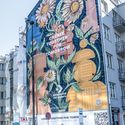
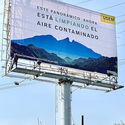
Warsaw, Poland, has become the second city to receive public art projects that, in addition to beautifying the landscape, clean the air. Painted by local artists, the massive mural uses special, sun-activated pigments capable of filtering the air.
The mural was produced with titanium dioxide, which attracts pollutants and transforms them into harmless nitrates thanks to a sun-activated chemical process. Through this process, the artwork can purify its surrounding air, an action equivalent to the work of 720 trees.
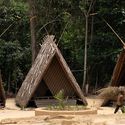
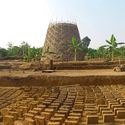
Earth, straw, and wood are some of the construction materials used by a rural community in the Republic of Cameroon. Beyond being low-cost, the project's main asset is its respect for the local landscape, building homes in harmony with their surroundings.
Called Warka Village, the hamlet is based on vernacular architecture. This means traditional construction techniques and locally available materials, such as stone, bamboo, and natural fibers, are used.
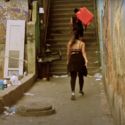
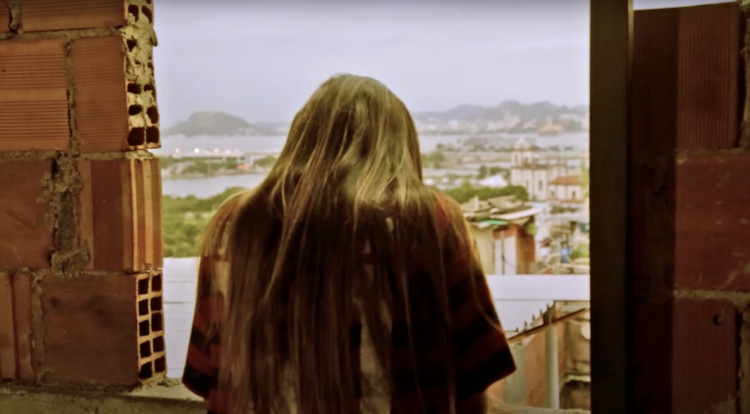
Dia a dia is a three-part mid-length film miniseries developed by the Urban Policy Commission (CPU) of CAU/RJ. Each episode is dedicated to one of the three pillars proposed within the theme of the right to the city—sanitation, mobility, and housing—through the perspectives and daily lives of three women living in completely different areas of Rio de Janeiro: Realengo, Barra da Tijuca, and the Santo Amaro community (Catete). The first episode, which premiered on August 21 and addresses housing, is available online.
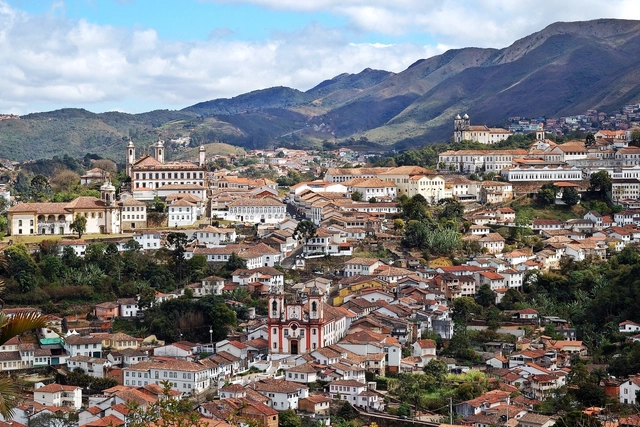
Ouro Preto, Minas Gerais. Photo by Rosino, Flickr. Licensed under CC BY-SA 2.0
In August, the city of Ouro Preto, in Minas Gerais, signed a public-private partnership for a "smart city" project, setting in motion plans to become Brazil's first historic smart city. The contract entails an investment of R$ 10 million and establishes an administrative concession for the Ouro Luz consortium to operate Ouro Preto's public lighting network and telecommunications infrastructure for 25 years.
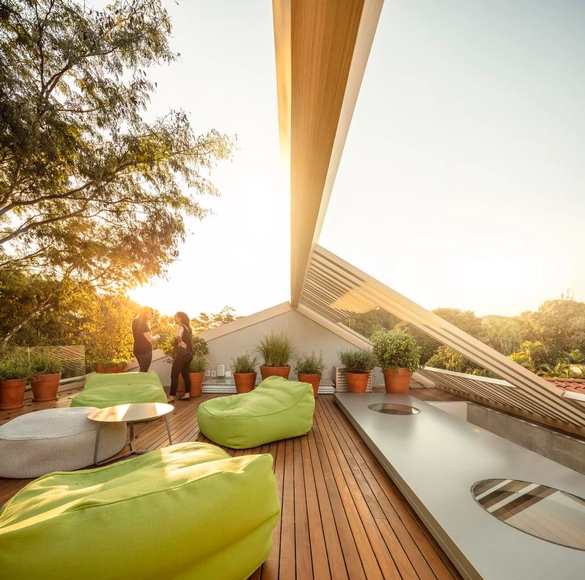
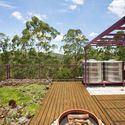
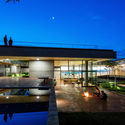
When imagining a building's roof being put to use, single-family homes are rarely the first thing that comes to mind. Utilizing the top level of a building is not always considered or prioritized; as a result, the opportunity to create spaces for contemplation and gathering—which foster a stronger connection to the outdoors and the climate—is often missed. Here, we gather 13 examples of terraces in Brazilian houses that demonstrate how this space can be utilized, regardless of its size.
Last week, Paulo Mendes da Rocha announced the donation of his entire project archive to the Casa da Arquitectura, a Portuguese institution based in Matosinhos dedicated to preserving and exhibiting architectural collections. The news was published at the time by ArchDaily and caused a stir among Brazilian architects, educators, researchers, and institutions—especially the FAUUSP, which expressed regret over Rocha's decision.



.jpg?1597324648 "Cohab © Coletivo Coletores")