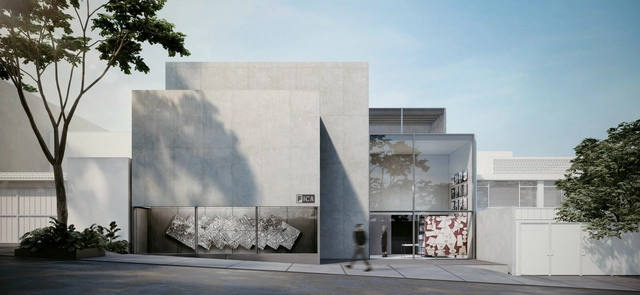
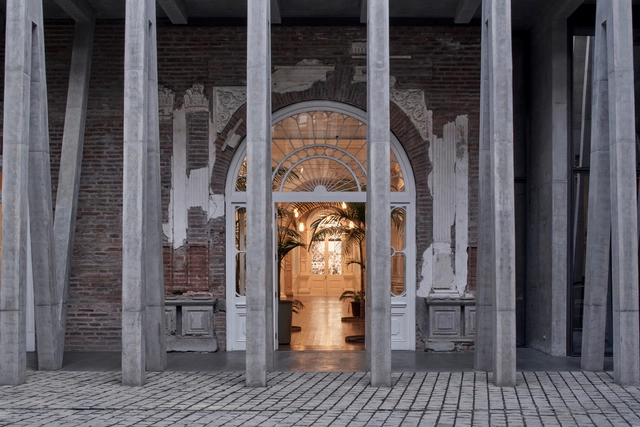
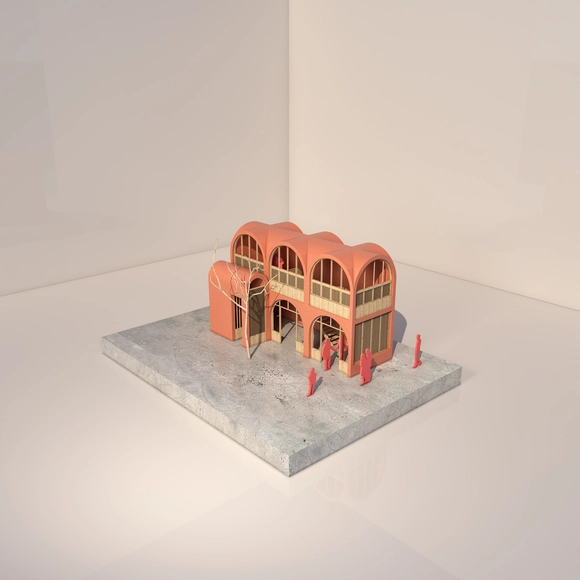
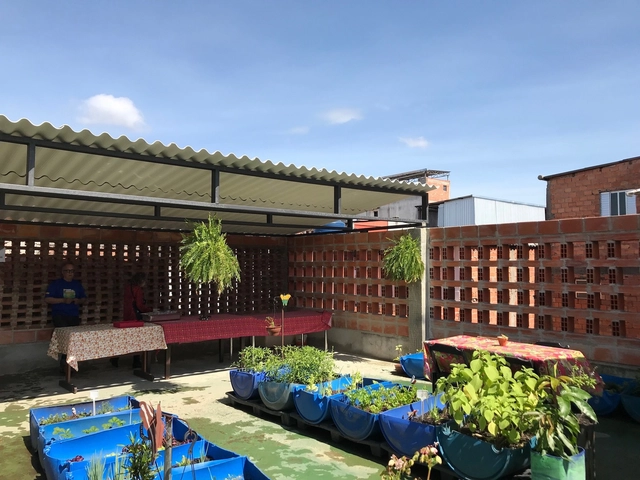
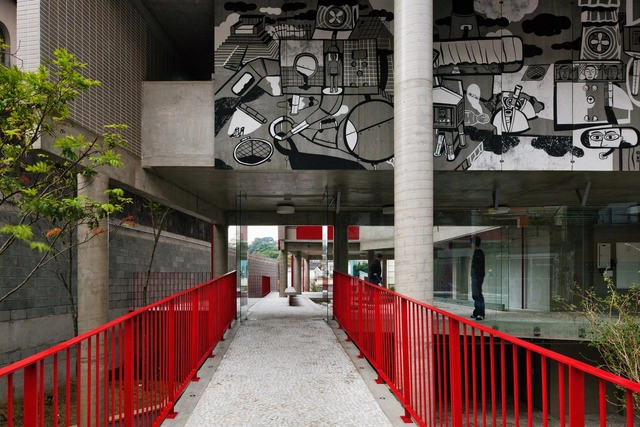
The Fundación ICA presents the initiative to establish the ICA Center for Education, Research, and Training (CENFICA), which will consolidate ICA's historical mission and vision for the professional development of new generations of professionals and the continuous training of its employees. Drawing on academic program experiences and the creation of innovation laboratories for construction and prefabrication processes, ICA promotes CENFICA through Fundación ICA—a non-profit civil association founded in 1986—aiming to expand its institutional outreach across three core areas: Education, Research, and Training.
Videos
One of the floating wind turbines installed in Portuguese waters. Photo: EDP
Between October 31 and November 6, 2023, Portugal produced more than enough renewable energy to meet the entire country's demand. While fossil fuel plants were still operational, the clean energy generated was more than sufficient to supply the grid. Consequently, consumer electricity rates dropped drastically.
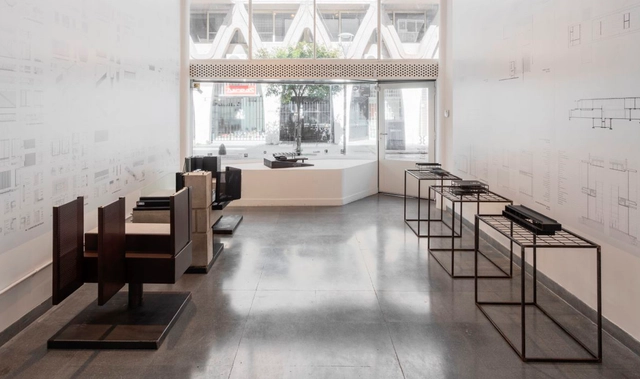
Through January 2024, the exhibition “Sommet: Structure, Precision, and Detail” will be on display at the Bisman Ediciones Architecture Gallery and Residence, located in the “Casa de Estudios para artistas” by Antonio Bonet, Horacio Vera Barros, and Abel López Chas in the heart of downtown Buenos Aires. Through plans and models, Sommet architecture studio showcases work defined by simplicity, understatement, and high construction quality.
What would happen if we abandoned the modern epistemology that separates “us” from “others”? What would art history look like without this restrictive separation? Many other, non-disenchanted worlds coexist with ours. Other cosmopolitics can offer us less exclusionary views of life and relationships, unearthing previously unsuspected futures.
Guilherme Wisnik talks with Renata Marquez, a professor at the UFMG School of Architecture and Design and co-editor of Piseagrama magazine. Holding a PhD in Geography and a postdoc in Anthropology, she researches curatorial practices, theory, and criticism at the intersection of art, architecture, geography, and anthropology.
On November 20 — Black Consciousness Day — the city of São Paulo inaugurated a statue honoring Joaquim Pinto de Oliveira, an enslaved 18th-century Black architect known as Tebas. Located in Praça Clóvis Beviláqua, on the eastern side of Praça da Sé in the city center, the sculpture was designed and developed by visual artist Lumumba Afroindígena and architect Francine Moura.
The work aims to cement Tebas's legacy, showcase his sophisticated technical output for the era, and, above all, provoke reflection on the historical significance of Black territorial presence in the city center, which has been fragmented over the centuries.
The MA Awards, conceived by Mujer ArquitectA, aim to highlight and promote the creations of contemporary women architects in Chile, valuing their contribution to the architectural field. This recognition celebrates the excellence and outstanding contributions of women architects in the field of creation and design. These awards seek to highlight the innovation, unique vision, and exceptional skill of women architects, offering a meaningful space to honor and bring visibility to their valuable impact on the world of architecture.
On Tuesday, December 5, at the AOA (Association of Architectural Offices) auditorium, the following winners were announced.
"The streets think; they have ideas, philosophy, and religion. As such, they are born, they grow, they change character, and, eventually, they die." Drawing from this quote by João do Rio in Alma Encantadora das Ruas, Guilherme Wisnik talks with Luiz Antonio Simas about street cultures through the concepts of terreirização and corporeality, viewing cities as spaces that are daily contested, tensioned, enchanted, and disenchanted.
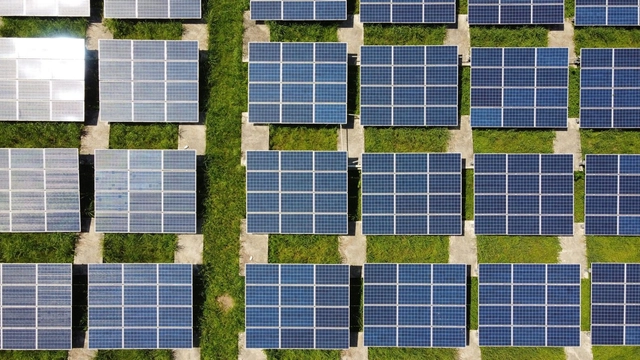
The government of Espírito Santo announced last week the launch of the GERAR Program, which aims to triple investments in distributed solar photovoltaic generation and expand incentives for renewable sources. Supported by the Brazilian Association of Photovoltaic Solar Energy (ABSOLAR), the program demonstrates the state's commitment to its targets for reducing pollutant emissions and combating the climate crisis.
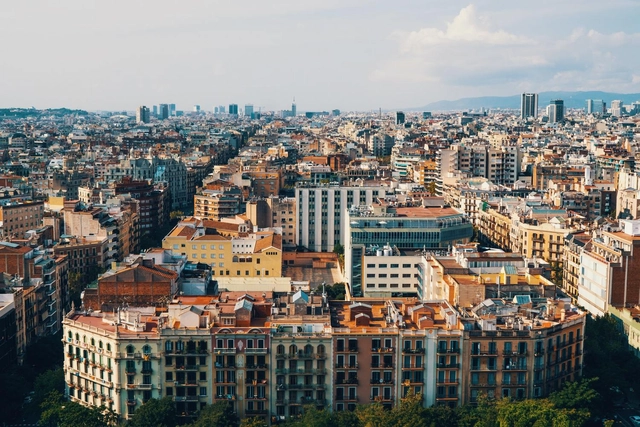
Barcelona, Spain. Photo by Erwan Hesry via Unsplash
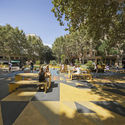
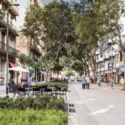
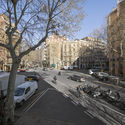
One in three streets in the city center of Barcelona will be transformed into a green axis to prioritize pedestrians and cyclists over cars. Along these streets, 21 intersections will be converted into public spaces so that everyone in the area has access to a park less than 200 meters away.
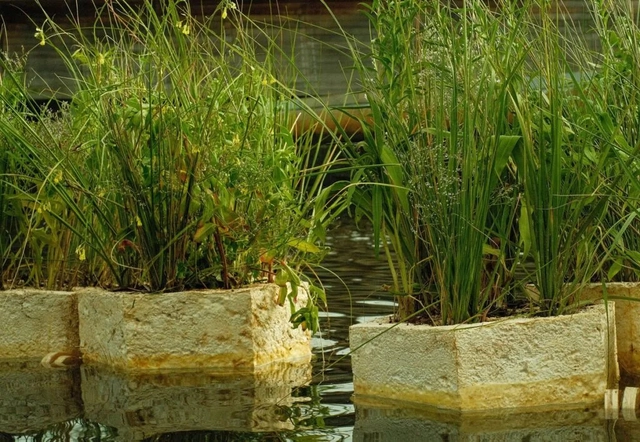
Using plants to filter impurities from lakes and rivers is already a common practice in sustainability. It is an alternative that avoids artificial chemicals in favor of maintaining a balanced ecosystem. Now, students at the Rhode Island School of Design (RISD) have gone a step further, creating floating planters made of mycelium to clean pollutants from waterways while restoring wetland habitats.
The winning project of the Oscar Hagerman Prize International Architecture Competition has been announced. Established in 2017 to honor the career of architect Oscar Hagerman, the biennial competition recognizes social architecture concepts, encouraging participants to utilize regional materials while prioritizing user needs.
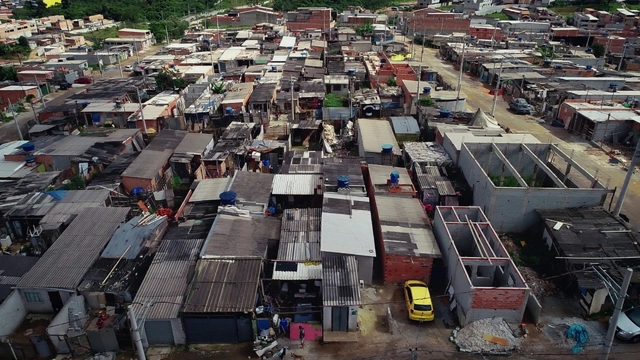
Favelas are an established reality in São Paulo, Brazil, housing more than 10% of the city's population. Within these communities, housing is a critical issue, due to both its inherent social dynamics and the poor environmental quality of indoor spaces—primarily caused by the overexposure of building envelopes to the sun and inefficient openings for ventilation. Against this backdrop, the project develops simple, replicable strategies to retrofit self-built housing based on the local climate.
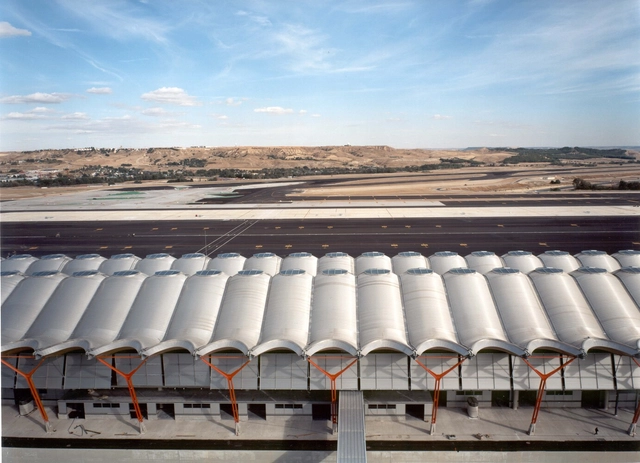
Estudio Lamela and Rogers Stirk Harbour + Partners (RSHP), alongside AYESA Ingeniería, will design the expansion project for terminals T4 and T4S at Adolfo Suárez Madrid-Barajas Airport. In addition to the terminal expansions, the project includes commercial areas, related equipment and furniture, as well as aircraft parking aprons.
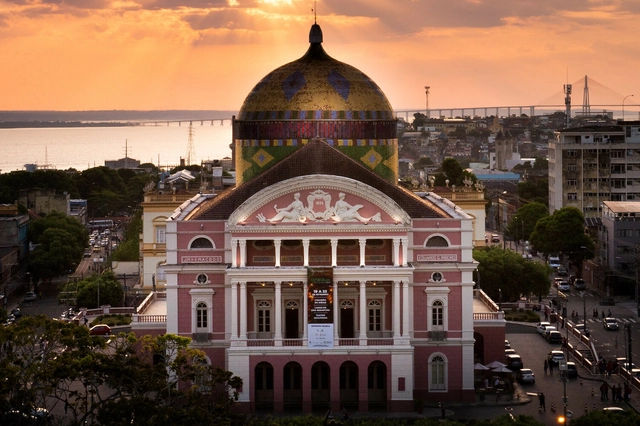
Amazonas Theatre. Photo by Rafael Zart, via Wikipedia. Licensed under CC BY 2.0
Teatro Amazonas in Manaus and Theatro da Paz in Belém could soon achieve recognition as UNESCO World Heritage Sites. The first step toward this distinction for the Amazon theaters will be taken between December 13 and 15, during the first mobilization workshop in Manaus. This event will gather representatives from the governments of Amazonas and Pará, the city halls of Manaus and Belém, civil society, researchers, and the National Institute of Historic and Artistic Heritage (IPHAN).
https://www.archdaily.com/1135873/theatro-da-paz-and-teatro-amazonas-could-become-world-heritage-sites-in-the-coming-yearsArchDaily Team
In a year marked by physical distancing, social media became even more crucial for connecting with others and staying informed. @archdailybr's Instagram expanded its reach, and in 2020, brought our audience not only Brazilian and Portuguese projects, but also the top articles and news from the architectural world.
When designing a building, one of the greatest challenges lies in integrating its base with the street level. To foster a more beneficial relationship with the city, bring "eyes on the street"—as Jane Jacobs put it—or even establish an active facade, architectural professionals employ various solutions.
Prototypes of AuREUS System Technology are already in operation on windows and external structures of buildings in the Philippines. Photo: Dyson Prize | AuREUS System Technology
Photovoltaic panels are increasingly gaining ground as a clean, renewable energy source. However, many of these systems only work under certain conditions—solar panels rely on direct sunlight, and photovoltaic plants are horizontal developments that require large areas.
The solution to these limitations may have been found by a 27-year-old Filipino student. Carvey Ehren Maigue, from Mapua University, developed a system that converts UV radiation into visible light to generate electricity. AuREUS System Technology, as it has been named, is a material that can be applied to pre-existing surfaces or structures.
The Virtual Museum of Art building, the world's first fully digital museum. Photo: Courtesy of VOMA
In a year deeply marked by virtual interactions, a temporary suppression of urban public spaces, and a profusion of digital exhibitions, the Virtual Online Museum of Art (Voma)—the world's first fully virtual art museum—has opened. Set in a context as intangible as its concept–perhaps on the shores of a lake or an inlet, one cannot be sure–the virtual building features a unique architecture, composed of complex, somewhat ambiguous volumes and a simulated materiality reminiscent of pigmented concrete.
The future has always been impossible to predict with absolute certainty. While various films, books, and theories have attempted to decipher it—and many have come close—we continue to be surprised by what actually emerges. Take, for instance, artificial intelligence tools. As we wrap up 2023 and head into 2024, does this dynamic remain the same? Can these tools also drive social change?
During the week celebrating Architects and Urbanists Day, TV Cultura will broadcast the documentary Social Housing: A Matter of Public Health. Premiering on national television, the production shows how the COVID-19 pandemic laid bare the country's chronic social housing crisis to all of society. Directed by Paulo Markun and Marcelo Amiky and hosted by Adriana Couto, the mid-length film will air this Wednesday (12/16) at 10:45 PM.
Today is National Architect and Urban Planner Day in Brazil. Since 2018, Law 13,627/2018 has officially established this date on the Brazilian calendar. The day was chosen to honor architect Oscar Niemeyer on his birthday, and also commemorates the founding of the Council of Architecture and Urbanism (CAU).
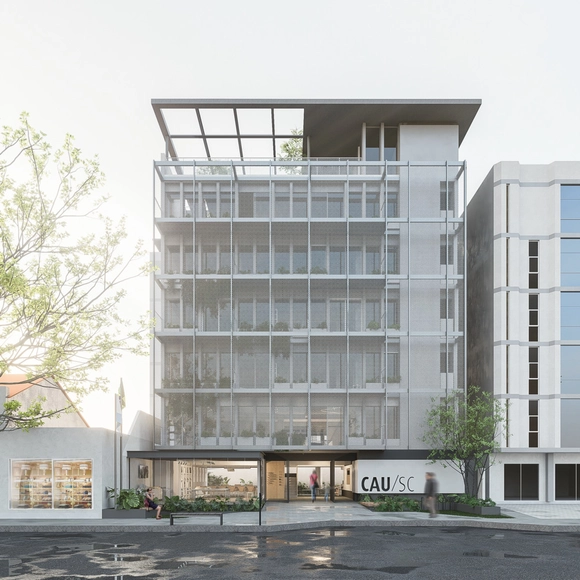
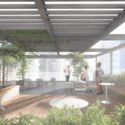
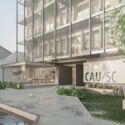
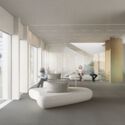
The firm Bloco B arquitetura, led by architects Júlia De Fáveri, Camilla Ghisleni, and Gabriela Fávero, was awarded second place in the competition for the renovation of the CAU/SC headquarters building. The competition sought solutions for the building's primary areas, such as the atrium, reception, and facade, in an effort by the Council to "welcome all architects and urban planners, connect with society, engage with the street, and practice the commitment to making the city more human."
https://www.archdaily.com/1135912/bloco-b-arquitetura-takes-second-place-in-the-competition-for-the-renovation-of-the-cau-sc-headquartersArchDaily Team
The IABsp has just registered its new Bylaws, approved by the Superior Council of the IAB (Cosu) in September of this year, enacting the first major statutory restructuring since 1957. The newly effective bylaws were approved during a general assembly of the IABsp in August, with unanimous support from the 80 members in attendance. The changes aim to increase transparency and representation, while streamlining management and governance within the São Paulo department, strengthening its institutional role.
https://www.archdaily.com/1124301/gender-race-transparency-and-governance-in-the-new-bylaws-of-iab-sao-pauloFernando Túlio, Gabriela de Matos, Hannah Machado e Rafael Mielnik
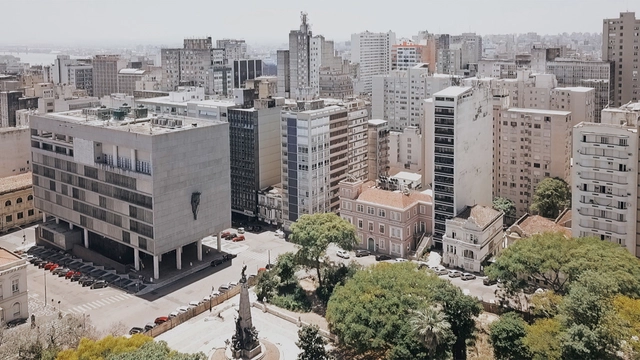
Honoring and reaffirming the importance of Porto Alegre's modernist icons, a new series launched by AsBEA-RS on its YouTube channel invites the public to visit, alongside architects, market experts, and users, six of the most important buildings constructed between the 1950s and 1960s in the state capital.
Faial, Santa Tecla, Santa Cruz, Palácio da Justiça, Centro Administrativo Fernando Ferrari, and Grêmio Náutico União: six projects that shape the skyline and reaffirm the construction quality of fifty-year-old structures, revisiting the legacy and lessons of prominent architects from Rio Grande do Sul for contemporary urban development.