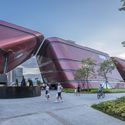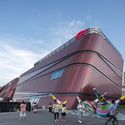
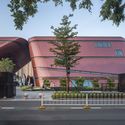
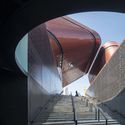
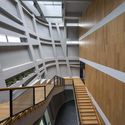

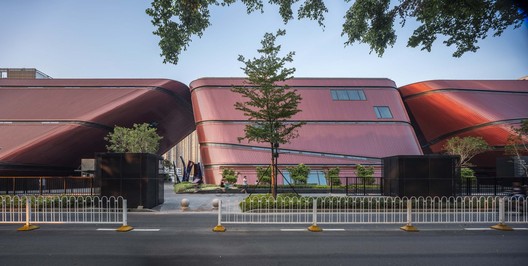
Text description provided by the architects. Shenzhen is a linear, fast-growing megacity, and Longgang, situated within it, is far from the central hub. While Futian, Luohu, and Nanshan districts have been advancing rapidly, Longgang's urban space remained at the level of the 1990s. However, after decades of development, an increasing number of people have settled here to live and work, generating a growing demand for cultural consumption. The area's identity is transitioning from a mere "urban settlement" to a district characterized by "urban culture," which is a promising trend. As a physical spatial response, Longgang in this new era requires a series of bold, progressive comprehensive cultural facilities to replace and upgrade its outdated urban context. Consequently, building four large-scale cultural facilities simultaneously at the same location became crucial for the Longgang district to reshape its positioning as a "sub-center of Shenzhen."