Modular units will house people experiencing homelessness in São Paulo. The project, named Vila Reencontro, was launched in the Bom Retiro neighborhood—though the proposed site is currently being analyzed for potential soil contamination—and is now expanding to Ladeira da Memória Street, near the Anhangabaú Metro station in the city center.
Led by SMADS (Municipal Secretariat of Assistance and Social Development), the initiative provides temporary housing made from shipping containers, functioning as modular metal homes.
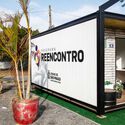


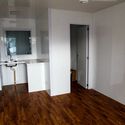

Each 18-square-meter unit features a bedroom, kitchen, and bathroom, accommodating up to four people. The walls and ceilings are made of fire-retardant materials that provide thermal and acoustic insulation.

In Bom Retiro, the plan includes 350 homes. According to Mayor Ricardo Nunes, the site will serve 2,000 meals a day and feature a UBS (Basic Health Unit). The units will occupy a 16,000-square-meter area; however, the site is undergoing soil testing because an asphalt plant previously operated there.
Meanwhile, at the Anhangabaú site, which is municipally owned, the plan is to install 41 modular homes to accommodate up to 160 socially vulnerable people. The project also includes a community kitchen, dining hall, playroom, laundry facility, and community garden, as well as spaces for social assistance services.
The project is inspired by the Housing First model, developed in European countries and the United States, which is based on the principle of ensuring immediate access to housing for people experiencing homelessness.

Eligibility
Priority will be given to families—with or without children—and older adults who have been experiencing homelessness for less than two years.
SMADS will use information from CadÚnico (the Federal Government's family income database) and its own registry data, such as SISRUA, to establish placement criteria for Vila Reencontro.

Existing guidelines dictate that each family can stay in the transitional housing for 12 to 18 months. Additionally, they “must participate in professional training and other social assistance services aimed at gaining autonomy,” SMADS stated in a press release.
Via CicloVivo.
This article was written by Marcia Sousa. The translation is powered by AI.