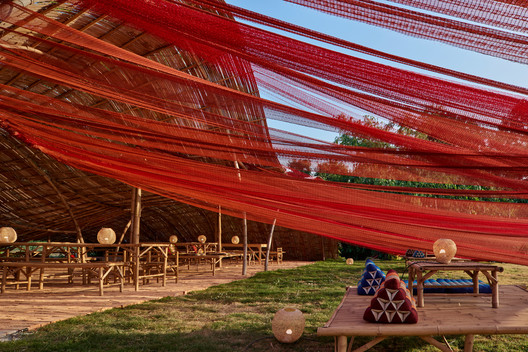
In primitive huts thousands of years ago, humans used animal skins and tree branches to build their shelters—the very same materials used to protect their bodies from the elements. From clothing to housing, these textile elements have accompanied human history, evolving alongside technology and securing a place in architectural production that goes far beyond membrane structures made of polyester/PVC and canvas. Today, they can be seen in other applications such as facade panels, interior partitions, openwork canopies, and more.





From a historical perspective, Gottfried Semper, author of the famous book The Four Elements of Architecture (1989), argues that the principle of cladding in architecture is grounded precisely in textile practices. According to Semper, the wall is an architectural element that materializes the delimitation of interior space and was originally made by weaving plant fibers (a textile principle) before being constructed from other materials. This situation links architecture itself to art, since the use of fabric (as well as clay, wood, and stone) stems from the creation of ornaments, weapons, utensils, and vessels—fields that advanced in material application long before monuments were ever built.


