
Anyone interested in urban policy will likely, at some point, come across the term “compact city.” This expression has become a staple of urban planning. Proposals associated with the concept favor denser development, with commerce and services close to residential areas, encouraging pedestrian, bicycle, and public transit mobility. Some European capitals, such as Copenhagen and Amsterdam, are often pointed to as examples of this model. Its counterpart is the sprawling city, where neighborhoods are predominantly residential, far from downtown, and require long commutes from home to work.




The compact form certainly offers many advantages. The document Compact City Policies: A Comparative Assessment, published by the OECD in 2012, presents several of them. Sprawling cities require infrastructure networks — such as water, power, and sewage — to reach the most distant neighborhoods, generating high costs for the public sector. This distance also makes establishing transit lines difficult. Furthermore, cities do not expand uniformly, making vacant lots within the urban fabric common. Rather than expanding the urban footprint, cities could “grow inward” by utilizing these vacant lots.
The report also suggests that having services and jobs close to home contributes to a better quality of life. In this view, the compact form helps revive urban life, neighborhood interaction, street-level commerce, and well-being in cities. However, this planning paradigm promotes an idealized lifestyle, leaving little room for individual choices that diverge from the model. For instance, the popularity of gated communities indicates that not everyone enjoys living close to the urban bustle.
Reports like the OECD's have been released for decades, influencing public policy worldwide. In Brazil, the City Statute (Estatuto da Cidade) incorporated mechanisms to curb urban sprawl, such as compulsory building construction and progressive property taxes over time. The regulation also dictates that municipalities intending to expand their urban perimeter must draft a specific project enacted by municipal law.

Efforts to contain cities often ignore the need for abundant, affordable urban land. In the vast majority of cities, land is more expensive in higher-density areas. Some cities even establish physical barriers to growth, such as greenbelts. In doing so, they create an artificial scarcity. Advocating for such policies ultimately means advocating for higher urban land prices.
In his book Planet of Cities, Shlomo Angel describes the case of Seoul. In 1971, the government strictly prohibited the expansion of the urban footprint. However, the number of housing units in the city more than doubled between 1970 and 1990, while South Korea's per capita income tripled. As a result, the population was squeezed into increasingly smaller and more expensive properties. Angel points out that land prices in 1989 were 23 times higher than in 1970.
To address the housing crisis, the government built no fewer than five satellite cities around Seoul. Although designed to be self-sufficient, these cities remain closely tied to the capital's job market to this day.
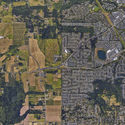
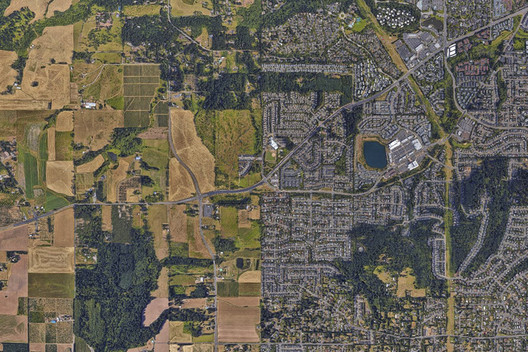
Another notable case is Portland, Oregon. Like Seoul, the city established an urban growth boundary in the 1970s. Satellite tracking shows that infill development did indeed occur within the urbanized area. However, Angel demonstrates that this urban infill also took place in Houston — a city with no zoning laws and no containment policies. The difference is that, relative to the average income of its residents, a home in Houston is twice as affordable as one in Portland.
The Challenge We Face
According to the United Nations, Brazil will add 29 million people to its cities by 2050. This increase is driven not only by natural population growth but also by migration from the countryside and rural areas. During this same period, the urban population is projected to rise from the current 80% to over 90% of the country's total population.
The Ministry of Regional Development reports that about half of the properties in the country are informal or unregistered. In practice, our cities rely on an informal market to provide affordable housing. Informal land subdivision allows families to purchase a cheap lot and build their homes incrementally. Remarkably, these residents secure housing without access to formal mortgages. Instead, they take on minor debt at building material stores, and construction can be paused during times of financial hardship. Housing built under these conditions also fuels a vast rental market in Brazil's peripheries.
This is not about opposing the compact city, but rather questioning its feasibility. Our cities are far from housing their entire populations in neighborhoods with proper infrastructure. In a country as unequal as Brazil, there will always be people willing to live dozens of miles from their workplaces. When choosing between reducing housing costs or commute times, the former is almost always prioritized. For many families, these outlying areas are the only places that offer viable housing costs.
In 2016, the Atlas of Urban Expansion study compiled a vast amount of global urban data. The research indicates that cities are not becoming more compact, but quite the opposite. On average, population density has declined decade after decade, a trend that has been occurring for at least a century. This global trend has rendered containment efforts largely ineffective. Even Portland, which successfully curbed its urban footprint, has recorded a decline in population density.
In developing nations, significant migration from rural areas to cities is expected, alongside higher population growth than in developed countries. All signs point to these nations facing a massive expansion of their urban footprints in the coming years. Believing this movement can be stopped risks leaving cities unprepared for it.
The Future of Cities Is Expansion
If urban expansion is inevitable, what can urban planners do? According to Angel, the priority is to secure space for arterial roads and public spaces. Local authorities must secure the land where future roads will run. There is no need to open streets and pave the entire grid immediately; regular monitoring to prevent informal settlements in these corridors is sufficient. In some cases, clearing dirt roads to demarcate the space is desirable.

Prioritizing street layouts is not a new strategy. This approach dates back to the period between the 19th and early 20th centuries, one of the most prolific eras in the history of urban planning. During this time, plans such as Cerdà's in Barcelona and the Commissioners' Plan for Manhattan were created. The defining feature of these plans is that they allowed for the gradual addition of streets as the city expanded. This layout was also a response to technologies that required straighter streets, such as horse-drawn and steam-powered streetcars. Cities like Buenos Aires and Chicago, which grew around transit tracks, still reap the benefits of an orthogonal urban grid today.
While some Brazilian metropolises already have extensive road networks, much of this growth will occur far from major urban centers. According to the IBGE, the highest proportion of municipalities growing at over 1% annually is in the 100,000 to one million inhabitant range, whereas cities with over one million inhabitants experience growth between 0% and 1% per year. This presents a massive opportunity to plan the future of Brazilian cities. Barcelona and New York were not large cities when they mapped out their grids; establishing a street grid early on allowed these cities to achieve a high standard of urban quality.
Mapping out arterial roads does not mean adopting a compact-city planning model. Toronto, Canada, grew over a road grid built in the 19th century. These avenues define large plots that can be subdivided internally as needed. This type of solution combines local-scale design diversity with city-wide arterial road alignment.

While this street planning approach might seem rigid, the compact city is hardly spontaneous either. As Michael Neuman states in his article The Compact City Fallacy, restricting urban form is only possible under heavy regulation. This is perhaps the greatest paradox of the compact city: under the guise of fostering a utopian relationship between people and the city, it imposes an artificial form that leaves little room for experimentation. Intervening in a city without identifying where the demand for land, housing, and jobs lies is counterproductive. Regulations and guidelines are necessary, but an excess of them hinders the observation of these dynamics. Ultimately, urban evolution is sacrificed for the sake of a city ideal.
The history of urban planning is filled with theories that are, paradoxal, anti-urban. Despite its merits, the compact city seems to have joined the ranks of proposals aimed at disciplining our cities. Fear of uncontrolled sprawl is no reason to resist growth vectors that could prove beneficial. Perhaps the greatest challenge in planning is understanding where the urban planner's work ends and where the city should be left to its residents.
Via Caos Planejado.
This article was written by André Sette. The translation is powered by AI.

