André Sette

BROWSE ALL FROM THIS AUTHOR HERE

The Line: Linear Cities Make Absolutely No Sense

Subscriber Access | 

In recent months, the internet has been flooded with videos of the Middle East's new futuristic wonder: Neom, or The Line, a planned city commissioned by the Saudi Arabian government to rival its neighbors, Dubai and Abu Dhabi. As Henry Grabar writes, the city is a collection of buzzwords like "smart city," "net-zero carbon," and "15-minute city." In a world where images go viral faster than cities can actually be built, these concepts serve as powerful marketing tools. Yet, so far, no explanation has been offered as to how they will actually be implemented.

Minha Casa, Minha Vida is not enough for the housing challenge

Subscriber Access | 

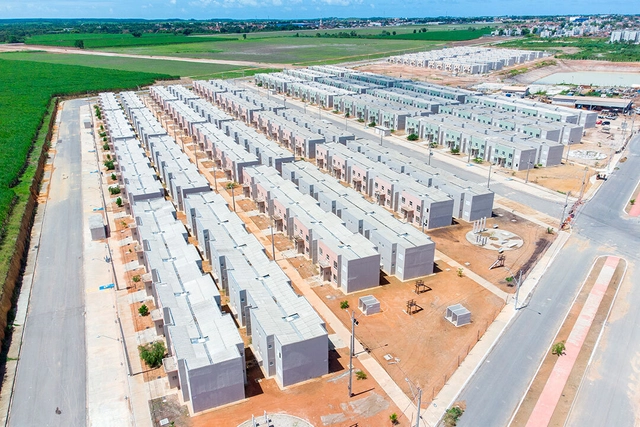
Celso Carvalho's article, recently published in Carta Capital magazine, offers important reflections on the Minha Casa, Minha Vida program, as well as the need to promote changes to its strategy. Carvalho points to the high cost of urban land as an obstacle to providing Social Interest Housing (HIS) in the most valuable neighborhoods of Brazilian cities—the so-called "land knot" (nó da terra). In short, Carvalho argues that the new MCMV should:

The mid-sized cities that scare capitals

Subscriber Access | 

The release of the first data from the 2022 Census caught many by surprise. According to the IBGE, Brazil now has around 203 million inhabitants, a figure below the Institute's projection of 215 million. Another striking data point was the growth of midsize cities (100,000 to 499,000 inhabitants), which gained 8.3 million residents. Given that the country's population grew by 12 million since the 2010 Census, these cities account for more than two-thirds of that increase. 

The mid-sized cities that scare capitals - Imagen 1 de 4The mid-sized cities that scare capitals - Imagen 2 de 4The mid-sized cities that scare capitals - Imagen 3 de 4The mid-sized cities that scare capitals - Imagen 4 de 4The mid-sized cities that scare capitals - More Images+ 5

Vienna: An Extraordinary Social Housing Policy

Subscriber Access | 

The city of Vienna has a highly praised housing policy. While it certainly has many merits, it is not necessarily perfect. In fact, Vienna's housing policy has taken a different path than other European cities, sparking interest among those who study the subject. In this episode of the Housing Voice podcast, produced by UCLA, Justin Kadi presents several features that make the Austrian capital a unique case. The episode also provides a series of academic articles for anyone wishing to delve deeper into the subject.

Vienna: An Extraordinary Social Housing Policy - Imagem 1 de 4Vienna: An Extraordinary Social Housing Policy - Imagem 2 de 4Vienna: An Extraordinary Social Housing Policy - Imagem 3 de 4Vienna: An Extraordinary Social Housing Policy - Imagem 4 de 4Vienna: An Extraordinary Social Housing Policy - More Images+ 1

Decentralizing São Paulo: A Difficult Promise to Keep

Subscriber Access | 

São Paulo is immense and full of challenges. With twelve million inhabitants, Latin America's largest city struggles to provide a good quality of life for its residents. Traffic congestion is relentless. Public transit is still far from ideal. The Expanded Center concentrates a volume of jobs disproportionate to its population. Unsurprisingly, the daily commute is one of the main complaints of paulistanos.

Decentralizing São Paulo: A Difficult Promise to Keep - 1 的图像 4Decentralizing São Paulo: A Difficult Promise to Keep - 2 的图像 4Decentralizing São Paulo: A Difficult Promise to Keep - 3 的图像 4Decentralizing São Paulo: A Difficult Promise to Keep - 4 的图像 4Decentralizing São Paulo: A Difficult Promise to Keep - More Images+ 5

Does the ideal of the compact city still make sense?

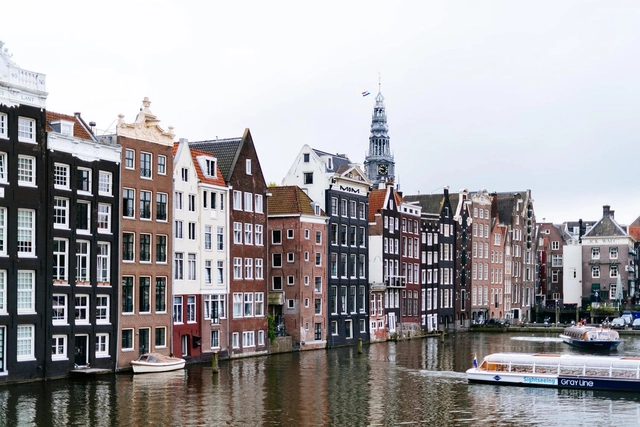
Anyone interested in urban policy will likely, at some point, come across the term “compact city.” This expression has become a staple of urban planning. Proposals associated with the concept favor denser development, with commerce and services close to residential areas, encouraging pedestrian, bicycle, and public transit mobility. Some European capitals, such as Copenhagen and Amsterdam, are often pointed to as examples of this model. Its counterpart is the sprawling city, where neighborhoods are predominantly residential, far from downtown, and require long commutes from home to work.

Does the ideal of the compact city still make sense? - Image 1 of 4Does the ideal of the compact city still make sense? - Image 2 of 4Does the ideal of the compact city still make sense? - Image 3 of 4Does the ideal of the compact city still make sense? - Image 4 of 4Does the ideal of the compact city still make sense? - More Images

Amazon and the Return of “Starchitecture”

Subscriber Access | 

While the corporate world debates remote work, Amazon has decided to double down on physical offices. Earlier this year, the company announced plans for its new headquarters in Arlington, Virginia. The building complex will be anchored by a spiraling structure more than 100 meters tall, dubbed the Helix. In addition to 260,000 square meters of office space, there will also be 10,000 square meters of public space, including an amphitheater, a market, restaurants, and plazas. The choice of location, in the heart of the Washington, D.C. metropolitan area, stands in contrast to companies like Apple and Facebook, which built their closed-off headquarters in the suburbs.

Amazon and the Return of “Starchitecture” - Imagen 1 de 4Amazon and the Return of “Starchitecture” - Imagen 2 de 4Amazon and the Return of “Starchitecture” - Imagen 3 de 4Amazon and the Return of “Starchitecture” - Imagen 4 de 4Amazon and the Return of “Starchitecture” - More Images

Upward, inward, or outward: how do cities grow?

Subscriber Access | 

Nothing represents this change better than the habitat humanity has created for itself. The generation before Toffler knew an eminently rural world, of humans bound to the land, born and dying within their communities. The generation yet to be born will inherit an already urbanized, hyper-connected world, characterized by extreme mobility between cities and countries. We, who live today, have both the privilege and the responsibility of watching this urban phenomenon reshape the face of the planet.

Half a century ago, when Future Shock was published, just over a third of the world's population lived in cities. Today that figure stands at 55%, a share projected to rise to 70% by 2050. Nearly 90% of this growth will occur in Africa and Asia. The number of people living in informal settlements has already reached one billion worldwide, and the UN estimates that, by 2030, about three billion people will need adequate housing.

Does building more buildings make the city more expensive?

Subscriber Access | 

What do you think about building more highways to reduce traffic congestion? If you follow the debate on urban policy, you probably already have the answer on the tip of your tongue: building more lanes doesn't improve traffic! The more highways, the more cars!

Building roads encourages more people to drive. With more paved lanes at their disposal, more people are willing to swap public transit for the convenience of a personal car. Residents might seek housing further away, assuming they can quickly drive to work.