
The Romano Guerra Editora and the Instituto Tomie Ohtake are launching a new book on the work of Ruy Ohtake, exploring aspects of the architect's career that have received little attention in previous publications. According to editors Abilio Guerra and Silvana Romano Santos, “the nine previous monograph publications lacked consistent technical drawings. Unrestricted access to the architect's archives, however, made it possible to analyze and present the complexity of the designs.”
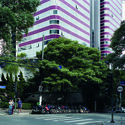
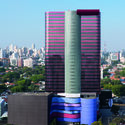
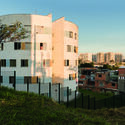
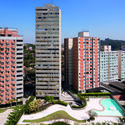

The new book is structured around conceptual themes divided into three chapters: “Morar na praça” (Living in the Square), with text by Ruth Verde Zein and photographs by Nelson Kon, which examines small-scale buildings, particularly residences; “O desenho, a cor e a cidade segundo Ruy Ohtake” (Design, Color, and the City According to Ruy Ohtake), with text by Luís Antônio Jorge and photographs by Tatewaki Nio, focusing on high-rise buildings that house various programs – residential, cultural, services, etc. – and the use of color as a fundamental element; and “Ruy Ohtake: a arquitetura como paisagem” (Ruy Ohtake: Architecture as Landscape), with text by José Tabacow and photographs by Antonio Saggese – covering urban-scale projects with urban planning, landscape, ecological, and infrastructural focuses. Each chapter features three contemporary photo essays and extensive visual documentation of the projects across all three scales.

Born in São Paulo in 1938, Ruy Ohtake was the son of the visual artist Tomie Ohtake and graduated in architecture from FAU USP in 1960. The recipient of 25 awards, he received the Gold Collar from the Institute of Architects of Brazil – IAB (2007). He was named Professor Emeritus by the Faculty of Architecture of Santos and received an Honorary Doctorate (Doctor Honoris Causa) from Braz Cubas University. Among hundreds of lectures delivered worldwide, he was part of the select group of architects invited to the 20th Congress of the International Union of Architects (1999) to deliver one of the keynote addresses in Beijing, alongside Jean Nouvel and Tadao Ando. During the 60th-anniversary celebrations of FAU USP in 2008, he was the guest architect invited to hold an exhibition in the main hall designed by modern master Vilanova Artigas.

With hundreds of designs to his credit, Ohtake began his career with small-scale works before moving on to more complex programs, several of which have become landmark structures in São Paulo – such as the Instituto Tomie Ohtake and the Unique and Renaissance hotels –, as well as major infrastructure projects and public and private facilities for various cities – the Tietê Ecological Park, Expresso Tiradentes, and the Heliópolis Residential Complex and Educational Hub in São Paulo; the Indaiatuba Ecological Park; the Pantanal Aquarium in Campo Grande; Brasília Shopping in Brasília; the Walmir Campelo Bezerra Stadium in Gama; and the Brazilian Embassy in Tokyo. While his work has been widely featured in magazines and books, there has not yet been an unbiased, in-depth critical assessment that places his body of work in its rightful position within the history of Brazilian architecture. The primary goal of this cultural project is to fulfill this objective.

The virtual launch is scheduled for August, featuring the architect Ruy Ohtake alongside the editors and the authors of the book's critical and photographic essays. For more information, visit the Romano Guerra Editora website.
This article was written by Romullo Baratto. The translation is powered by AI.


