The Tecelagem Parahyba and Fazenda Santana do Rio Abaixo complex in São José dos Campos, São Paulo, is the newest monument to be permanently listed as Brazilian Cultural Heritage. The unanimous decision was made on the 10th of this month during the 98th Meeting of the Cultural Heritage Advisory Council, a body of the National Institute of Historic and Artistic Heritage (Iphan). The complex had already been provisionally listed by the agency and is now permanently protected.
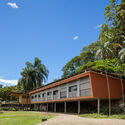
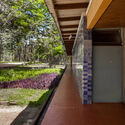
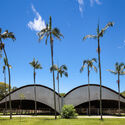
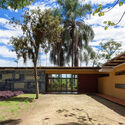


The Council recommended that the complex be inscribed in the following Iphan Registry Books (a federal agency linked to the Special Secretariat for Culture and the Ministry of Tourism): the Historical Registry Book; the Archaeological, Ethnographic, and Landscape Registry Book; and that part of the preserved collection be inscribed in the Fine Arts Registry Book. Due to the heritage listing, any interventions on the buildings must be authorized by the Institute.

Founded in 1925, it was the first textile factory established in the municipality of São José dos Campos, São Paulo. Tecelagem Parahyba gained national prominence for its production of blankets and throws. The industrial complex houses a collection of modernist buildings, including works by the office of architect Rino Levi, who designed the residence of the Olívio Gomes family, the company's owners.
The textile complex also features gardens designed by landscape architect Roberto Burle Marx. Characterized by the seamless integration of architecture and landscape, they bring aesthetic and environmental quality to an industrial activity historically associated with unhealthy, smoky environments. The site represents architectural concepts from different phases of 20th-century industrialization in São Paulo, referencing the 1922 Modern Art Week and the cultural movements of the era that valued a national-popular sense of culture.

In addition to the site's importance to the history of modernism, Tecelagem Parahyba is also considered a milestone in Brazil's industrialization process. — Larissa Peixoto, president of Iphan
Initially, the construction was inspired by English models, featuring characteristics such as exposed brick factories, sawtooth roofs that maximize natural light and ventilation, and an internal layout and organization of warehouses designed around production logic. Over the years, investments were made in buildings that prioritized improving employees' quality of life. In this regard, modern architecture established models that balanced production needs with environmental conditions for workers.
Heritage Listing
According to Decree-Law No. 25 of 1937, properties listed by Iphan cannot be “destroyed, demolished, or defaced.” Prior authorization from the Institute is also required for interventions such as repairs, painting, or restoration. Furthermore, without Iphan's approval, no construction may be built that obstructs the visibility of the listed property, nor can posters or advertisements be installed nearby. According to the decree, Brazilian Cultural Heritage comprises assets whose preservation is in the public interest, either due to their connection to significant events in the country's history or because of their archaeological, ethnographic, bibliographic, or artistic value.

Via Iphan.
This article was written by Iphan. The translation is powered by AI.