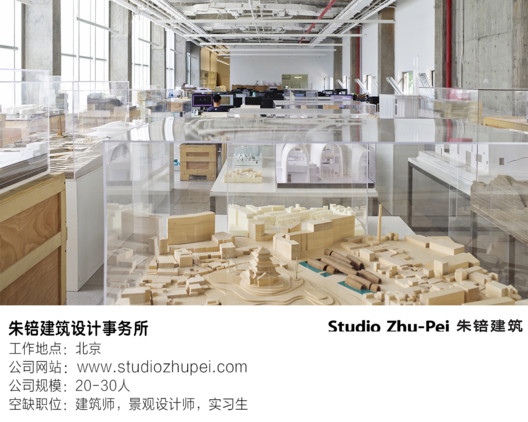
Studio Zhu-Pei was founded in Beijing in 2005 by Zhu Pei. The practice has consistently focused on the exploration and practice of cultural architecture, driven by an artistic and experimental creative ethos. To date, the studio has completed 18 art museums and cultural projects, with another 17 currently under construction or in the design phase. Design Philosophy: "Nature Architecture" is neither landscape architecture nor green architecture. Rather than referring to nature in a narrow sense, it represents a natural attitude—an exploration of the natural tectonic laws behind architecture. It seeks to uncover the sensory roots defined by one's own culture, establishing a deep-seated connection between architecture and local culture, geography, and climate.
About the Studio
Studio Zhu-Pei was founded in Beijing in 2005 by Zhu Pei, a renowned contemporary architect, Dean and Professor of the School of Architecture at the Central Academy of Fine Arts (CAFA), visiting professor at Harvard University and Columbia University, and an Honorary Fellow of the American Institute of Architects (Hon. FAIA). Over the past 16 years, the studio has dedicated itself to the exploration and practice of cultural architecture, maintaining an artistic and experimental attitude. Its portfolio includes 18 completed art museums and cultural projects, and 17 currently under design or construction. Key projects include the Jingdezhen Imperial Kiln Museum, Shouxian Cultural Art Center, Yang Liping Performing Arts Center in Dali, OCT Art Center in Zibo, 798CUBE Art Center, Beijing Minsheng Art Museum, Jiangdong Catholic Church in Ningbo, Dali Art Museum, Jingjiang Cultural Center, Beijing Imperial Ancestral Temple Art Museum, and the Baiyang Prehistoric Museum in Dali. Commissioned by the Guggenheim Foundation to design the Guggenheim Abu Dhabi and the Guggenheim Beijing, Studio Zhu-Pei joined the ranks of world-renowned practices such as Frank Lloyd Wright, Frank Gehry, and Zaha Hadid in designing for the Guggenheim.


