Cities around the world are welcoming the colors and benefits of murals painted with photocatalytic paint, which is known for helping to clean the air. The murals are part of the Converse City Forests project, developed by the brand behind the famous All Star sneakers. The goal is to paint more than 14,000 square meters of murals worldwide by the end of this year. Together, they are equivalent to planting approximately 40,000 trees.



Photocatalytic paint technology uses light energy to break down harmful air pollutants, converting them into harmless substances. Any surface coated with this paint becomes an active air-purifying surface, helping to protect people from harmful gases. The paint essentially acts as trees in areas where they cannot grow.
São Paulo
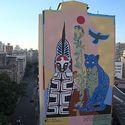
São Paulo is among the cities participating in the project. The local mural was designed by artist Rimon Guimarães and is located near the Minhocão elevated highway in the city center. This high-traffic area with heavy pedestrian and vehicle flow was specifically chosen to maximize the paint's technological impact.

The Brazilian mural is part of the project's second phase, which celebrates Latin heritage, local roots, ancestry, and pride in cities such as Santiago, Lima, and Mexico City. The installation in Brazil will filter the same amount of air as 750 trees.
The Artwork
Titled "Pindorama," the piece is based on research into Brazilian indigenous peoples and the concept of the indigenous imaginary as an individual. "The synergy these peoples have with nature is undeniable. The bird and the jaguar, for instance, are highly symbolic animals to them, such as Kianumaka-Maná, the jaguar goddess of the Menihaku people," the artist says.
The landscape recalls the times when São Paulo was not a concrete jungle and one could see the horizon with mountain ranges in the background, as well as abundant rivers symbolized by shades of blue, with references to the 4 elements: earth, fire as the sun, water represented by blue, and air as a bird. – Rimon Guimarães

Alongside the jaguar, the artwork features a plant and the sun, representing Brazilian fauna and flora. It also illustrates the chemical process of the paint technology—which resembles photosynthesis—and features a genderless character wearing a traditional female Jurupixuna ritual garment, documented in the 18th century by explorer Alexandre R.F. The masked face, meanwhile, blends Rimon's personal style with inspiration from Kayapó and Xikrin face paintings.
The Artist
Born in Curitiba, Rimon is a self-taught, multidisciplinary artist. He has extensive experience creating murals, with his career spanning 27 countries. Wherever he goes, Rimon participates in social projects aimed at community integration.
His largest mural, measuring 370 square meters, is located in Amsterdam. He also created a 260-square-meter piece in Damascus, Syria, with the help of refugee children. For the project in São Paulo, the artist was assisted by a young member of the brand's creative community, known as the All Stars.
Murals Around the World

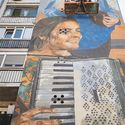
The project's previously completed murals are located in Bangkok, Thailand, and Warsaw, Poland, both created in partnership with local artists. In Bangkok, the illustration was inspired by the theme of unity; since the two collaborating artists had distinct styles, the goal was to blend their aesthetics to represent the unity of the Thai people.

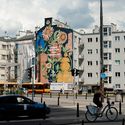
Meanwhile, the mural in Warsaw depicts a future filled with nature blended into an urban backdrop. In total, the two murals are equivalent to 930 trees in areas where they cannot be planted.
Via CicloVivo.
This article was written by Natasha Olsen. The translation is powered by AI.