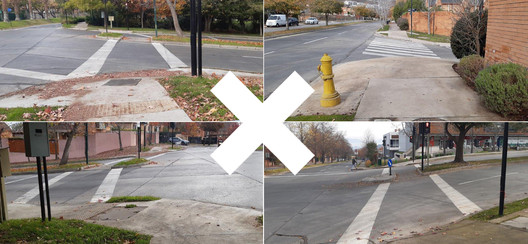
Implementing universal design in built environments is no easy task—especially regarding the minimum requirements for making public spaces accessible and adapting urban intersections (sidewalks, pedestrian crossings, and bike lanes). For this reason, the Corporación Ciudad Accesible has shared its constantly updated article, Accessibility on Sloped Terrain.
Applying universal design to sloped terrain introduces significant accessibility challenges. Accessible routes for pedestrian itineraries must be achieved to the greatest extent possible. If natural slopes exceed feasible parameters, alternative cross-routes must be explored to allow pedestrian movement toward service areas or public transit. This depends on the requirements imposed on future urban developments, prioritizing compliance with universal accessibility standards on roadways and sidewalks over individual project lots.
Road intersections present the greatest conflicts for the different forms of mobility converging in the same area (cars, public transit, bicycles, and pedestrians). In light of Chile's DS50 OGUC decree on universal accessibility and the current hierarchy that prioritizes pedestrians as the most vulnerable road users, urban development practices on sloped terrain must be rethought to ensure safer and more accessible sidewalks.