
_22.21.44.jpg?1556991044 "Santiago Borja, Sri Aurobindo Statue at UNESCO Headquarters, 2018, Paris. © Santiago Borja. Image via Graham Foundation")
_12.27.50.jpg?1556991054 "© Miquel Adriá. Image via Graham Foundation")
_12.28.45.jpg?1556991064 "Frida Escobedo and Xavier, satellite image of Mexico City, 2019. Image via Graham Foundation")

The Graham Foundation has announced 63 new grants to individuals around the world supporting architectural projects. The funded projects represent diverse lines of research with original ideas that advance our understanding of the built environment. Selected from over 500 proposals, the funded projects include exhibitions, publications, films, and performances that promote rigorous scholarship, stimulate experimentation, and foster critical discourse in architecture. These innovative projects are led by both established and emerging architects, artists, curators, filmmakers, historians, and photographers, among other professionals.
In this edition, the list of grantees includes professionals based in various parts of the world, including Mexico. Learn more about the projects below:
Frida Escobedo and Xavier Nueno / An Atlas of Contemporary Mexican Ruins
_12.28.45.jpg?1556991064)
"Since the 1982 economic crisis, Mexican institutions and infrastructure have been meticulously dismantled to accommodate neoliberal interests and investment. As the dismantling of the Mexican state was underway through massive privatizations and successive deregulation laws, a new type of ruin emerged. While archaeological ruins were reorganized during the post-revolutionary period into museums and historic sites to construct Mexico's post-colonial identity, 'designed ruins' have become testament to the ruin of the Mexican nation-state under the close supervision of transnational institutions and corporations. The ruined environments of contemporary Mexico range from the demolition economy and urban speculation that emerged after the 1985 and 2018 earthquakes in Mexico City, to the deregulation of land transport laws in 1989, to the proliferation of mass graves across the country. 'An Atlas of Contemporary Mexican Ruins' aims, through a series of visual and theoretical case studies, to explore the destructive yet productive architectural work of neoliberalism in Mexico."
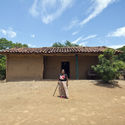
Onnis Luque and Mariana Ordóñez / Typologies: Current State of Traditional Housing in Mexico

"Traditional housing in Mexico is rapidly transforming due to a series of factors, including the urbanization of rural areas, the interruption of the generational transmission of knowledge, government programs that promote and encourage the use of industrialized materials, and public housing policies that dismiss the importance of traditional building systems and the diverse ways in which our country's Indigenous communities inhabit their spaces. This situation leads to the loss of both tangible and intangible architectural heritage, as well as the architectural values that Indigenous peoples have developed over time. In other words, it is not only architectural objects that are at risk, but also the knowledge behind vernacular housing. The goal of this project is to document and analyze the current state of traditional housing in Mexico and its transformation, as well as the territorial adaptations that have emerged in rural areas of the country."
Santiago Borja / Auroville
_22.21.44.jpg?1556991044)
"This research project is based on the unique relationship between UNESCO and Auroville, an esoteric, universalist community founded in India in 1968. Auroville was conceived by Mirra Alfassa, a French woman who followed the teachings of Indian guru Sri Aurobindo and dedicated her life's work to promoting his spiritual philosophy. Auroville is not only the utopian materialization of this belief system—based on models of solidarity, human unity through diversity, and universal well-being where money and other conventional means of commerce and organization were questioned—but also an interesting and unique example of esoterically inspired architecture in relation to ecological sustainability. Through the joint collaboration of the Auroville Earth Institute and the UNESCO Chair of Earthen Architecture, serious efforts have been made to promote earthen construction worldwide, expanding the reach of this belief system beyond the city's boundaries."
Miquel Adriá / On the Necessary Redensification of Housing in Mexico
_12.27.50.jpg?1556991054)
"It is widely understood that a dense and compact city is more efficient than a sprawling one. Cities grow primarily through two mechanisms: they densify or they expand, growing either vertically or horizontally. This project investigates potential social housing alternatives that can offer different solutions for people who lost their homes in Mexico after the 2017 earthquakes. There is a need to generate a pool of ideas and proposals that can be replicated on a large scale. Operating on the premise that urban sprawl has failed, and that land is a city's most valuable and scarce resource, it is essential to manage land for the benefit of society. The projects will be proposed as a first step toward offering real estate market typologies that improve upon the obsolete affordable housing models currently in place. Ultimately, this work may lead to a publication or exhibition."
The new grantees join a global network of individuals and organizations that the Graham Foundation has supported over the past 63 years. Over this period, the Foundation has awarded more than 4,500 grants, becoming one of the most significant funders in the field of architecture.
News via Graham Foundation.
This article was written by Mónica Arellano. The translation is powered by AI.

