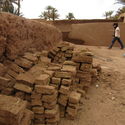
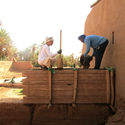
Earthen construction remains highly relevant today, spanning the preservation of architectural heritage, new projects seeking sustainable horizons, and numerous training programs offered by institutes and universities. Yet we cannot overlook one of the major driving forces behind this building material: self-construction. Thanks to its technical advantages and accessibility, communities worldwide have chosen to build their settlements with earth. Consequently, construction becomes a collective exercise where every individual can contribute to shaping a shared future.
In this article, we look at how the NGO Terrachidia works with the community of Mhamid in Morocco to rehabilitate public spaces chosen by local residents. Supported by volunteers, they rescue regional building traditions, successfully preserving and highlighting the local knowledge embedded in places where the pursuit of modernity has led to abandonment, but which remain deeply valued by those who inhabit them.