“You don't have to arrive first, but you have to know how to get there,” goes the song. In architecture, this path is often envisioned as a perfectly straight line, but in reality, it is more of a zigzag with the precision of an electrocardiogram.
Starting a degree, then dropping out, later returning to it; graduating only to travel and see the world; entering competitions relentlessly; crossing the ocean in search of a mentor or a job; following your heart even when the world tells you otherwise. All of these decisions served as the compass for several Argentine architects. Let's look at their first steps below.
Alejandro Bustillo

Thirty-four years before Clorindo Testa, Alejandro Bustillo was born—another great Argentine architect who shared a passion for both architecture and painting.
He began studying architecture, but later dropped out to devote himself to painting. In 1912, he won First Prize at the National Salon of Painting of the Museum of Fine Arts for his self-portrait.
However, he eventually returned to architecture, completing his studies in 1914. During the first six years of his career, he designed country houses and estates. In 1921, he traveled to Europe, where he stayed for two years, establishing contacts that would later become clients.
His highly prolific body of work evolved over time, transitioning from grand academicist residences to his signature regional style.
Jorge Bunge

He graduated with a degree in architecture from the University of Buenos Aires. In 1915, a scholarship allowed him to continue his training in Germany, specifically at the Munich Polytechnic, where he studied both architecture and urban planning. This expertise would later serve him in developing the urban plan for the city of Pinamar.
In Argentina, he worked as an architect and taught Art History at both the Academy of Fine Arts and the Faculty of Philosophy and Letters.
Alberto Prebisch

Born in Tucumán, he graduated from the University of Buenos Aires in 1921. In 1922, he traveled to Europe and spent two years in Paris studying modernist avant-garde movements. Upon his return, he began his most critical phase, writing articles that fiercely criticized the academicism promoted by the National Commission of Fine Arts and the National Salons. With an unwavering faith in modern rationalism, he laid the foundations for a body of work that would later culminate in iconic landmarks like the Gran Rex Theater and the Obelisk, among others.
Fermín Bereterbide
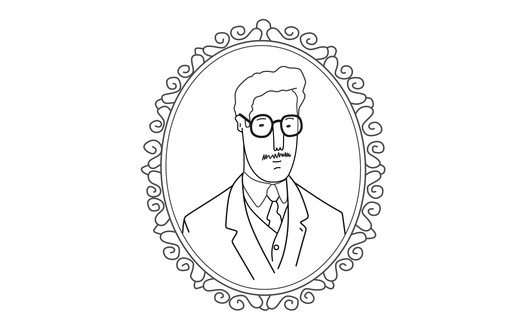
Born in Rosario in the late 1800s, he graduated as an architect from the School of Architecture at the University of Buenos Aires (UBA) in 1918. Unlike his contemporaries, he did not travel to Europe; instead, he focused on design competitions. In 1920, he won a competition to design a social housing project in the Flores neighborhood, which today is known as Mansión Flores due to its exceptional quality.
Later, in 1925, he won another competition to design three housing complexes in the Chacarita, Palermo, and Pompeya neighborhoods. However, only the first was built, known as Barrio-Parque Los Andes. This project reflects a core concern that spanned his entire career: the desire to create first-class, compact, and affordable social housing.
Amancio Williams

The son of Argentine composer Alberto Williams, Amancio was born in Buenos Aires in 1913. Blessed with an inquisitive mind, he began studying at the Faculty of Engineering at the UBA in 1931, but left after three years to pursue aviation. In 1938, he decided to study architecture, researching how scientific knowledge could serve humanity to create more dignified housing and homes. This interest arose as the world was suffering the ravages of World War II, leading Williams to believe that the architect's role was, above all, a social one.
Williams graduated as an architect in 1941, and six years later, he traveled to Europe, where he established a close friendship with Le Corbusier. Ever since, his work has been published and studied worldwide.
Juan Kurchán y Jorge Ferrari Hardoy

Juan Kurchán was born in Buenos Aires in 1913. His colleague, Jorge Ferrari Hardoy, was born a year later. In the late 1930s, they graduated from the School of Architecture at the University of Buenos Aires, where Kurchán was awarded the Gold Medal for academic excellence. They later traveled to Europe to study classical architecture, settling in Paris to work alongside Le Corbusier on the Master Plan for Buenos Aires. It was at his studio that they met architect Antonio Bonet. Given the geopolitical context at the outbreak of World War II, they decided to return to Argentina, where they founded the legendary Grupo Austral.
Mario Roberto Álvarez

A young Álvarez played with scale models. Wood and cardboard were enough to let his imagination run wild, creating ships, planes, and buildings. As he grew up, he decided to channel this passion and become an architect. His inner circle, however, did not think it was a good idea: “You lack connections,” “You don't have rich aunts.” It was 1932, and architecture was widely considered a career reserved for a privileged few. Law or engineering were seen as much “safer” paths.
The young Álvarez believed that to be happy, one had to work in a field they loved; money would not dictate his future. Ignoring the doubters and backed by his parents' support, he pursued his calling.
In 1936, he graduated with a degree in architecture from the University of Buenos Aires, earning the Gold Medal. Thanks to his outstanding academic record, he was awarded a scholarship to continue his studies in Europe. Armed with his newly acquired knowledge, he entered a housing competition and won third place.
Upon his return, he secured a job at the Ministry of Public Works. He worked there for about five years before resigning, finding it contradictory to design French-style buildings when he did not subscribe to that architectural philosophy. Once again, he followed his heart. The rest is history.
Clorindo Testa

Follow in his father's footsteps? “Absolutely not.” Read the story in his own words in this interview with Taller 9, here.
Eduardo Sacriste

He completed his studies in 1931 at the School of Architecture in Buenos Aires, during a period when the spread of modern architecture was shaping most students' perspectives. In 1941, a scholarship enabled him to travel to the United States to study low-cost and prefabricated housing. It was there that he began to explore and reflect on the work of Frank Lloyd Wright, whose design principles championed an architecture deeply rooted in its territory.
Eduardo Catalano

Born in Buenos Aires in 1917, he graduated with an architecture degree from the University of Buenos Aires in 1940. Shortly after, he traveled to the United States to complete his education with master's degrees from the University of Pennsylvania and Harvard University, where he studied the possibilities of structural geometries.
Upon returning to Argentina, he worked as an architect for the Municipality of Buenos Aires. In 1950, faced with a lack of job opportunities in the country, he decided to emigrate to London.
He excelled at adapting to diverse environments, ranging from his involvement with the Institute of Architecture and Urbanism of Tucumán to teaching at the Architectural Association in London, the School of Design at North Carolina State University, and MIT.
This adaptability is also reflected in his works, which range from the Ciudad Universitaria at the University of Buenos Aires to the Floralis Genérica in the Recoleta neighborhood.
This article was written by Mariana Etulain. The translation is powered by AI.