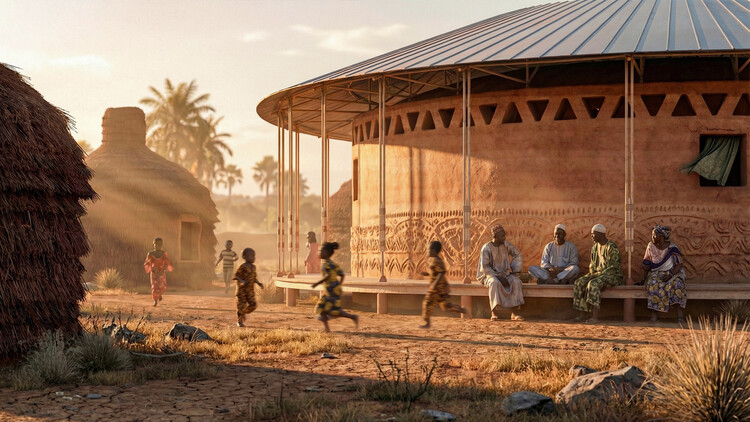
Temporal Sustainable Theatre Finalist Proposal / PM²G Architects
Designed by PM²G Architects…, their inspiration for their finalist proposal in the international competition for the Temporal Sustainable Theatre came up from the cultural and physical aspects of the region where Cardiff is based. The history of the country has been marked
Sports Club / GEO Arquitectos

Architects: GEO Arquitectos
Location: Alcobendas, Madrid, Spain
Architects In Charge: Álvaro Galmés, Arturo Grinda, Miguel Olazábal
Area: 2,570 sqm
Year: 2011
Photographs: Miguel de Guzmán

6970+ Revitalization Project Proposal / Op.N
Proposing a connective and activated public realm for the two blocks of Sixty Nine and Seventy in Salt Lake City, this design by Op.N… focuses on three main strategies: connectivity, activation of open and residual spaces, and extension of use.
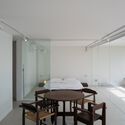
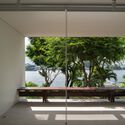
Residence of Daisen / Keisuke Kawaguchi+K2-Design

Architects: Keisuke Kawaguchi+K2-Design
Location: Daisen, Yonago City, Tottori, Japan
Year: 2011
Photographs: Koji Fujii – Nacasa&Partners

‘Redesigning Detroit: A New Vision for an Iconic Site’ Competition Entry / Various Architects
The mission in the proposal, titled ‘The Grand Opening,’ for the Redesigning Detroit: A New Vision for an Iconic Site competition is to create a vision for a 24/7 timeless, vibrant and walk-able urban neighborhood in downtown Detroit with a…
Pritzker Rejects Petition for Denise Scott Brown’s Retroactive Award

The Pritzker Prize has finally released their official statement in response to the petition Harvard graduate students Arielle Assouline-Lichten and Caroline James wrote, proposing that Denise Scott Brown retroactively receive recognition for the Pritzker Prize that her husband, Robert Venturi, won in 1991.
Lord Palumbo, the Chair of The Pritzker Architecture Prize, has responded that this would be impossible due to the way that Pritzker Juries deliberate: “Pritzker juries, over time, are made up of different individuals, each of whom does his or her best to find the most highly qualified candidate. A later jury cannot re-open, or second guess the work of an earlier jury, and none has ever done so.”
The letter goes on to suggest that Ms. Scott Brown is, however, still eligible for a Pritzker of her own; it also thanks Assouline-Lichten and James for “calling directly to our attention a more general problem, namely that of assuring women a fair and equal place within the profession. [...] one particular role that the Pritzker Jury must fulfill, in this respect, is that of keeping in mind the fact that certain recommendations or discussions relating to architectural creation are often a reflection of particular times or places, which may reflect cultural biases that underplay a woman’s role in the creative process. Where this occurs, we must, and we do, take such matters into account.”
Read the full letter, after the break…
Twitterverse responds to Pritzker’s Rejection of Denise Scott Brown Petition
We have rounded up some of the reactions to this afternoon’s news that Denise Scott Brown would not retroactively receive recognition for the Pritzker Prize that her husband, Robert Venturi, won in 1991.
http://t.co/Yjb69OVfHT – Pritzker to Brown: drop dead. The jury was sexist, not us // Future winners should #refuseapritzker
— Cameron Sinclair (@casinclair) June 14, 2013
Are we satisfied? No.
— Alexandra Lange (@LangeAlexandra) June 14, 2013
Venturi won Pritzker in 1991. Jury that year: J. Carter Brown, Gio. Agnelli, Ada Louise Huxtable, Legorreta, Nakamura, Roche, Rothschild
— ChristopherHawthorne (@HawthorneLAT) June 14, 2013
The Pritzker denies a public effort to recognize Denise Scott Brown. She tells me what she thinks of the decision. http://t.co/mNTCtk4wFO
— Carolina A. Miranda (@cmonstah) June 14, 2013
Read more tweets after the break…
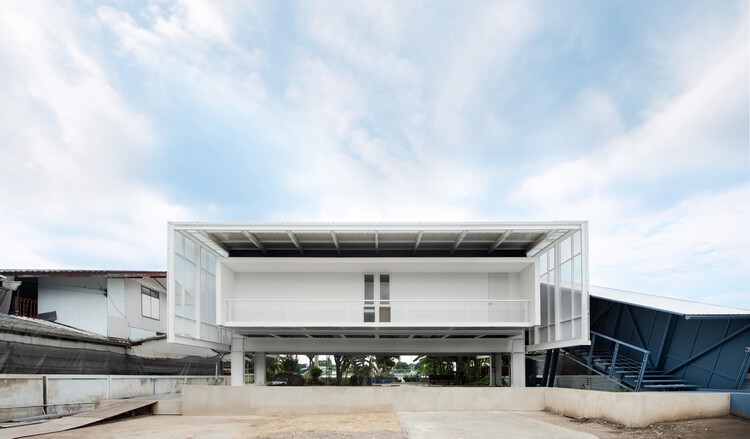
White Lodge / DyerGrimes Architects

Architects: DyerGrimes Architects
Location: Tandridge, England, United Kingdom
Client: Tony and Nicky Maude
Photographs: Courtesy of DyerGrimes Architects
BUS:STOP Krumbach: 7 Architects, 7 Buildings, 7 Statements

BUS:STOP Krumbach is a recently initiated project in the Bregenzerwald region of Austria that will pair seven well-known architecture offices from around the world with seven local architects and allow them to work together on the design of seven new bus shelters in the town of Krumbach. A true collaboration between tradition and innovation, national and international, BUS:STOP hopes to create a series of small and functional buildings with their own unique characters that tell not only the story of these architects, but also of this special region.
For the list of participating offices and to learn more about BUS:STOP, read on.
Peanuts / Uid Architects

Architects: Uid Architects
Location: Hiroshima,Japan
Architect In Charge: Keisuke Maeda
Area: 11874.0 sqm
Year: 2012
Photographs: Hiroshi Ueda, Courtesy of Uid Architects

Critical Distance Kairos Conference
[ June 21, 2013; 19:00 to 21:00. ] Taking place this coming Friday, June 21st, at 7:00pm, the Critical Distance Kairos Conference is a free event presented by the Lisbon Architecture Triennale and Kairos project. Maurício Pezo and Sofía Von Ellrichshausen, with Pedro Gadanho, will host the event which is followed by the…
Peace Pavilion / Atelier Zündel Cristea

Architects: Atelier Zündel Cristea
Location: Museum Gardens, Bethnal Green, London, UK
Constructor: TP Arquitectura i Construccio Tèxtil
Exhibition Period: May/June 2013
Year: 2013
Photographs: Sergio Grazia

Montreal Museum of Fine Arts Pavilion 5 Finalist Proposal / Saucier + Perrotte Architectes
Just as layers of history accumulate through time to offer varying perspectives on culture and environment, Saucier + Perrotte…’s design for the Fifth Pavilion of the Montreal Museum of Fine Arts is composed of a series of mineral strata
Heineken House Mexico / Art Arquitectos

Architects: Art Arquitectos
Location: Ciudad de México, México
Architect In Charge: Antonio Rueda
Collaboration: Ferry A. Tabelling, Menno Rombach
Area: 1,300 sqm
Proyect Year: 2011
Photographs: Paul Czitrom
Name Observatory, Birdwatching Circuit / Mauricio Orlando Rojas Riquelme

Architects: Mauricio Orlando Rojas Riquelme
Location: Cauquenes, Chile
Guide Architect: Gregorio Brugnoli Errázuriz
Area: 78 sqm
Year: 2012
Photographs: Mauricio O. Rojas Riquelme

Taichung Cultural City Center Competition Entry / de Architekten Cie.
The proposal for the Taichung Cultural City Center by de Architekten Cie.… is composed of a well-defined system of voids as the museum and the library are designed as a flexible structure to be able to follow frequent changes in
Zigzag House / Cobaleda & García Arquitectos

Architects: Cobaleda & García Arquitectos
Location: Pozuelo de Alarcón, Madrid, Spain
Architect In Charge: Luciano Cobaleda Hernández y Raúl García García
Structures: José Miguel Melo
Technical Architect: Ramón Chivite García
Area: 400 sqm
Year: 2012
Photography: Courtesy of Cobaleda & García Arquitectos

Craiova Football Stadium Proposal / Proiect Bucuresti
Dedicated to football and designed by Proiect Bucuresti…, the new 40,000-seat Craiova stadium will replace the existing “Ion Oblemenco” stadium on the site in Romania. As a tribute to the Romanian sculptor Constantin Brancusi, the form of the main
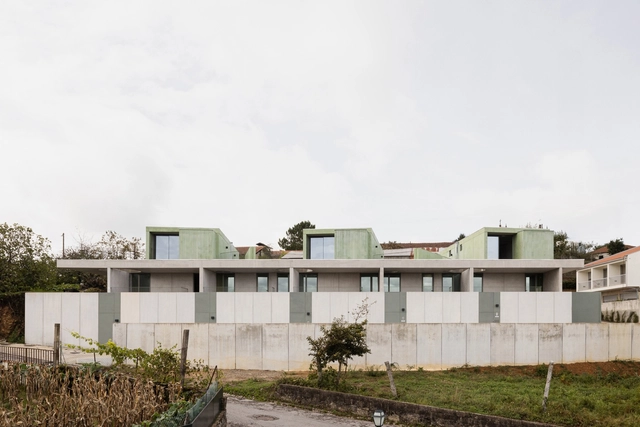
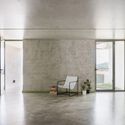
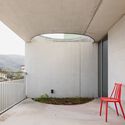
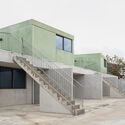
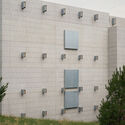
12 Maisons de Ville / Agence Bernard Bühler

Architects: Agence Bernard Bühler
Location: Bordeaux, France
Consulting Engineers: ETBA (Béton) MATH ING. (thermique) EUROVRD (VRD)
Area: 1,080 sqm
Year: 2010
Photographs: Vincent Monthiers, Desiree Castillo
In Progress: Porter School / Axelrod-Grobman Architects + NCArchitects + Geotectura

Architects: Axelrod-Grobman Architects, NCArchitects, Geotectura
Location: Tel Aviv
Area: 3700 sqm
Year: 2013
Photographs: Courtesy of Yossef Cohen and Gilad Adin, Architect Dr. Yasha (Jacob) Grobman and Architect Irit Axelrod from Axelrod-Grobman Architects; Architect Nili Chen and Architect Nir Chen from NCArchitects; and Architect Dr. Joseph (Yossi) Cory from GEOTECTURA, Roy Kroizman, BRAUDE-MAOZ Landscape Architects, Nitzan Hafner and Gilad Adin
Infographic: How Our Cities Are Shaping Us

Architects and city planners are becoming more and more familiar with the health effects of our built environment. This to-the-point infographic, designed by Chris Yoon, cites a few ways in which mid-20th century city planning trends have contributed to a growing obesity problem in the United States. This data has alarmed scientists, planners and city officials into stressing the importance of redesigning the physical spaces so as to encourage physical activity and healthy choices.