

Landscape “artist” Enzo Enea recently completed the Tree Museum in Rapperswil-Jona, Switzerland, right next to the brand new headquarters for Enea Garden Design designed by Miami based Oppenheim Architecture + Design (more on that soon!).

The museum includes 50 different species on the site of a 14th century monastery, some of them 130 years old. These have been collected by Enzo himself for the past 17 years, sometimes rescuing trees threatened by construction or urban expansion. The collection includes over 2,000 species on an adjacent 2.5 acre park.
A delicate landscape work, using a series of local sandstone walls which frame the trees and generate zen like spaces to contemplate the beauty of the “exhibit”.
More photos after the break.
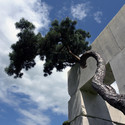
- 18. Pinus sylvestris, also known as Scotch Pine, is part of the Pinaceae family with an origin from Central Europe. With a height of 9.9/11.55 ft., the exhibited Scotch Pine is 50-60 years old / © Enea
- Left: 17. Taxodium distichum, also known as Bald Cypress, is part of the Taxodiaceae family with an origin from Southeastern North America. With a height of 28.05/29.7 ft., the exhibited Bald Cypress is 50-60 years old. Right: 18. Pinus sylvestris, also known as Scotch Pine, is part of the Pinaceae family with an origin from Central Europe. With a height of 9.9/11.55 ft., the exhibited Scotch Pine is 50-60 years old / © Enea
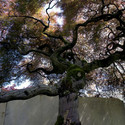
- 11. Acer Plamatum ‘Dissectum Garnet’, also known as Red Japanese Maple, is part of the Aceraceae family with an origin from East Asia. With a height of 6.6/8.25 ft., the exhibited Red Japanese Maple is 130 years old / © Enea
- 18. Pinus sylvestris, also known as Scotch Pine, is part of the Pinaceae family with an origin from Central Europe. With a height of 9.9/11.55 ft., the exhibited Scotch Pine is 50-60 years old / © Enea
- Left: 3. Magnolia soulangeana, also known as Saucer Magnolia, is part of the Magnoliaceae family with an origin from North America. With a height of 18.15/19.9 ft., the exhibited Saucer Magnolia is 70-80 years old. Right: 2. Juniperus communis, also known as Common Juniper, is part of the Cupressaceae family with an origin from Europe, North America and East Asia. With a height of 13.2/14.85 ft., the exhibited Common Juniper is 60-70 years old. / © Enea
- 3. Magnolia soulangeana, also known as Saucer Magnolia, is part of the Magnoliaceae family with an origin from North America. With a height of 18.15/19.9 ft., the exhibited Saucer Magnolia is 70-80 years old / © Enea
- 11. Acer Plamatum ‘Dissectum Garnet’, also known as Red Japanese Maple, is part of the Aceraceae family with an origin from East Asia. With a height of 6.6/8.25 ft., the exhibited Red Japanese Maple is 130 years old. / © Enea
- 28. Cedrus libani, also known as Lebanon Cedar, is part of the Pinaceae family with an origin from West Asia. With a height of TBD ft., the exhibited Linden is TBD years old. / © Enea
- Top: 22. Acer palmatum, also known as Japanese Maple, is part of the Aceraceae family with an origin from East Asia. With a height of 21.45/23.1 ft., the exhibited Japanese Maple is 60 years old. Bottom: 11. Acer Plamatum ‘Dissectum Garnet’, also known as Red Japanese Maple, is part of the Aceraceae family with an origin from East Asia. With a height of 6.6/8.25 ft., the exhibited Red Japanese Maple is 130 years old / © Enea
- Left: 12. Cedrus atlantica ‘Glauca’, also known as Atlas Cedar, is part of the Pinaceae family with an origin from the North African Mountains. With a height of 14.85/16.5 ft., the exhibited Atlas Cedar is 40-50 years old. Medium: 13. Larix kaempferi ‘Diana’, also known as Japanese Larch, is part of the Pinaceae family with an origin from Japan. With a height of 19.8/21.45 ft., the exhibited Japanese Larch is 40-50 years old. Right: 14. Pinus parviflora, also known as Japanese White Pine, is part of the Pinaceae family with an origin from Asia. With a height of 9.9/11.55 ft., the exhibited Japanese White Pine is 112 years old / © Enea
- 21. Rhododendron Catawbiense-Hybrid, also known as Catawba Rhododendron, is part of the Ericaceae family with an origin from East Asia. With a height of 13.2/16.5 ft., the exhibited Catawba Rhododendron is 70-80 years old / © Enea
- Left: 4. Ulmus minor, also known as Field Elm, is part of the Ulmaceae family with an origin from Middle and South Europe. With a height of 8.25 ft., the exhibited Field Elm is 35-40 years old. Middle: 5. Acer japonicum ‘Aconitifolium’, also known as Fullmoon Maple, is part of the Aceraceae family with an origin from Japan. With a height of 18.15/19.8 ft., the exhibited Linden is 40-50 years old. Right: 2. Juniperus communis, also known as Common Juniper, is part of the Cupressaceae family with an origin from Europe, North America and East Asia. With a height of 13.2/14.85 ft., the exhibited Common Juniper is 60-70 years old. / © Enea
- 22. Acer palmatum, also known as Japanese Maple, is part of the Aceraceae family with an origin from East Asia. With a height of 21.45/23.1 ft., the exhibited Japanese Maple is 60 years old / © Enea
- Left: 25. Taxus baccata, also known as Conifer, is part of the Taxaceae family with an origin from Middle Europe. With a height of TBD ft., the exhibited Conifer is TBD years old. Middle: 22. Acer palmatum, also known as Japanese Maple, is part of the Aceraceae family with an origin from East Asia. With a height of 21.45/23.1 ft., the exhibited Japanese Maple is 60 years old. Right: 18. Pinus sylvestris, also known as Scotch Pine, is part of the Pinaceae family with an origin from Central Europe. With a height of 9.9/11.55 ft., the exhibited Scotch Pine is 50-60 years old / © Enea
- Left: 15. Platanus x acerifolia, also known as London Planetree, is part of the Platanaceae family with an origin from North America and Southeast Europe. With a height of 19.02/11.2 ft., the exhibited London Planetree is 80-90 years old. Middle: 25. Taxus baccata, also known as Conifer, is part of the Taxaceae family with an origin from Middle Europe. With a height of TBD ft., the exhibited Conifer is TBD years old. Right: 18. Pinus sylvestris, also known as Scotch Pine, is part of the Pinaceae family with an origin from Central Europe. With a height of 9.9/11.55 ft., the exhibited Scotch Pine is 50-60 years old / © Enea
- Left: 8. Aesculus hippocastanum, also known as Horsechestnut, is part of the Hippocastanaceae family with an origin from Southeast Europe. With a height of 14.85 ft., the exhibited Linden is 100-110 years old. Right: 7. Ginkgo biloba, also known as Maidenhair Tree, is part of the Ginkgoaceae family with an origin from China. With a height of 18.15/19.8 ft., the exhibited Maidenhair Tree is 30-40 years old. / © Martin Rütschi
- 11. Acer Plamatum ‘Dissectum Garnet’, also known as Red Japanese Maple, is part of the Aceraceae family with an origin from East Asia. With a height of 6.6/8.25 ft., the exhibited Red Japanese Maple is 130 years old. / © Martin Rütschi
- Left: 10. Malus toringo sargentii ‘Tina’, also known as Sargent Crabapple ‘Tina’, is part of the Rosaceae family with a variety in its origin. With a height of 6.6/8.25 ft., the exhibited Sargent Crabapple is 60-70 years old. Right: 9. Parrotia persica, also known as Persian Ironwood, is part of the Hamamelidaceae family with an origin from North Persia. With a height of 13.2/14.85 ft., the exhibited Persian Ironwood is 60-70 years old. / © Martin Rütschi
- © Enea
- © Enea
- © Enea


plans? section? details?
very nice
I love how the mineral “enlights” (maybe not the exact term) the vegetal, and respectfully the opposite.
Very relaxing sights.
Love it
形式感很強烈~~
Yes, the ~~ is hard to put into words, but it is definitely there.
This site is in English, many of us (myself included), do not have English as our native tongue, we make an effort to post in English, so will you NOT post in Chinese, please?
Don’t be such a bully. Use Google translator if you really care that much
It’s a question of manners, si no entiendes eso, pues que rudimentaria tu tu manera de pensar, además de que no sabes utilizar la palabra bully en su significado correcto, ignorante.
love the trees
They took all the trees
Put ‘em in a tree museum
And they charged the people
A dollar and a half just to see ‘em
Don’t it always seem to go
That you don’t know what you’ve got
Till it’s gone
They paved paradise
And put up a parking lot
Joni Mitchell
nevertheless it seems to be a beautiful place!
don’t like it. It’s just average, not bad, but not special. It doesn’t give anything to the trees (nothing for me).
The blocks are too heavy and with all the holes and hangovers trying to be poetical. But it’s fake. Poetical isn’t achieved with some cuts into the stone. Only snobbish emotion.
That’s only my opinion which is the one and the only.
I agree with what Zig says: It doesn’t do anything for me either – because the trees would be more special, i.e. more natural in their own element (nature). The photos, however, always look good. It’s just that you get a very different feel when you are there, for some reason. I think it was a good idea, and wonderful that he rescued these trees, but I am thinking it would have been more beautiful to view them in a more natural and harmonious landscape. The fact that he charges CHF 15 entrance fee AND you can’t even picnic around the trees does not make it any better…
I visited the park while it was still under construction, last year, and found it nice; at least, I could get to know some new tree species, aside the few that are used in standard “civic architecture” around the Country. I don’t remember paying an entrance fee, but maybe we were just lucky to come by during the last days of work.
Excellent web site. A lot of useful info here. I?m sending it to some buddies ans additionally sharing in delicious. And of course, thank you on your effort!
very nice