For more than 80 years, plastics have been improving the performance and durability of nearly everything we buy, and build, with their remarkable properties. Take, for example, this video we dug up on YouTube. Disney’s “Monsanto House of the Future” featuring “plastics used boldly, creatively as building materials.”
It was just 50 years ago we were idealizing about a world full of plastic, as pointed out in the video:
“Is everything plastic?”, the narrator asks. “Almost! Dishes, cups, counter tops, walls, floors, ceilings, tabletops, shelves and cabinets. Plastics in all their colorful, functional, and beautiful versatility have transformed their work area, stepped it years ahead.”
And, in his book Maps to Anywhere, Bernard Cooper explains the allure of that seemingly magical world of plastics:
“It was the permanence, the durability of plastic that made the Monsanto house a marvel. The wings, it was said, would never sag. The plastic floor would never buckle, chip, or crack. At the time, 30 percent of Monsanto’s business was in plastics, synthetic resins, and surface coatings.” (hat tip to Lloyd Alter at Treehugger)
Some of that video was, in fact, accurate. Today it is hard to imagine a world without plastics! In the ideal world portrayed in the video, however, no one seems to pick up on the price that we would eventually pay. We’re beginning to see these consequences more and more; in the press, blogosphere and, of most concern, in our natural environment and human bodies. The idea of “better living through chemistry” failed to take into account the harmful effects those very chemicals would later have on our health.

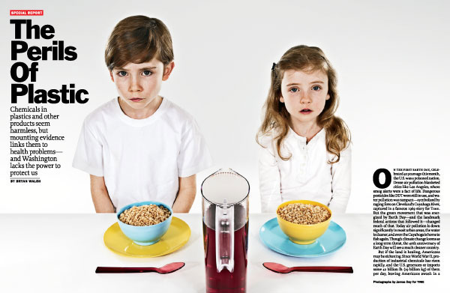
You may remember this Time Magazine article published in April, “The Peril of Plastics”. With plastics everywhere, including the controversial BPA (a synthetic estrogen), Time states “if you don’t have it in your body, you’re not living in the modern world”. Was this the modern world (the ‘future’) that the Monsanto house envisioned?
And so, in hindsight, perhaps we should have explored alternatives. Somewhere along the line, though, we parted ways with nature, favoring the path to a manufactured future – one with indestructible materials, even after we would decide we had no use for those materials any longer.
But where has industry been in the return to nature? Just as the video states, “a revolution has quietly been taking place in homes”, we now need a revolution to explore the future of plastics as a sustainable building material – only this time, maybe we shouldn’t be so quiet.
That’s why we’re happy to see companies like Interface, Steelcase, Herman Miller, and Construction Specialties (C/S) stepping up to the plate. Led by leading green thinkers like William McDonough, of MBDC and founder of the Cradle to Cradle design process, these companies are leading the way into a world that is truly better, not just less bad (as seen with so many green marketing efforts). Unfortunately this revolution won’t happen with just a quick fix.


At the recent AIA 2010 Convention in Miami (appropriately themed “Design for the New Decade”), we had the opportunity to catch up with Construction Specialties and learn a little more about its new line of interior wall protection products. You’ve likely seen Acrovyn before (see images below) – it’s in tens of thousands of hospitals, airports, and schools in North America. It’s one product you might not think about as you walk through those places – but there’s a lot to C/S’ story of how their latest product line, called Acrovyn 4000, is ahead of the pack when it comes to sustainability.


Here’s some of what C/S has accomplished, with some serious research, development, engineering, and sustainable chemistry work, to bring the Acrovyn product to where it is today:
- Eliminated Persistent Bioaccumulative Toxins (PBTs) from all products
- Completely removed PVC & BPA
- Earned Cradle to Cradle: Silver Certification
- Meets California 01350 protocol for good indoor air quality
- Improved color match, texture, gloss and cleanability based on extensive market research

On top of that, we couldn’t help but be impressed by C/S’ involvement in big picture efforts to change the industry altogether. This past April, there was a Senate Hearing on reforming U.S. chemical safety laws that called for industry leaders to testify with their thoughts on the matter. Construction Specialties’ Vice President, Howard Williams, spoke at that hearing, and has continued to be a voice for change with respect to a reformed Toxic Substances and Chemicals Act (TSCA), calling for increased transparency, regulation, and third party involvement in verifying environmental, safety, and chemical claims made by industry. You can watch the webcast of that speech here (watch for Howard at the 34:00 mark). Here’s a good excerpt:
“Reform should include making the data available, identifying chemicals of concern, and promoting safer alternatives through Green Chemistry – reform in ways that reduce causation, improve life, and lower healthcare costs. You and the buildings industry, through existing and emerging standards, have an opportunity to protect millions from building-related PBT exposure, while accelerating product innovation, job creation and economic growth.”
As members of the architectural community, we’ve got to keep in mind that it is these products, when used as part of smarter building designs, which can help the building industry get back on track with nature. This is our responsibility. There’s still a long way to go, but, by selecting the right products and working with product manufacturers to better the materials we put in our buildings, we can get there. Perhaps this will enable us to build a new version of the ‘house of the future’ – one that embraces nature, exemplifies safer buildings and, of course, promotes a healthier people and planet.

Looking for more ways to help? We hope that you’ll join Construction Specialties and the growing number of people and companies leading the charge on chemical reform. For more information, visit this link.
Disclaimer: This is a sponsored post by Construction Specialties (C/S), one of our partners.