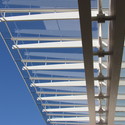
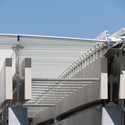
For architects, Louis Kahn's Kimbell Museum has long been hallowed ground. For Renzo Piano, who designed the museum's first major expansion, it was also an enormous difficulty to overcome. His addition to the museum could be neither too close to Kahn's building, nor too far. It had to solve a parking problem, yet respect Kahn's distaste for cars. It had to respond to Kahn's stately progression of spaces—and that silvery natural light that make architects' knees go wobbly. And yet it could not merely borrow from Kahn's revolutionary bag of tricks.

I made my first pilgrimage to the Kimbell in August of this year. Across a muddy construction site, I imagined another of what critics have described as Piano's technically sublime but aesthetically sterile museum buildings. From Boston's diminutive Gardner Museum to his vast annex at the Chicago Institute of Art, people have compared his recent works to airports and suburban office parks.