The Frontier Project, located in Cucamonga, Southern California, is a 14,000 square foot demonstration building that will educate all in the community about the latest information, technologies and approaches regarding environmental friendliness. The project will make resident consumers, commercial builders, and sustainable advocates aware and informed of the alternative building methods to encourage sustainability. HMC Architects’ building will not just be something for visitors to look at and admire; rather, the building will become more of a learning experience as visitors are welcomed into its spaces and sustainable strategies are pointed out with their importance explained. “Everything from material and plant selection, the layout of space, and the maintenance regime will have a purpose, demonstrating the principle of green design for home owners, consumers, contractors, design professionals, sustainability advocates and the general public,” explained the Frontier Project founders.
More about the demonstration building, including a video and images, after the break.
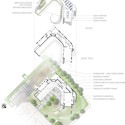
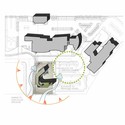
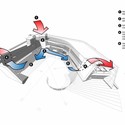
Four concentric layers of building shells each have a different purpose: the outer shell, constructed of insulated concrete forms, acts as thermal mass protecting the building from the solar heat; the second shell is a cast in place concrete wall that provides lateral integrity to the building structure; the third shell, a mostly north facing glazed curtain-wall, maximizes diffused daylight and visual connection into the building; the inner shell, made of salvaged red wood from the local winery, shades the south facing wall of office/conference wing.

These four shells define the interior spaces. Such spaces are ”open and fluid to maximize spatial flexibility and interconnectivity for ventilation and daylight.” The exterior and interior spaces were both designed with the intent to constantly push the visitor onward in his journey of experiencing the building.

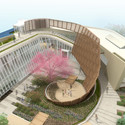
The project goes “beyond the norm of sustainable buildings as merely machines of green technologies by combining architectural and ecological design principals as equal forces in the formation of the building,” explained the architects. With plans to achieve a LEED Platinum Certificate, the building is designed to constantly educate visitors on the many options of sustainability. From the time the visitors enter the landscaped gardens at the ground level that show rain filtering strategies to the moment the visitors make their way to the roof to see numerous sustainable roofing stategies, the users are constantly being exposed to different environmentally friendly solutions.

THE FRONTIER PROJECT
Architect: HMC Architects Location: Rancho Cucamonga, California Client: Cucamonga Valley Water District/ The Frontier Project Foundation Project Team: Laurie McCoy AIA, Principal in Charge Raymond Pan AIA, LEED AP, Design Principal Pasqual Gutierrez AIA, Principal Dexter Galang, Project Designer Daniel Sandoval, Project Leader
The building’s form allows visitors to explore each of its parts, “from the composition of the energy efficient walls to the various roofing constructions”, in an attempt to provide as much information to the visitors as possible.