
Celosia Building / MVRDV with Blanca Lleó

Uploaded by — Filed under: Housing ,Selected , , , ,
 

edf_cel_bp01

Architect: MVRDV & Blanca Lleó
Location: Madrid,
Client: EMVS
Year: 2009
Budget: 12.6M Euro
Constructed Area: 21,550 sqm
Photographs: Ricardo Espinosa

edf_cel_bp04 edf_cel_bp07 edf_cel_bp11 edf_cel_bp20

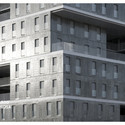
In Madrid-Sanchinarro the first residents received the keys to their apartments in the just completed Celosia building. Jacob van Rijs of and Blanca Lleó have completed the social housing block near the Mirador Building, which is an earlier collaboration. The perforated block of Celosia assembles 146 apartments, communal outside areas throughout the building, and parking and commercial program in the plinth. The total floor area is 21,550 sqm. With a construction cost of 12,6 million Euro the apartments can be sold for affordable prizes. The city block is opened and allows wind and light to enter the building, offering vistas and outside spaces contrasting the surrounding area. The client is EMVS, the public housing corporation of the city of Madrid.

edf_cel_bp03

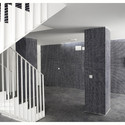
The given volume of the city block was divided into 30 small blocks of apartments. These blocks are positioned in a checkerboard pattern next to and on top of each other, leaving wide openings for communal patios throughout the building. 146 one-, two- and three-bedroom apartments are all accessed via these communal spaces. Most apartments offer additional private outdoor space in the shape of a loggia right behind the front door. Inhabitants have the possibility to gather in the communal high-rise patios which offer views towards the city and the mountains and provide natural ventilation in summer. Opening the front doors connects the private outdoor areas to the communal area.

edf_cel_bp15

The façade is made of coated concrete which was from the ground floor up constructed in complete mould system, an efficient and clean way to cast concrete, keeping the construction cost to a minimum; an important asset for this social housing project. The polyurethane coating allows the façade to shimmer and reflect depending on the light condition.

All windows are floor to ceiling height and can be shielded from the sun. Each apartment has the possibility of cross ventilation through two or three facades and enjoys views through the building and to the surrounding. A system of power efficient boilers is used in the building; solar panels on the roof heat water reducing energy consumption further.

edf_cel_bp08

Underneath the building a parking garage on two levels provides 165 parking spaces. The ground floor offers room for 6 individual retail units.

The nearby Mirador building which was completed by MVRDV and Blanca Lleó in 2005 also discusses the traditional building block by putting it vertical. The Celosia building is horizontally arranged around the interior court but opposes the generic introverted architecture in the area by bringing light and communal space into the building allowing a perhaps more extraverted Spanish lifestyle as every apartment opens up to a small plaza.


Thumb up Thumb down 0
Balkan says:

Looks a bit sterile for living purpose but I like it. Would like to see inside the apartments.

 
# August 2, 2009 at 06:45
    Thumb up Thumb down 0
    r.lambelho says:

    I had the opportunity to visit the interior and are very bad, spatial organization and finishes

     
    # January 12, 2011 at 17:53
Thumb up Thumb down 0
PJ says:

Needs more colour!

 
# August 2, 2009 at 08:31
Thumb up Thumb down 0
QFWFQ says:

very cool.
MVRDV要在马德里发现了大展拳脚的机会了。

 
# August 2, 2009 at 08:45
Thumb up Thumb down 0
QFWFQ says:

very cool.
MVRDV要在马德里发现了大展拳脚的机会了。
欢迎加入每日建筑qq讨论群48204925
最后13个名额。

 
# August 2, 2009 at 08:46
Thumb up Thumb down 0

Coated concrete facade = heavy! (visually)

 
# August 2, 2009 at 09:36
Thumb up Thumb down 0
tnam says:

interesting yet depressing…

 
# August 2, 2009 at 12:12
Thumb up Thumb down 0
josep says:

I think this building has potential to be great! if you think about it, once inhabited all those voids will be fill with colors, clothes hanging [like those in diller scofidio japan housing project but that was a middle class project] colorful curtains and different shades of light…..I’m excited to see this!

 
# August 2, 2009 at 13:34
Thumb up Thumb down 0
DCV says:

Great! I’d loved to see it when it’s fully inhabited, in a few years.

 
# August 2, 2009 at 16:02
Thumb up Thumb down 0
james says:

same old…

 
# August 2, 2009 at 22:47
Thumb up Thumb down 0
Ron says:

same old… prison

 
# August 2, 2009 at 23:15
Thumb up Thumb down 0
Sebastián Nicolossi says:

How are those voids profitable? how they manage to suppress that cost from getting to the dep´s owners?

As an architect, I understand such a design desicion, but will regular people pay for empty spaces…?

…personally I like the building.

 
# August 3, 2009 at 02:01
Thumb up Thumb down 0
jiri says:

I find it quite cool – there is really no façade game, just pure tectonics. But I would like to see some pictures while inhabited as well. I hope the void spaces work.

 
# August 3, 2009 at 02:32
Thumb up Thumb down 0
Richiee Phan says:

I like the simple design. Grey (concrete) + White –> nice
I wish I can live in there.

 
# August 3, 2009 at 05:35
Thumb up Thumb down 0
Juan Gomez-Velez says:

It defeats its purpose, I would live there if I had to, I wouldn’t want to. Ideas are good if they are shared by those who use the spaces seemingly smart designers construe, if not, no matter how appealing to others, it simply is not successful. We all have to be communicators, original, passionate and ……effective, to allow for meaningful and enduring architecture to come to life.

 
# August 3, 2009 at 06:50
Thumb up Thumb down 0
alejandro says:

interiors please…

 
# August 3, 2009 at 12:51
Thumb up Thumb down 0

What’s the word…irresponsible? outdated? tone-deaf?

 
# August 3, 2009 at 13:44
Thumb up Thumb down 0
asintoras says:

Jesus… that’s ugly!
I guess in the scale model probably it looks cool, but in real life, with that material and color selection…

Like it was said already: it looks like a prison, and I don’t want to live there (definitely). I also would like to know how they convinced the client to create all those holes in the facade. Furthermore, I would like to see a picture in the future with people using it… for a party? conversation place? smoking place? will neighbors complain?

 
# August 3, 2009 at 15:16
Thumb up Thumb down 0
quinn says:

Perhaps the voids aren’t “profitable”, but there is something humanizing about having public housing that isn’t a typical floor plan extruded 20 stories.

That being said, I feel like the voids could have been used more effectively. Maybe it is the lack of furniture / people in the photos, but I feel like the spaces won’t be used – they are neither private nor public. I feel like the voids would not be a cool place to hang out because they are basically glorified hallways.

 
# August 4, 2009 at 01:27
Thumb up Thumb down 0
MINOS, el juez says:

De un tiempo a esta parte, no se en que se está convirtiendo la arquitectura, ya que aparecen obras como esta, tan deficientes en composición.

PARECE QUE MIS AMIGOS DE mvrdv NO TIENEN VOCACION POR LA ESTETICA.

 
# August 4, 2009 at 12:03
Thumb up Thumb down 0
!! says:

no me apetece vivir en este lugar…

 
# August 5, 2009 at 08:39
Thumb up Thumb down 0
elver says:

Desepcionante! Mucho dibujito y nada de nada.

 
# August 5, 2009 at 10:42
Thumb up Thumb down 0
Hermes says:

There is nothing new here. In 1925, Le Corbusier has drawn this same building on his project called ‘Immuebles-Villas’. If anyone go to the page 76 of the volume ‘Oeuvre Complete 1910-1929′, you’re going to find the same building (you can also go to the last pages of ‘Towards a New Architecture’). Maybe we just have here just a vulgar copy and anything new about facing housing problems. Are we facing the same problems on this beginning of the XXI century? In some ways, yes… but…

 
# August 15, 2009 at 15:25
Thumb up Thumb down 0
Alex says:

Ci dovrebbero essere dei negozi e attività commerciali alla base invece che della terra, se no si crea un quartiere dormitorio.
There should be some shops and businesses at the base instead of the land, otherwise you create a neighborhood dormitory.

 
# December 11, 2009 at 11:02
Thumb up Thumb down 0
hk says:

I like it. Large communal spaces, the relationship between these spaces and the outside and the plaza. But it looks too “cold”

 
# February 20, 2010 at 11:05
Thumb up Thumb down 0
Esco says:

floor plans????

 
# February 21, 2010 at 12:47
Thumb up Thumb down 0
kyle says:

i think this is a really cool building, but out of curiousity i did the math.
21,500sqm = 231,400sqf
12.6M euro = 17.9M $
=$77/sf

FOR REAL??? It is a little misleading to believe this to be accurate or true, unless I fudged my math somewhere. I see the interiors are rather sparse, but please fact check this one.

 
# November 4, 2010 at 14:51
Thumb up Thumb down 0
jdcarling says:

this would help me a little… maybe not the colors but the idea at least:

http://www.flickr.com/photos/44326080@N02/5146339257/

 
# November 4, 2010 at 16:53

Leave a Reply »


Latest Comments »

Architecture has been and always...[+]
I think the idea of the whole project...[+]
Another useless piece of junk from him – except this time it is dangerous!...[+]
Coffee with an Architect has got to stop; it’s pathetic.[+]
Has archdaily started a new...[+]

Upcoming Architecture Events »

got events? invite us! click here

Architecture Books & Magazines »

Golconde: The Introduction of Modernism in India

Golconde: The Introduction of Modernism in India

Sited on the coastal edge of the Bay of Bengal, Golconde, a dormitory for the Sri Aurobindo Ashram in Pondicherry, India, was designed by architects Antonin Raymond and George Nakashima. Golconde is a remarkable architectural edifice, seemlessly negotiating between


Caramel: Forget Architecture / Caramel Architekten

Caramel: Forget Architecture / Caramel Architekten

We recently received a book from Caramel Architekten. We previously featured four of their projects if you would like a taste of their work (click here). The book is presented in both German and English and offers a wonderful insight…


Strategy Space / a+t: Landscape Urbanism Strategies

Strategy Space / a+t: Landscape Urbanism Strategies

Landscape Urbanism is the new black in architecture and this magazine, part of a+t strategy series, has heads turning. There are a dozen projects and hundreds of ideas in this edition. A recurring them is the manipulation of time…


Our partners »

AD on iPad via Pulse

Browse by date »

Browse by category »

Friends »