






-
Architects: Woodhead
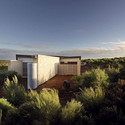
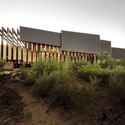
Text description provided by the architects. Woodhead Architects designed this building over a beautiful landscape in Western Australia, integrated with it through the use of wood. The exterior spaces offer a shaded place to contemplate this landscape.
The ritual burning of the Pinnacles Interpretive Centre in Western Australia, as part of its design and building process underscores the unique role of fire both culturally and environmentally in Australia.

This incredibly evocative gesture by Woodhead and project architect for the Centre, John Nichols, introduces this specific practice into contemporary Australian architecture.
Located 250km north of Perth in the Nambung National Park, the Pinnacles is made of thousands of protruding limestone formations spread over a vast dunal landscape. The rock formations are the exposed eroded remnants of a formerly thick bed of Tamala Limestone, created over time by rain and wind.

The design principle for the centre is completely embedded in the mutable narrative of that landscape.
The forces at play in the landscape determined the configuration of the elements and distinct staging of construction. Stage One involved the complete construction of the freestanding limestone walls only that were then left to sit inconspicuously in the landscape as both 'ruins in reverse' and 'immature pinnacles' for a period of time. At the completion of Stage two of construction, the vertical timber elements, which were a figurative reference to the heath shrub in the area, were deliberately set on fire.

The burning and the burnt remains are integral to the scheme and highlight the relationship between fire, the land and its inhabitants, particularly in Australia, which requires a specific way of engaging with space, which non-Aboriginal culture, is just beginning to engage with.

The material language for the scheme fits into its environment, becoming just another part of the background to the desert.
Those materials used are specifically 'of the place': the podium and the walls are constructed in limestone, timbers used are direct references to the nearby grove of vanishing tuarts, disappearing under a shifting sand dune and the planting interventions involve species endemic to the region.

As a consequence this project deliberately favours shifting and multiple axis lines over a singular orientational logic, resulting in precarious spatial relationships. The configuration of the walls creates open-ended opportunities for enclosure, rather than clear-cut pockets of space, and material elements both fragment and overlap to emphasise the shifting focal points.


