
Kodály Centre / Építész Stúdió

Uploaded by — Filed under: Cultural ,Selected , , , ,
 

© Tamás Bujnovszky

Architects: Építész Stúdió
Location: ,
Interior design: László (f) Rádóczy, Zsolt Tolnai – PÉCSÉPTERV
Landscape: Sándor Mohácsi, Borbála Gyüre – S73
Acoustics: Éva Arató, Anders Christian Gade, András Kotschy
Project area: 11,200 sqm
Project year: 2007-2010
Photographs: Tamás Bujnovszky

© Tamás Bujnovszky

There are two identities constituting the units of our world: inside and outside. Object and space. Extrovert and introvert. Active and passive. Community life and internal silence. The building that we can walk around, and the hall where music surrounds us. The building itself is vivid, moved by the dynamic symmetry of golden ratio. The hall itself is tranquillity filled by the symmetry of intellectual serenity.

It all derives from the mathematical basis of our world.

“Music that conveys universal truths itself, shows more direct connections with the physical and spiritual world order.

© Tamás Bujnovszky

There are two sequences appearing significant in the sythesis of our world. As demonstrated below, both begin with the number 1 and 2. In the first sequence, each number is multiplied by 2 to get the next one, while in the second sequence, each remaining number is the sum of the previous two.

Both sequences can be found in European music.

The first sequence is represented by the symmetry of classical music. It is filled by pursuit of balance.

© Tamás Bujnovszky

Not like in case of the second sequence. The Fibonacci-sequence is the most common presentation of golden ratio by integers. Golden ratio is usually called dynamic symmetry. Its most beautiful realisation in music is perhaps the 1st movement of Music for Strings, Percussions and Celeste by Bartók.

Golden ratio as a characteristic of the living world is perfectly efficient to express fight, struggle and tension of existence, just as balance to express the intellectual serenity. Bartók composed his most impressive pieces – Music, Sonata for Two Pianos – implying the sphere of golden ratio in the 1st movements, then principle of classic symmetry in the last movements.

section

The two systems relate to each other just like two worlds – more precisely, as two faces or sides of the same world. The first one applies balance as a guiding principle, the second one applies tension. They are connected in mutual presupposition and exclusion, they compose unity and contrast.”

The architectural characteristics of the concert hall are in close harmony with the common principles of design and musical composition. Dynamics and balance. Two sides of the same world.

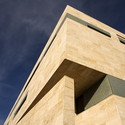
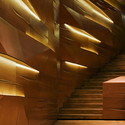
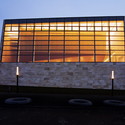
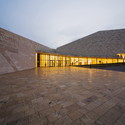
The building elements: stone and wood. Hard and soft. Cold and warm. Age of myriads and centuries. Enduring and intimate. The ancientwhite stonesnail slowly embraces the concert hall lined with pure wood. As if we were listening to music inside a gigantic wooden shape or instrument.

© Tamás Bujnovszky

The opening of the concert hall means that a 200-years-dream is about to come true in the city’s musical development. Its essential artistic and professional aim, applying the principle of regionalism, is to introduce Pécs as the musical centre of the Southern Cultural Zone. As the residing orchestra, the Pannon Philharmonic Orchestra is going to determine the professional musical concept of the concert hall.

The existing traditional concerts gain new dimensions: having the opportunity to invite dominant guest artists who have not visited Pécs before because of infrastructural sanctiness, as well as to perform pieces that could not be staged in the previous venues. These are conditions for further advancement of the orchestra -and now all attainable by the concert hall.

© Tamás Bujnovszky

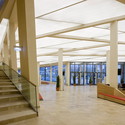
The new building include, in addition to a concert hall and a large rehearsal room, the offices of the Pannon Philharmonic and the Conference Centre, other rooms necessary for the operation of the orchestra (such as storerooms for sheet music and instruments), facilities serving the audience -café, bookstore, lounge, etc. – and several service premises.

The design competition was closed in the spring of 2007. The winning proposal was submitted by the Építész Stúdió Ltd. from Budapest. The archaeological explorations and licensing procedures were completed, construction work began in July 2009. The opening concert took place in December 2010.
* Location to be used only as a reference. It could indicate city/country but not exact address.
 
 
Thumb up Thumb down 0

It is quite nice the way that the bulk of the building’s services and admin. space is tucked toward the back (and away from the front plaza) via the coiling form. The first image of the plaza and the plans are exceptionally good, indicating both the desires for a low and smaller scale address to the plaza and its realization. The back is pretty “bad”, but I suppose that’s just the natural reaction to a good “front.” Can’t have it all.

 
# February 4, 2011 at 13:36
Thumb up Thumb down 0
littleoslo says:

the capital is staying old while the rest of the country is changing so much, n i like the design of the hallway.

 
# February 4, 2011 at 15:22
    Thumb up Thumb down 0
    Nikoletta Smith says:

    The capital, Budapest is getting NEW, look at the Whale-building, Corvin…etc

     
    # February 14, 2011 at 08:06
Thumb up Thumb down 0

I like this kind of dynamic architecture….

 
# February 5, 2011 at 01:09
Thumb up Thumb down 0
Delftse_student says:

Why is this concert hall reminds me soooo much of Jean Nouvel’s Danish Radio concert hall?

 
# February 5, 2011 at 05:23
Thumb up Thumb down 0

7:28 PM Feb 4th

RT @ArchDaily: Kodály Centre / Építész Stúdió http://archdai.ly/eq7asY #architecture

Thumb up Thumb down 0

7:28 PM Feb 4th

ELS

RT @ArchDaily: Kodály Centre / Építész Stúdió http://archdai.ly/eq7asY #architecture

Thumb up Thumb down 0

7:48 PM Feb 4th

Kodály Centre / Építész Stúdió: © Tamás Bujnovszky Architects: Építész Stúdió Location: Pecs… http://goo.gl/fb/Vu8gA

Thumb up Thumb down 0

7:49 PM Feb 4th

Kodály Centre / Építész Stúdió: Architects: Építész Stúdió Location: Pecs, Hungary Interior design: László (f) R… http://bit.ly/hd7YiH

Thumb up Thumb down 0

8:19 PM Feb 4th

RT @archfeeds: Via @ArchDaily – Kodály Centre / Építész Stúdió http://dlvr.it/Fq4yH #architecture

Thumb up Thumb down 0

8:24 PM Feb 4th

Kodály Centre / Építész Stúdió | ArchDaily: Architects: Építész Stúdió Location: Pecs, Hunga… http://bit.ly/ehuovn http://www.cubestudio.info

Thumb up Thumb down 0

9:30 PM Feb 4th

A Kodály Központ az ArchDailyn http://is.gd/YiVJNI

Thumb up Thumb down 0

12:19 AM Feb 5th

Kodály Centre / Építész Stúdió | ArchDaily http://bit.ly/epMo8g

Thumb up Thumb down 0

5:43 AM Feb 5th

RT @ArchDaily: Kodály Centre / Építész Stúdió http://archdai.ly/eq7asY #architecture

Thumb up Thumb down 0

9:08 AM Feb 5th

RT| Kodály Centre / Építész Stúdió: © Tamás BujnovszkyArchitects: Építész Stúdió Location: Pecs, Hung… http://bit.ly/g2j0Cm @archdaily

Thumb up Thumb down 0

10:29 AM Feb 5th

Kodály Centre / Építész Stúdió _ http://t.co/HDGKRB8 #architecture #photography

Thumb up Thumb down 0

3:00 PM Feb 5th

The performance hall is mesmerizing @ArchDaily – #KodályCentre / Építész Stúdió http://dlvr.it/Fq4yH #architecture

Thumb up Thumb down 0

3:42 PM Feb 5th

RT @ArchDaily: Kodály Centre / Építész Stúdió http://archdai.ly/eq7asY #architecture

Thumb up Thumb down 0

10:30 PM Feb 6th

Kodály Centre http://goo.gl/9NRSY #architecture

Thumb up Thumb down 0

9:30 PM Feb 9th

Ezt olvastam: Kodály Központ, Pécs – http://tinyurl.com/4c8mb87 #fotok

Leave a Reply »


Upcoming Architecture Events »

got events? invite us! click here

Architecture Books & Magazines »

A Peripheral Moment

A Peripheral Moment

This book is an account of the highly productive decade of architectural experimentation in Croatia lodged between the violent break-up of Yugoslavia and their slow integration into the EU. Ivan Rupnik guides the reader through the emergence of this


The Architecture of Croce, Aflalo and Gasperini / Aflalo and Gasperini Architects

The Architecture of Croce, Aflalo and Gasperini / Aflalo and Gasperini Architects

Aflalo & Gasperini Arquitetos recently shared with us the book they are launching titled, “The Architecture of Croce, Aflalo and Gasperini.” The book details the 50 years history of one of the most important architecture office in Brazil. The…


Encyclopedia of Detail in Contemporary Residential Architecture

Encyclopedia of Detail in Contemporary Residential Architecture

French novelist Gustave Flaubert’s expression, “le bon Dieu est le détail” became a cliché for one reason, it is true. God does dwell in the details, and well done details are often the difference between a mundane building and…


Our partners »

AD on iPad via Pulse

Browse by date »

Browse by category »

Friends »