

-
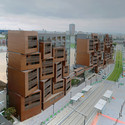
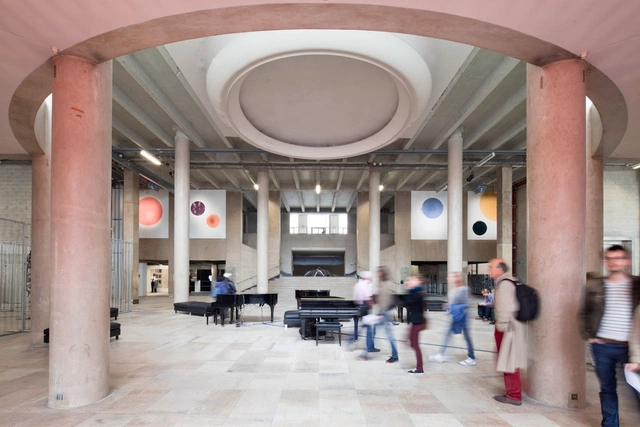
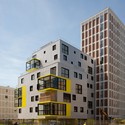
Architects: Philippe Dubus Architectes
- Area: 4697 m²
- Year: 2011



French practice bureau faceB has redefined the pedestrian bridge with their winning design concept that allows Paris residents to “flirt with the water” as they traverse across an intentionally unstable bridge. Dubbed “Water at-traction”, the atypical bridge embraces the potential of traction as it’s steel cables stretch across the Seine in Paris and reconnects the city to the water.
Learn more after the break.


Maison L, the dramatic addition that transformed an 18th century orangery into an innovative contemporary house on the outskirts of Paris, has been awarded the Royal Institute of British Architects’ (RIBA) 2012 Manser Medal for best newly designed private house. The major restoration and extension was designed by christian pottgiesser architecturespossibles (CPAP), a well-published practiced based in Paris whose portfolio ranges from small private homes to large scale urban design. The French home was selected over four other impressive residences, seen here on the 2012 Manser Medal shortlist.
Continue reading for more.

Beginning on October 16th, 2012, Galeries Lafayette in Paris, France, will be celebrating the 100 year anniversary of the Dome designed by architect Ferdinand Chanut and glass artist Jacques Gruber in 1912. 100 years under the Dome will be held at the flagship store of the boulevard Haussmann, a true Parisian symbol. In addition, the gallery will launch an exhibition called 1912-2012. Chronicles of a Creative Itinerary by architect Rem Koolhaas and his studio OMA, along with a collaboration called Chrysalide between visual artist Yann Kersalé and Djuric Tardio – Architectes.
Join us after the break for more stunning images for the anticipated celebration.
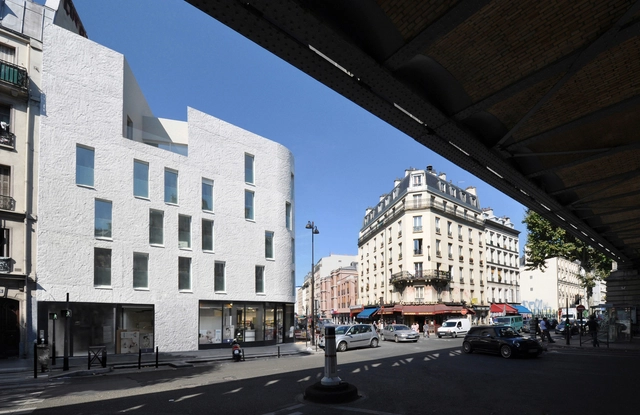

The initiative by h2o Architectes for the renovation of the first cinema for art house film follows the tradition of innovation and evolution that have been a part of this establishment’s history. The main project for the Studio des Ursulines in Paris was concentrated on the lobby, as the existing theatre has been simply refurbished. Founded in 1925, by the actors Armand Tallier and Laurence Myrga, this theater continues it’s tradition today by catering to the younger Parisian public by providing a locale to discover cinema in it’s many facets. The small theater offers selective programming as well as the opportunity to meet those who make films. More images and architects’ description after the break.
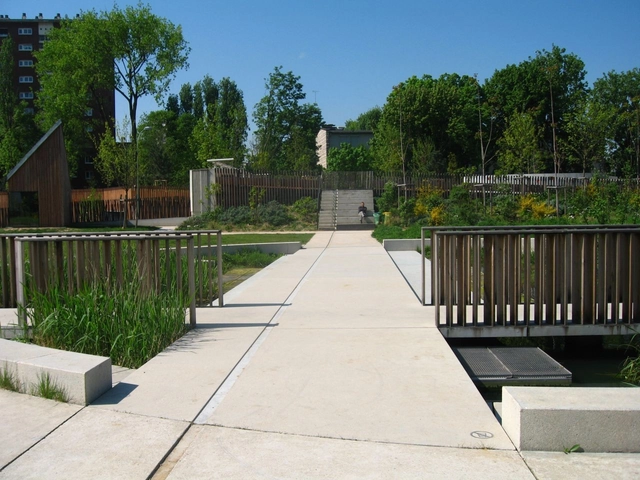

Designed by ANMA to act as a natural machine, the new headquarters of the Ministry of Defense, located in southwestern Paris, includes a health center, restaurants, media and sport centers as well as a crèche. This complex structure, designed around the strictest security requirements, is the largest public building to be built in France for 20 years. The structure aims to present an image of the armed forces, not only as a protective force, but a strong and stately force as well. More images and architects’ description after the break.