This set of 8 houses around a shared space is located in an irregular plot previously occupied by a large house, within walking distance from Santiago's financial center. The common area is conceived as a pedestrian walkway with continuous edges, whereas the houses on their sides have a symmetrical "L" plan around a squared courtyard.
https://www.archdaily.com/968016/8-houses-in-alcantara-street-cristian-izquierdo-lehmannClara Ott
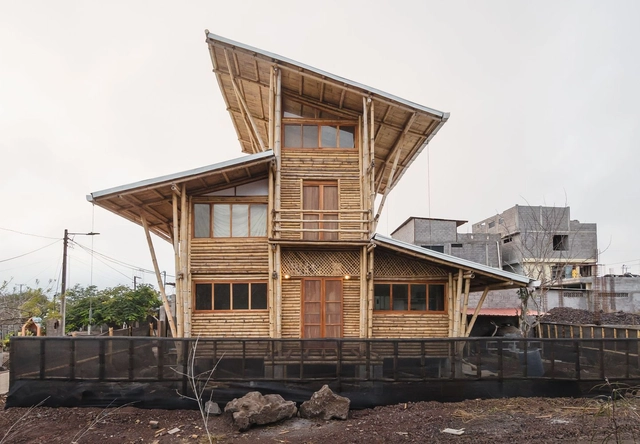
In 2015, Dany and Jenny founded the first artisanal brewery on San Cristóbal Island, in Galapagos: La Cervecería Endémica. The proposal sought to be sustainable, natural, and local; as much as possible, considering the limitations of an Island (resources and energy supply, transportation, etc.). After four years of work and with the arrival of their first child, the couple decides to build the first house of their own on a plot of land located on the urban edge of Puerto Baquerizo Moreno, one kilometer away from the coast. In the same way as in the brewery, they seek to build their home sustainable, local, and as sensitive as possible to the natural context of the Islands. The Endemic House, therefore, aims to be a simple, efficient house and prioritizes the use of the local workforce and materials. The limited budget represents an important challenge in terms of management and logistics.
In this episode of “Behind the Scenes”, where we showcase the work of visionary artists and ask about their experiences beyond what is seen by the public, we are presenting Nicolás Sánchez: a designer from Pehuajo, Buenos Aires (Argentina). Nicolás defines himself as an eccentric person with a strong obsession with symmetry and mathematics applied to the objects and spaces that surround him, which awakens in him the curiosity of wanting to understand everything and to find the reason for things. Through his illustrations and animations, he transmits and shares everything he perceives and feels with playful, surreal, and impossible spaces.
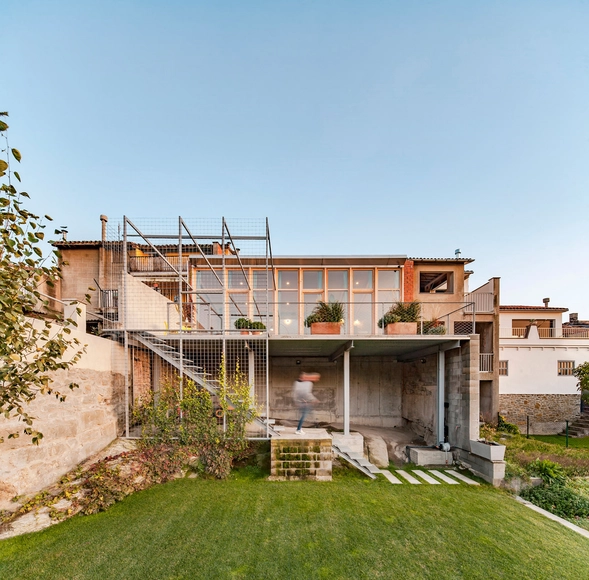
L’Esquirol House is situated in a row house of several stories in the village of the same name in the county of Osona. Francesc, one of the children of the house’s owners, contacted Sau Taller d’Arquitectura, a Catalan practice with a great deal of experience in this type of intervention, to turn the ground floor into a separate dwelling, independent of the rest of the building. Francesc’s objective was to live in “a house with large shared spaces, with lots of light and easy access”, and for his mother to continue living independently. This meant that the biggest challenge of the project was climate control, addressing both lighting and ventilation.
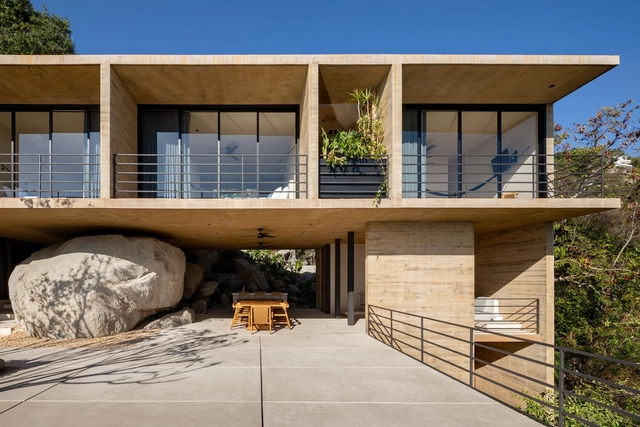
Casa Piedra is located in Brisas Marqués, a residential subdivision in one of the peninsulas that surround the traditional Bay of Acapulco in the state of Guerrero. The essential characteristic of this setting is that it is located in a deposit of granite rocks of great antiquity that define the type of soil of the bay. On a 1,000-square-meter plot of land, located 100 meters above sea level and 300 meters from the sea limit, the almost regular property, full of restrictions, presented a couple of important challenges to solve.
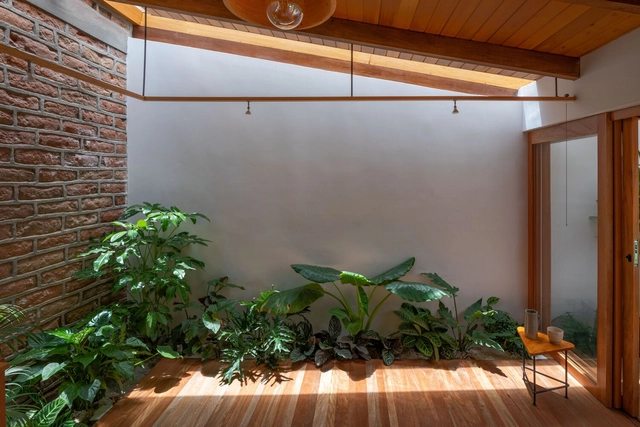
As in most rehabilitations, the premise of this project was to solve problems and adapt the construction to use more in line with the owner's searches. Its main problem of habitability: the constant humidity in the walls that could not be solved in any of the previous interventions carried out in the place and that has been damaging every finish and piece of furniture that has had minimal proximity.
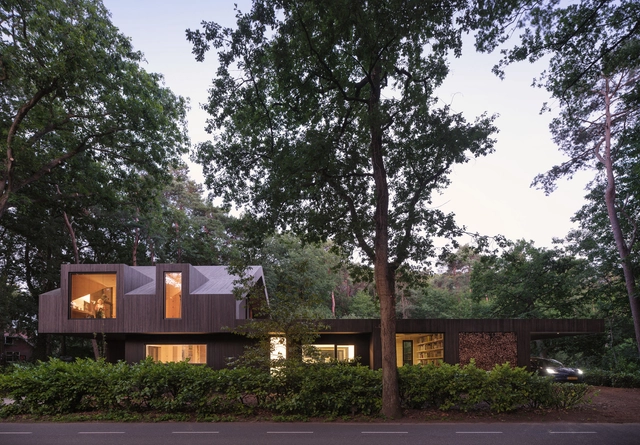
Speehuis is not only unique in its appearance and location but above all, for its very sustainable and healthy design. The energy-neutral design consists virtually entirely of circular and bio-based materials.
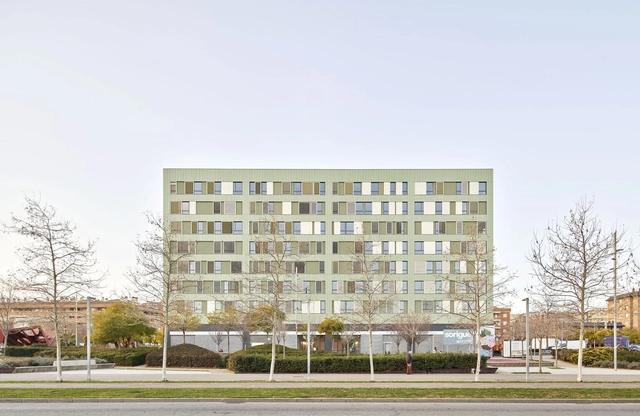
The program —mixing social and free-market housing in coexistence and without differences—demands practically the consumption of the available building volume. This constraint, together with the demands for efficiency and simplicity that we impose on ourselves, represents a challenge for the development of a project with some added value. To this end, we look for the hidden powers of a proposal that is both pragmatic and at the same time sensitive to external stimuli.
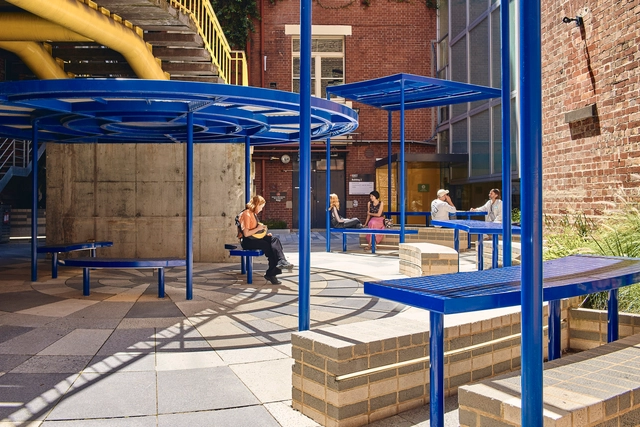
This project forms part of the revitalisation of RMIT University’s public realm, transforming under-utilised spaces into a vivid and welcoming place. This is achieved at Rodda Lane by stitching together the warren of back-of-house laneways to provide a new focal point to the city campus through the addition of outdoor flexible spaces to improve student amenity.
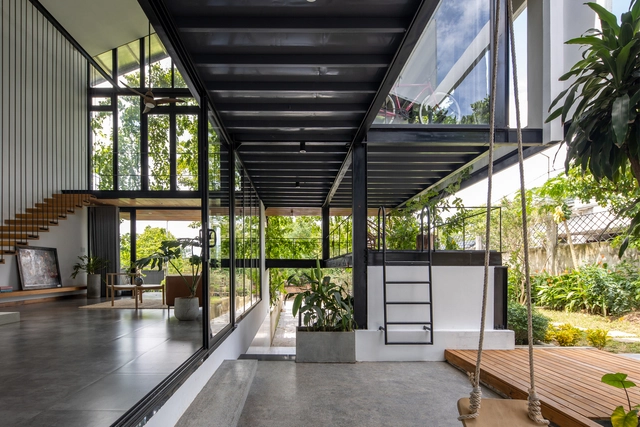
The Hillside house is located on a hillside west of Hue City, Vietnam. The architects have made it as simple as possible because of the inherent beauty of the surrounding terrain. The construction site has a gradually descending slope and is surrounded by green gardens. The house is designed with two stories on the site's highest point, providing a breathtaking view of the surrounding hillsides. A pathway cut through the ground opens into a basement, allowing family vehicles to access the center of the house. There are two landscaped walkways along the slope towards the hall and a BBQ yard on both sides.
SPARK is delighted to announce the completion of the Minhang Riverfront Regeneration, the initial phase of SPARK’s much wider regeneration master plan of the public space of Shanghai’s Minhang district. The Minhang Riverfront is an ambitious story of urban regeneration. A mere 24 months ago it was a decrepit overgrown riverfront faced by low grade industrial warehouses with remnants of paths, industrial and disused utilities evidence of many years of change and neglect within the district.
https://www.archdaily.com/970831/minhang-riverfront-regeneration-spark-architectsYu Xin Li
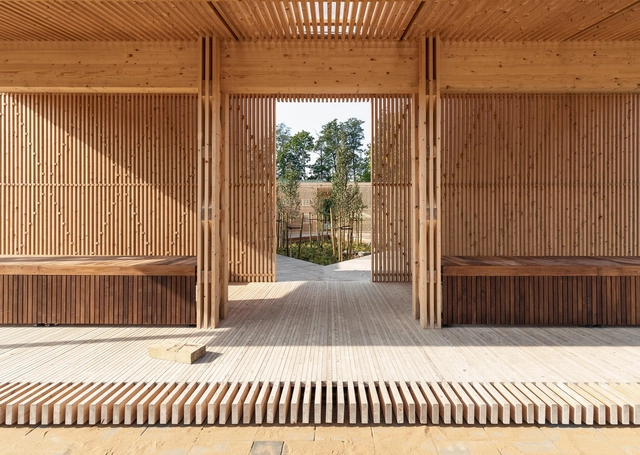
The new Kärdla City Pavilion located on Dagö Island just off the west coast of Estonia is one of several projects that was initiated to celebrate the nation’s declaration of independence 100-year anniversary. Bornstein Lyckefors Arkitekter along with Mareld Landscape won an open international competition to renew the city’s central square and create a new life in the city center with a new market hall and cultural center. Part of the competition project now constructed is the new city pavilion.
Casa Hormiga is a single-family house located in a neighborhood scale context in San Fernando, Zona Norte, implanted and coexisting with the local regulations.
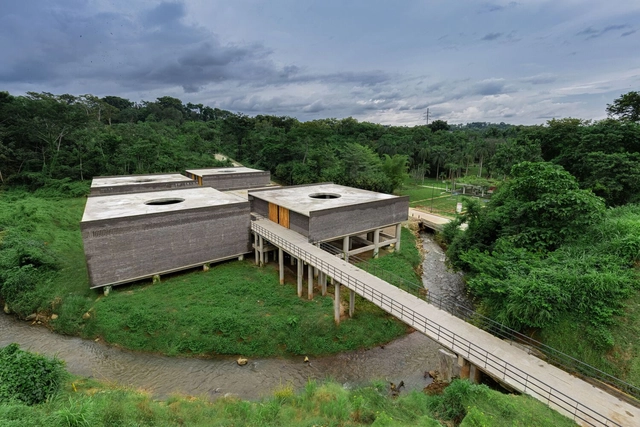
The CDC Community Development Center is an architectural complex where a series of social assistance services are offered, which favor the welfare and social participation of the population, through programs that promote a better organization and interrelation of the community. Through the CDC it is possible to contribute to the integral development of families and communities, from a perspective of gender, through programs for indigenous peoples and vulnerable groups, contributing to the improvement of public safety and the conservation of the environment, through the education of the population.
Seduced by the photographic narration illustrating the projects of Studio Jean Verville, two admirable eccentrics, passionate about art and Italian design of the 80s, invited him to design their refuge in the forest. The objective is to host their daily lives with whimsical energy, a challenge in absolute cohesion with the disruptive approach of the Studio.
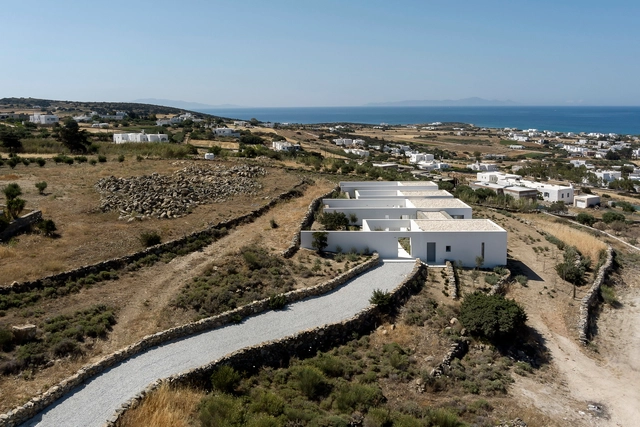
The plot is in the southern part of Paros Island. It has a southwest orientation on the long side, overlooking the sea, the bay of Aliki, and Antiparos. The building rests on the hillside and adapts to the topography and the terrain's morphology.
Spanning a 190-foot gorge and with a gasp-inducing gap in the middle, the bridge follows the line of the original route – a narrow strip of land, long lost to erosion – between the 13th-century gatehouse on the mainland and the courtyard on the jagged headland or island jutting into the sea. So significant was this historic crossing that it gave rise to the place’s name, the Cornish Din Tagell meaning “the Fortress of the Narrow Entrance”.
A street battle is over. Hard infrastructure turned soft – from central parking to central park. Sandwiched between two contexts of the (car-based) oil host city of Sandnes, Ruten park is framed by the elevated train tracks and a large shopping mall. The former parking lot provided a central and generous open space protected only by its capacity of cars. RUTEN has remained a buffer in the urban development in anticipation of something bigger - as the Central Park in New York was built before the Manhattan grid was condensed around it.