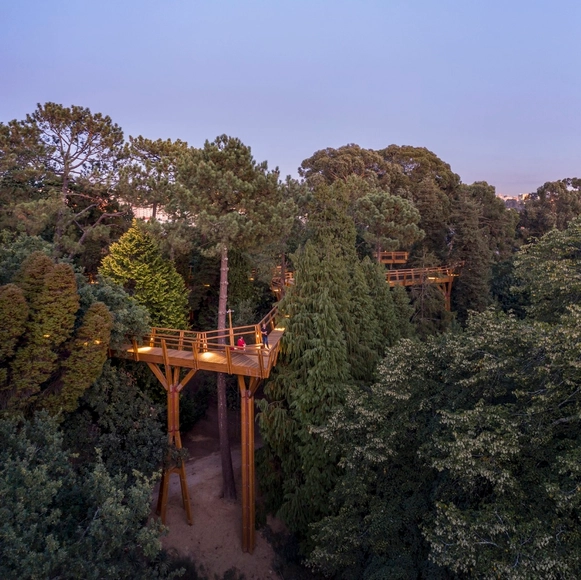
Rigot Collective Dwelling Centre / acau architecture

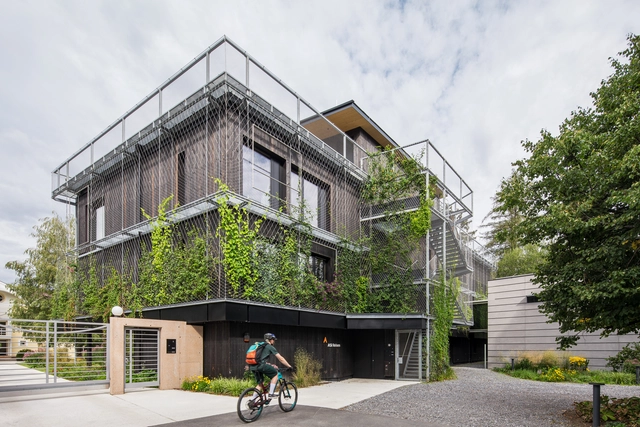
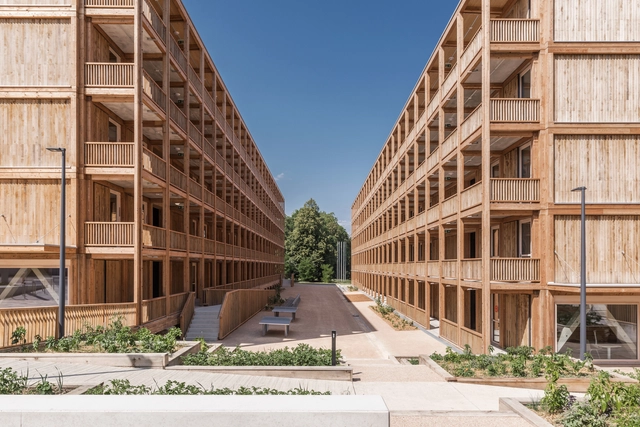
The project is located in the Rigot park in Geneva, alongside the Avenue de France, near the Sismondi school. The choice for the location in the park was impulsed by an urgent and temporary measure aiming at accommodating 370 migrants. The project consists of two symmetrical buildings of 5 levels made of 230 prefabricated wooden modules. The dwellings are accessed by an external gallery open to a public courtyard, which connects to the Sismondi streetcar stop to the Rigot park. Through its constructive mode, the project aims to limit its environmental impact at various scales. The buildings are bound to be relocated within ten years and the site returned to its original state. Anticipating the rehabilitation of the site and the recycling of the materials upon removal, the foundations are made of wood and can be reused on the next building location.

La Paisanita Refuge / STC Arquitectos

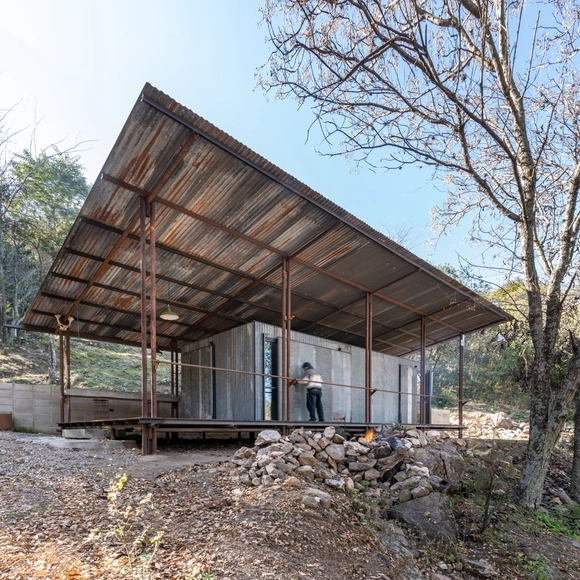
In a terrain with a steep slope and vast vegetation located in the heart of Cordoba, Argentina, we find this small refuge that respects the characteristics of the natural soil and preserves the existing flora without altering the mountain landscape.

A House for a Young Man / 226arquitectos

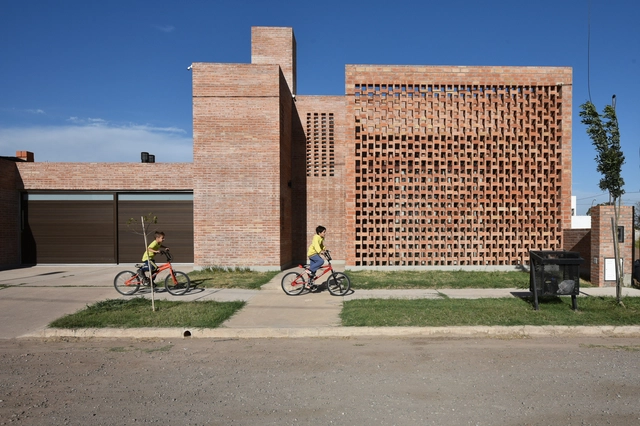
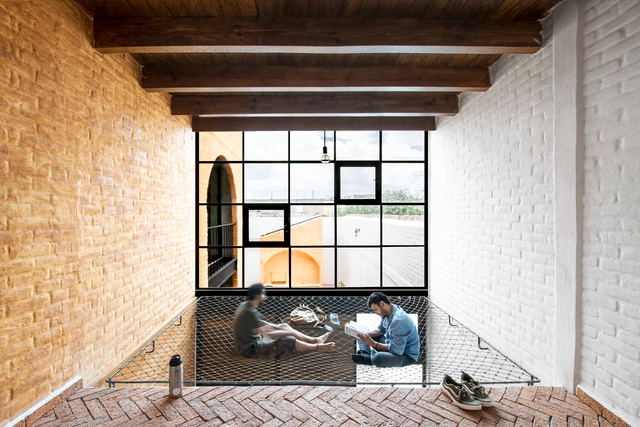
In a peripheral area of the city of San Francisco is this brick house designed as the first house for a young man. The project proposes a unique space that integrates different living, eating and sleeping environments. The possibility of generating a bedroom above the garage was also envisaged. The site where it is located is a sector in development that does not present any element that stimulates contact with the outside world. This unfavorable environment added to the intense sunlight on the front of the land (west) was presented as a problem when starting the project.

Reconstruction of Jiang Village / Yuan Ye Architects

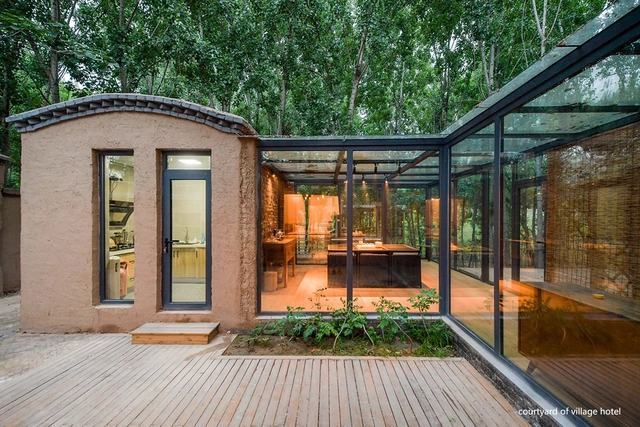
Jiang village is located on the Bank of the Yellow River at the junction of Henan Province and Shandong Province in China, with a history of more than 400 years. In the village, 99% of the villagers are surnamed "Jiang", and a genealogy of Jiang's clan of 96 generations has been well preserved. Due to the frequent flooding of the Yellow River, since the 1960s, villagers have moved to new villages to the west of the Yellow River levee, and the old villages have been abandoned. In 2017, with the support of the local government, the public welfare project of "BONA VILLA" initiated by China Foundation for Poverty Alleviation took Jiang village as an important pilot project of rural tourism poverty alleviation for overall reconstruction.

Revitalized Public Spaces: Fostering Human Connections in Cities

Public space has always been a top priority in every city’s urban planning agenda and given today’s world context, these urban spaces have emerged as fundamental elements of cities and neighborhoods. Plazas, squares, and parks, undeniable necessities in the urban fabric, have become, today, more vital than ever.

House H / Onishimaki + Hyakudayuki Architects

This is a house designed for a couple in Tokyo. Since the site was surrounded by streets on its three sides, we thought about incorporating the remaining street that continues from the city into the house. The street twist around the house, transforming into an outdoors stairway, a greenhouse-like terrace, a garden leading to the tea ceremony room, and continuing eventually to the rooftop. By wrapping the house with the street, we created a home that can be directly entered from the outside through seven different entryways.

Leona House / Colectivo Arrabal

Arches, patios, deep pergolas, brick, talavera, terracotta, and colors… that nostalgia for the traditional Mexican house inspired us –to the client and to us – for this project. Conversing with them about the happy memories of houses in which they had grown up, we seek to bring back those sensations of textures, materials and shapes. In addition, the house is located in the ‘El Encino’ neighborhood one of the traditional neighborhoods of the city, so that essence had to be respected.

Sichuan Fine Arts Institute Library of Huxi / Tanghua Architect & Associates

The library site on a complex mountainous site, propagated by terraced paddy fields. The minimal and holistic form of the building distinguishes itself from the other existing scattered and small-scale buildings on the campus.

Whidbey Island Farm Retreat / mwworks

Located on a rural site on Whidbey Island, a local family sought a new home and retreat on the site of their family farm. Out of respect for turn-of-the-century agricultural buildings located on the site, the home ticks into the edge of a densely forested hillside, overlooking chicken sheds, a weathered red barn, cattle fields, and a fishing pond. The house appears intentionally modest and humble from the valley, deferential to the pastoral farmlands below. The house was designed as both retreat and part-time residence for a growing family with strong local roots going back several generations on the island. Intended for summer BBQs, fishing retreats, and family gatherings, the house was designed to be flexible and durable, and reflect the layered history both of the site and the family itself.

Capital House / Olson Kundig

Inspired by classical monuments such as the Lincoln Memorial at the nearby capital, and the client’s longing for a vaulted roof form, Capital House is at once monumental and cozy, regal and understated. The contemporary lines of this modern residence are balanced by neutral tones and natural materials, including stone, concrete and bronze. The two-story house is clad in elegant slabs of limestone on the bottom level, rising to extensive glazing on the second story and a curved roof floating above. Choosing dark, rich colors for the exterior helps the home recede visually and blend with the neighborhood.

HexBox Canopy / DTC + CodeToProduction

The HexBox Canopy is an experimental segmented timber shell, consisting of prefabricated hexagon-shaped boxes made from plywood plates. Since antiquity, arched spatial structures such as masonry vaults and domes have played a fundamental role in architecture, enabling the covering of wide spans without the use of intermediate supports as well as dramatically reducing the amount of required material.

Refugia Hotel / Mobil Arquitectos

The Refugia Hotel is located on the Rilan Peninsula on the Island of Chiloé in the Lakes Region of southern Chile. From the site, one has a distant view across an inland sea of the volcano-studded Andes on the mainland. Nearby on the surrounding the peninsula, one can enjoy the on-going activity of the tides, the picturesque beauty of the waterways, and the rich biodiversity of the wetlands of Pullao.

Yifang Art Center / YIHE Landscape Architecture

The project is in a newly developed Dazhulin district in the north of Chongqing downtown. When we first visited the site, it had an unfinished concrete structure from previous developments. Our Client Sunac stepped in and had the vision to develop Dazhulin as a new TOD project. Surrounded by future mixed-use developments, our goal is to reuse and redesign the abandoned concrete structure as a new community core. It will serve for nearby residents and visitors in daily use and host events for special occasions. This new community center has four levels including an indoor swimming pool, a gym, various community amenity rooms, a sky bar, and an art gallery. Stairs and elevators are used for circulation between levels. 

Venice Beach House / Montalba Architects

This single-family residence was designed to meld together indoor and outdoor programs through tethered courtyards and gardens. The airy Venice Beach home was designed with the intent of blurring the lines between indoor and outdoor spaces to achieve a warm, tranquil home. The design began with its exterior, to ensure the family could enjoy the perks of Southern California’s year-round mild climate. Almost every space is connected with a sister outdoor space to further blur the distinction between in and out.

The Beauty of Construction Details: A Conversation with @the_donnies

Facades are the first barrier outside a building. They weather rain, snow, winds, sun, and temperature changes. Their primary function is to keep interiors free of water, thermal bridges intact, and internal atmospheres as comfortable as possible. This reality is why the detailing of facades is usually done by experienced architects or specialized companies, who understand materials and construction methods well and are able to select the best solutions for each circumstance. But some projects have facades with such complex detailing, encompassing thousands and thousands of lines, hatches, and dimensions, that they inspire a particularly awestruck response. Making these drawings didactic, technical, and, above all, beautiful, is a task few can achieve to perfection. We spoke with Troy Donovan, the creator of the 188,000 follower Instagram account @the_donnies, who does this job like few others. Read the interview below.

KOPI Jewellery Boutique / NOKE Architects

When walking into KOPI boutique in Warsaw, one can immediately feel like in a luxurious Moroccan tent in the middle of a desert. Natalia Kopiszka, the designer and founder of the brand, found the inspiration to create this unique interior during her travels to Morocco and French Riviera. The ones who made Natalia’s vision come true were Noke Architects, who are famous for their refined attention to detail. Our aim was to create an interior that would give clients a completely immersive experience. The soft, irregular shapes of KOPI jewelry and the designer’s holiday inspirations were our starting point – says the Noke Architects duet: Karol Pasternak and Piotr Maciaszek.

Red House / Biuro Toprojekt

'Red House' is situated in a Cistercian landscape of Rudy Wielkie, a vast area in Upper Silesia of Poland. The walls of the building were made out of hand-sorted waste bricks from nearby brickworks making it a perfect fit for the vicinity of Rudy where one can find a number of brick buildings built in a masterly way.