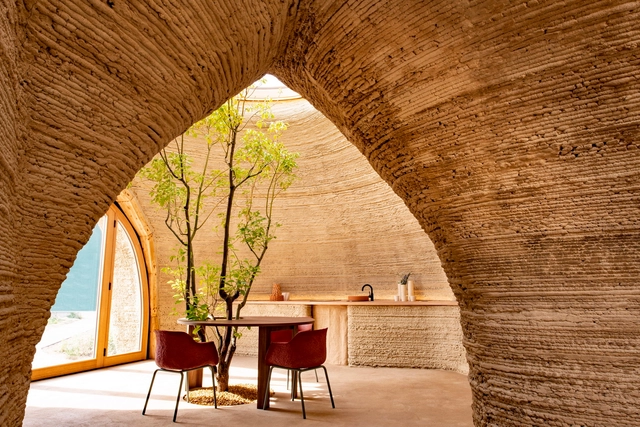
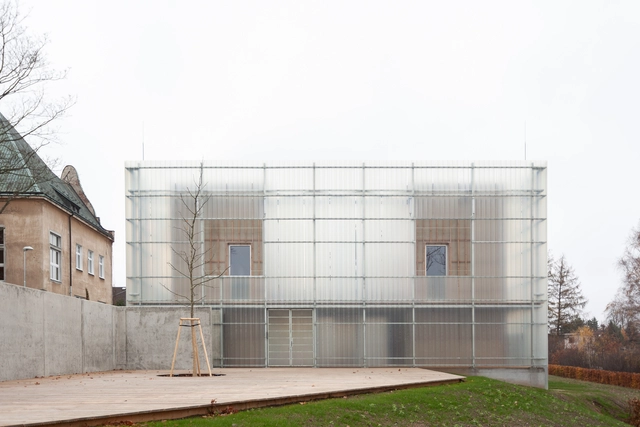
The first eco-sustainable housing model 3D printed entirely from local raw earth. This genuinely innovative and pioneering approach was conceived from the start as a joint project between the two firms, who worked closely throughout the project’s design and construction.
In a homogeneous space like an office, about twenty users were engaged in work; some were packing products in boxes at their desks, and some were processing parts for industrial products. One-half of them were working at an open desk, and the other half sat at individual desks with partitions so that no other people came into sight. Because they felt nervous about the visitors, high screaming came from individual cabins separated by piled up boxes and partitions. It was something I saw in the existing facility on an adjacent section before the design of the employment support facility PALETTE.
Public reuse of the former barn at Hemigkofener Straße 11. The guiding ideas for this design were to treat the architectural heritage with consideration and respect and to preserve the character of the old barn in the center of Kressbronn while transforming it – with just a few, well-considered interventions – into a modern, accessible building. The conversion of the former agricultural barn should preserve the building’s character, retain the deeply overhanging, protective roof, and also maintain the traditional division with a solid ground floor and a threshing floor above.
Established in 1147 by Augustinians and rebuilt after the earthquake of 1755, the chapel of Nossa Senhora do Monte dominates the city of Lisbon. The popular neighbourhood built around the historical hermitage holds on to the steep hillside. Accessible via narrow stairs only, many houses have been abandoned over the years.
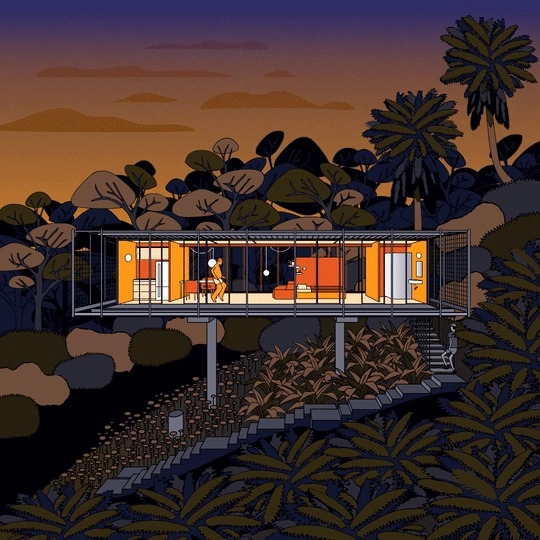
In this episode of “Behind the Scenes”, where we showcase the work of visionary artists and ask about their experiences beyond what is seen by the public, we are presenting Nicolás Castagnola: an illustrator, animator, and architect born in Buenos Aires and based in Berlin. Through his illustrations and animations, he brings different meanings to architecture by opening an imaginative field about the infinite possibilities that the built environment can provide.
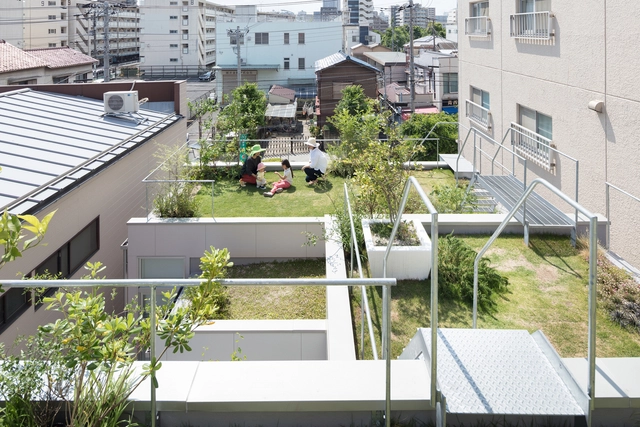
The site faces a street on the west side. All other sides are surrounded by neighboring houses on the east and south side, and a mid-rise apartment building on the north side. After considering everything the client required for the house, there was not enough ground space left for a garden.
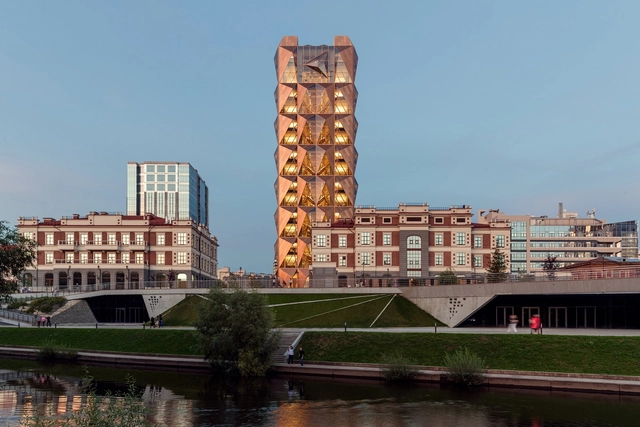
RCC Headquarters in Ekaterinburg has officially opened. The practice’s first office building in Russia, the building reimagines the conventional cellular office to set new standards in quality, comfort and flexibility. The 15-storey building’s innovative modular office units are enveloped in an energy efficient enclosure, which provides a distinctive symbol for the organisation in Ekaterinburg.
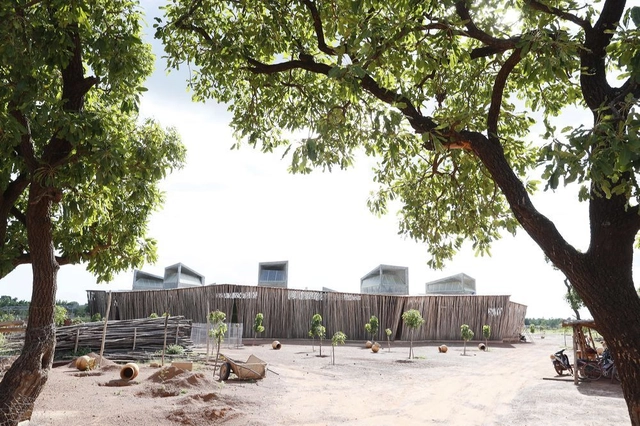
Located in the third most populated city in Burkina Faso, the Lycée Schorge Secondary School will not only set a new standard for educational excellence in the region, it will also provide a source of inspiration by showcasing locally-sourced building materials in an innovative and modern way.
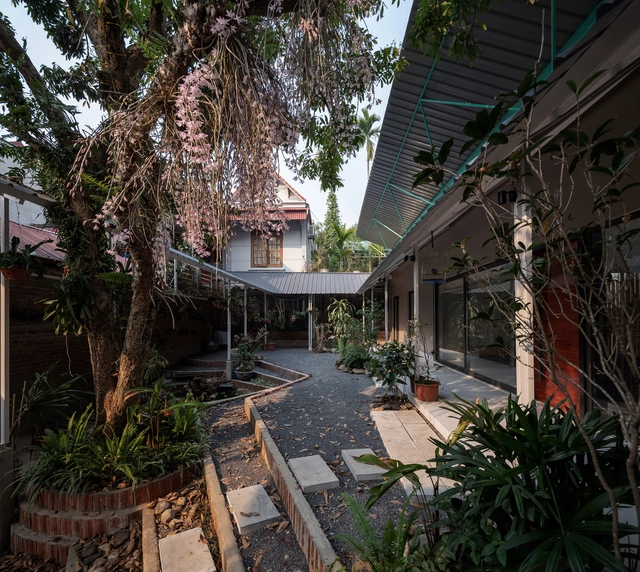
We started the project with the remaining memories of a friend's house on this land. It’s a small house of a village on the hillside. At that time, the houses were sparse, the roofs were low and appeared peeked through the trees that covered the village. The feeling of the garden and the paths to the house is about the rays of sunlight piercing the leaves, of the soft and dark shadow.
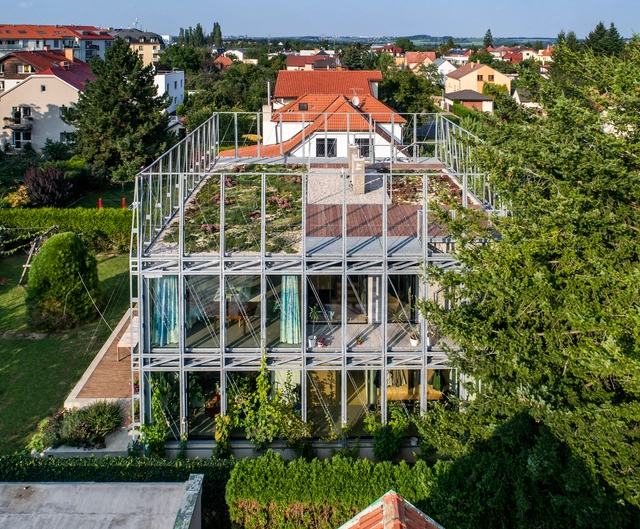
It is the construction modification of a family house in Prague, which was completed and reconstructed several times as an originally recreational building from the 1930s for permanent residence. Considering these interventions, its stability was no longer sufficient. The fundamental decision was thus to complement and in general stiffen the construction with a steel corset. Another problem was the original mansard roof, which had a thickness of only 15 cm.
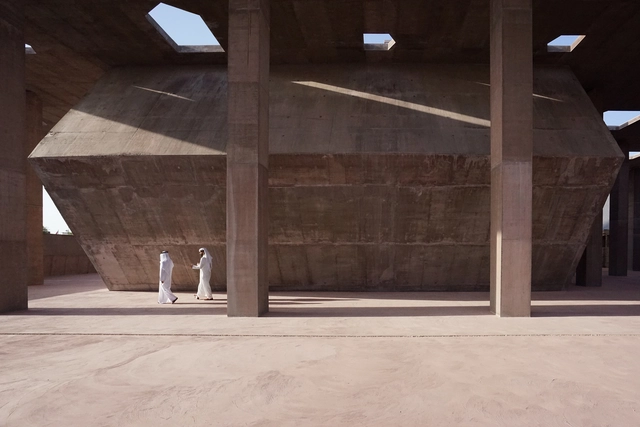
The site contains ruins that form part of the UNESCO Pearling Path. The entire building functions as the entrance to the cultural heritage and the foyer for the medina. It is an urban room for the people of Muharraq with the scale of a public park. Concrete elements are placed along the property boundary to form a new locus in the dense city.
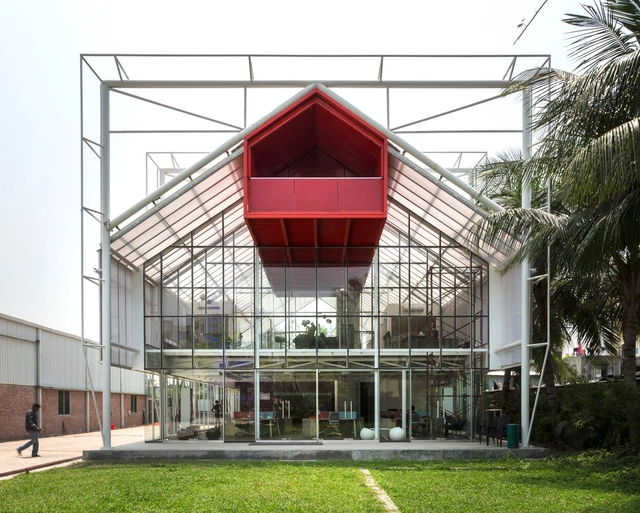
The place where “Blues H. Office” is standing today, was simply occupied by a warehouse before. When “Blues” decided to shift their office right beside there warehouse, the primary plan was simple. They wanted to build a normal work space where they can accommodate 30 to 40 workstation. After building the foundation, they gave it a second thought and decided to do something different with it.
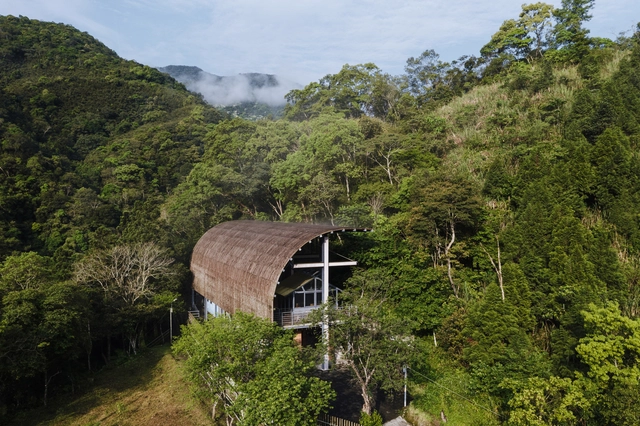
The building design was based on the faith of Christians at the present time. The cross structure of building not only architecturally supports the church, it also implicitly watches out the tribe. The original faith of the tribe then becomes the arched roof and diamond ceiling that artistically signify the sky of the church.
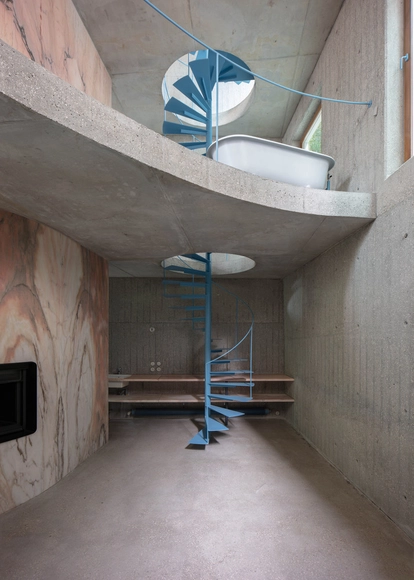
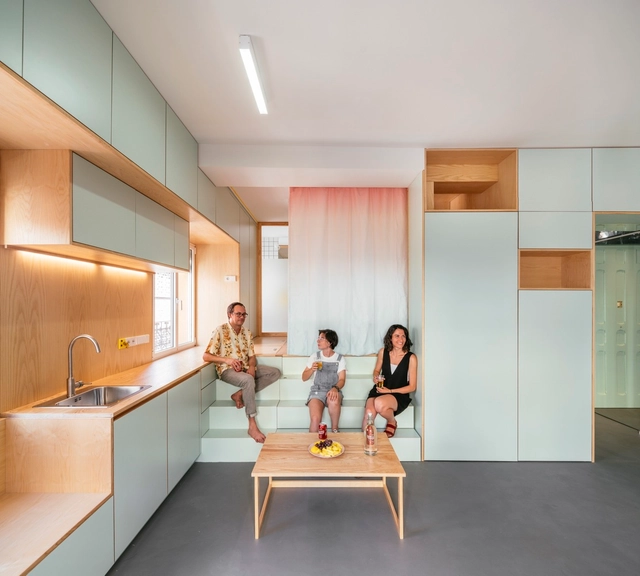
EBBA have recently completed an ambitious refurbishment to an apartment located in an old matchstick factory in East London. The project includes the complete overhaul of a double height space in the converted factory building, opening up and extending the mezzanine to provide a generous flexible apartment. The renovation sought to maximise the small footprint by lining the edges with joinery and storage, allowing for an open plan arrangement with vertical lines that could increase the sense of volume.
A dual strategy is applied to this project Firstly, the floor plan arrangement is based on an L-shaped service band that integrates the access, wet areas, storage areas and leisure spaces. This frees up the main area, which opens up to the windows and balconies to create a brightly lit atmosphere. The intimate areas are therefore secluded and sheltered from view from the entrance.
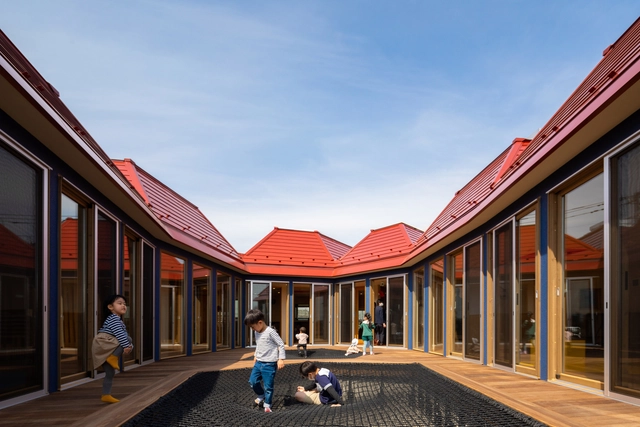
The new Kindergarten - Nová Ruda in Vratislavice nad Nisou - solves the need of the city district regarding its growing population, by providing educational spaces and a leisure area for children.
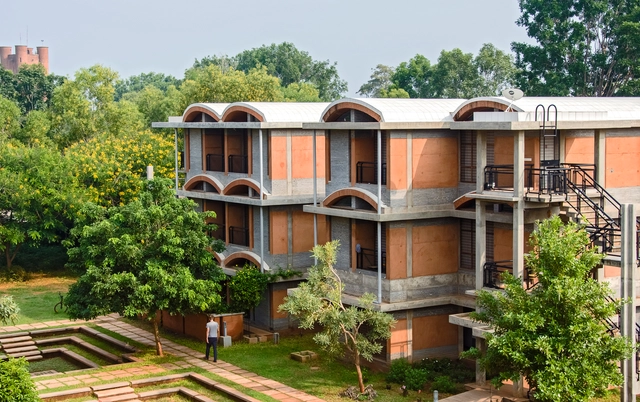
The “HUMANSCAPES HABITAT- is an applied research and demonstration project of Sustainable and Integrated Urban Living Project” for benchmarking in habitat as a course correction for a sustainable and harmonious model of development which is an imperative need in the present global crisis of energy and climate change. This mixed-use development of residences, community, and workspace would be a touchstone for standards for low-embodied energy building. This project also wants to address the issues of skill development upgrade the capability in the unorganized labor sector of India in the construction sector to transition construction jobs from building with high embodied energy materials to building materials and technology to reduce the carbon footprint in the habitat sector to meet India’s commitment to IPCC.