Kokage-gumo Pavilion / junya ishigami + associates

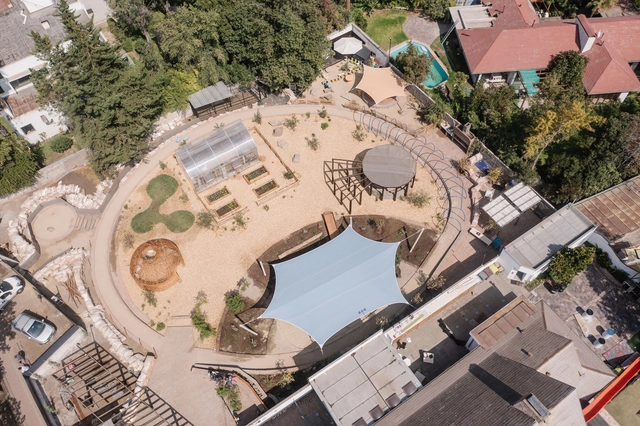
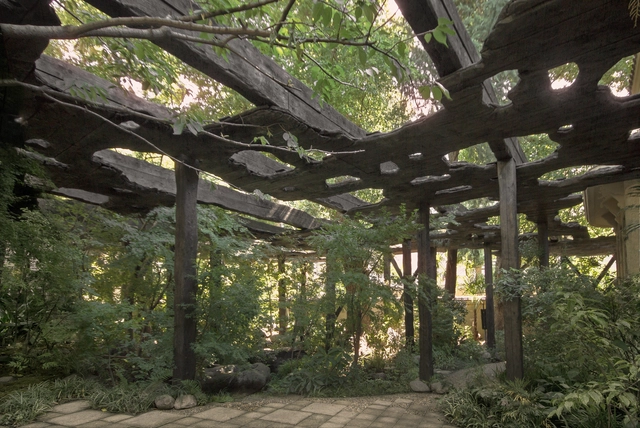
There is an old house in Kudanshita, built-in 1927 by the industrialist Mankichi Yamaguchi. Among those involved in its creation, there is Tacchu Naito who designed the structural plans for Tokyo Tower. In the beautiful old garden of this house, a sunshade was planned to softly block the sunlight exclusively during the summer of 2021.

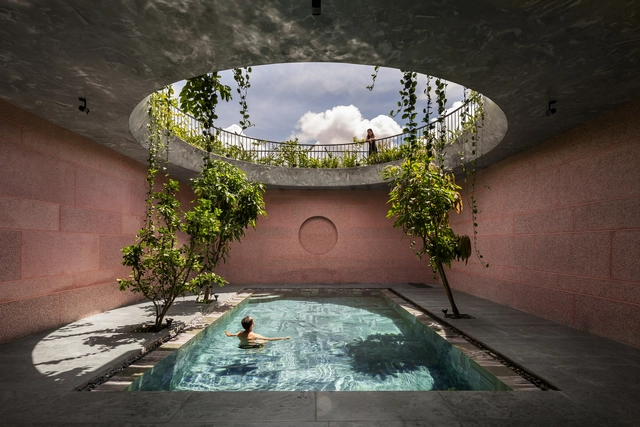
Pink House / 23o5Studio

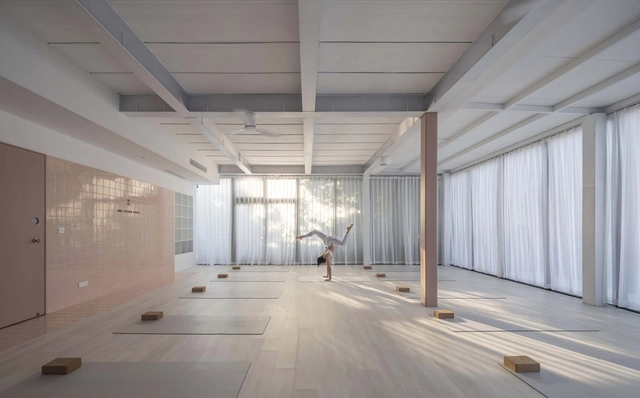
The project is designed for female hosts and sisters. The project focuses on exploiting areas of light and transitions in modern living spaces. Closedness (privacy and security), expansion (discovery), tranquility (life), spatial experiences are continuously evolving.

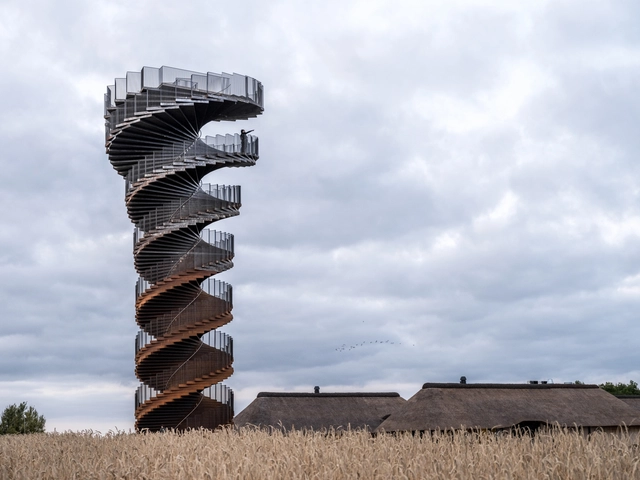
Marsk Tower / BIG

The 25-meter-high Marsk Tower – translated as “Marsh Tower” due to its location in the marshlands of Denmark’s popular National Park, Wadden Sea – offers expansive views of the natural environment. Appearing as a sculptural art object rising out of the landscape, Marsk Tower will function as an observation lookout that facilitates community as a key tourist landmark. A wheelchair-accessible tower, an elevator located in the core of the tower provides access via the ground level ramp. The tower’s simple design, defined by Corten steel materiality, exudes a natural aesthetic that blends with the surrounding environment while simultaneously becoming a new, visible destination in Denmark.

Bamboo Playground / Blue Temple

The construction serves 2 different functions. On one side, the school playground becomes an interactive and playful surface, a sort of ribbon that starts as a floor and morphs into a roof, kids can play on top, around and underneath the structure. On the other side, the design is addressing an unconsidered and informal public space in the city; an above-ground water pipeline that over time became a pedestrian highway; by providing it with lighting at night for safety and aesthetic purposes, the structure also stands in the landscape as a sculpture, a landmark to create a sense of place.

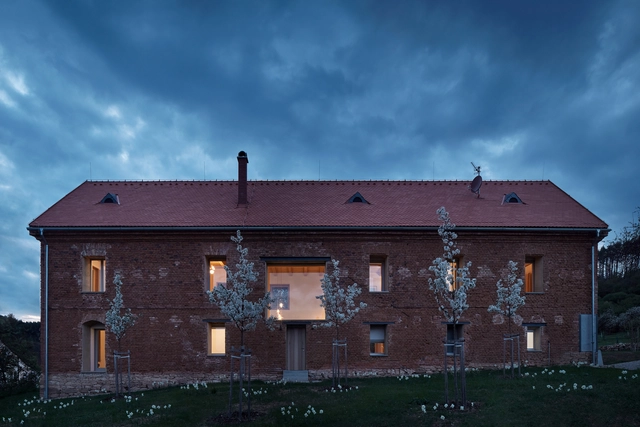
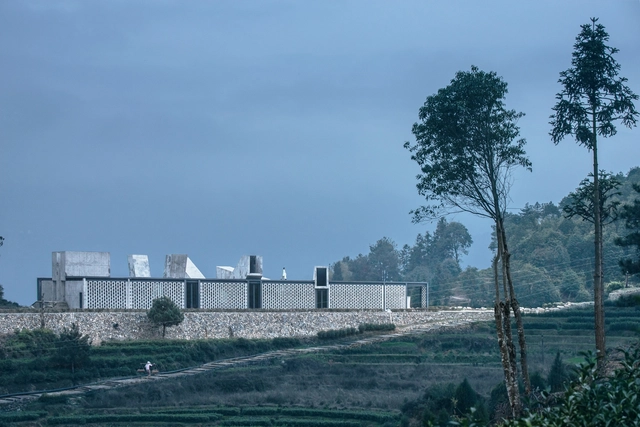
House Inside a Ruin / ORA

We were approached to reconstruct a fascinating building. We found a house that suffered significant damage, a former homestead rebuilt under the communist regime into a granary. The house was looted and reorganised for another purpose. During the first site visit, we analysed its joints, niches, and protrusions, discovering the original forms. Despite its previous inconsiderate rebuilding, the house has not lost any of its grandeur. On the contrary, the way it is situated, the way it rises to the sky, and the way its raw matter resists time, have proven to be of the highest quality.

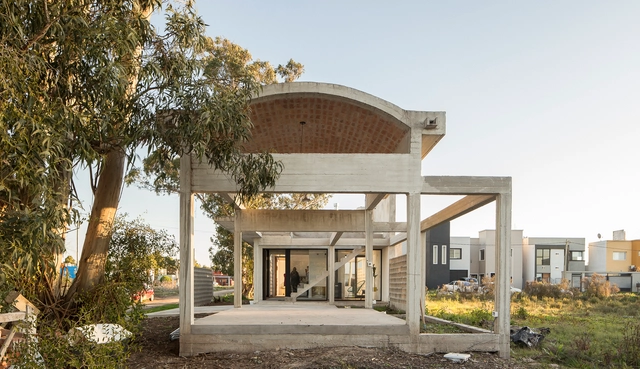
House Luisina / Reimers Risso Arquitectura

The house was designed for 4 possibilities of expansion, the need to propose changes that guarantee adaptability, and the possibility of them being made by the occupier with complete independence was one of the premises. This is a house that includes photographic studio, with extensions that adapt to public uses such as workshops and expo. In the first initial stage, minimum domestic space is proposed, the remaining extensions remain latent in the resolution of the structure, both from a technical and spatial point of view. Research on small suburban houses The houses are located on the outskirts of the town center. The land occupation strategy focuses on the disposal of reduced surfaces on a more extensive modular grid.

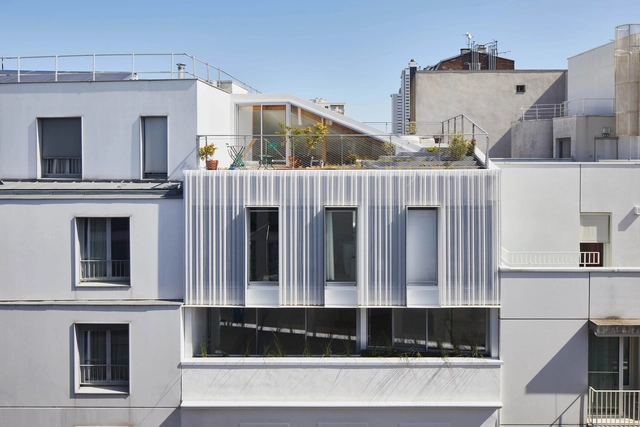
Living on the Roof / rotunnojustman

In Paris, the scarcity of land partly explains the city’s low housing production capacity. The research for alternatives to densification must be encouraged. The Rotunno Justman architectural firm has just raised a small building in the 15th arrondissement. Through the accuracy of the architectural intervention, the project requalifies the existing building and contributes to harmonious densification of the district, in connection with its skyline.

Clemens Strobl Winery / destilat

Weinmanufaktur Clemens Strobl is the centerpiece of a historical 4,000-m2 ensemble that includes business premises and a manor house in Kirchberg am Wagram (Lower Austria).

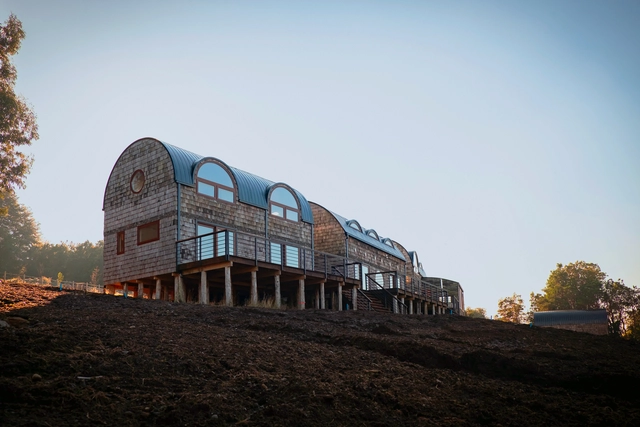
Abovedada House / Edward Rojas Arquitectos

Abovedada house is located on a high-rise terrain with good sun and extraordinary views of the landscape. It is conceived as a set of very defined modules crowned with barrel vaults; those that house different functions. 

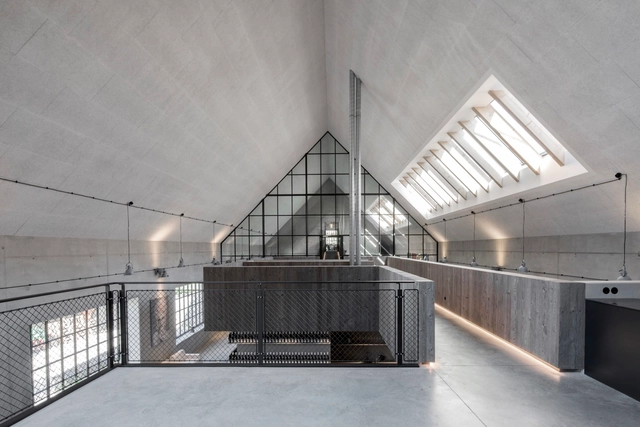
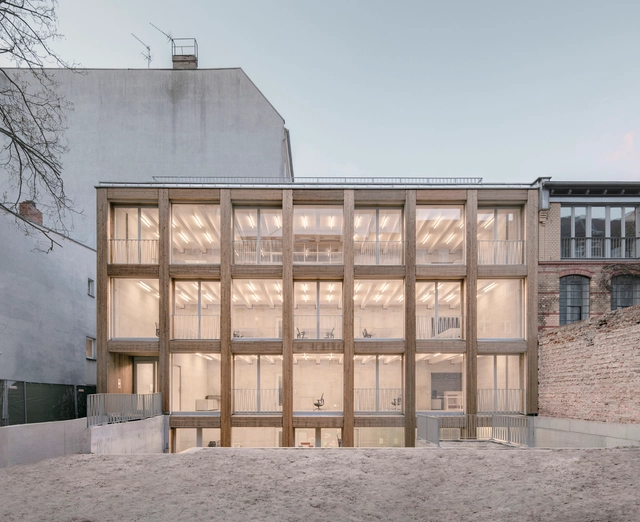
Remise Immanuelkirchstrasse Workspace / JWA Berlin + Ralf Wilkening Architect

The site for a start-up REMISE (a tenement-block outhouse, historically a workshop-cum-carriage house) at Immanuelkirchstraße is situated in the Prenzlauer Berg district. It in turn rests, geologically, entirely on the ground moraines of the Barnim Plateau. Eighty percent of the existing building was erected over a hundred years ago (ca. 1890–1905). The structure was always the same: a front building, a back building, and then a Remise, the outhouse. The occupancy mix was vibrant. While the front and back buildings were used for living, artisans plied their trades in the REMISE: carpenters, saddlers, locksmiths, printers, bakers.

Stepping Stone House / HAMISH&LYONS

Three disconnected, under-used and flood prone outbuildings were replaced with two new buildings that provided additional living accommodation for the existing house. Specific attention was given to the 5 children, all boys. The design therefore seeks to engage the family with the calming effects of nature. This is achieved through the abundant use of daylight, an organic structure, natural materials and a new landscape design. 

Korea National Arboretum Children's Forest School / GEEUMPLUS

“Korea National Arboretum Children's Forest School” is used as an educational and exhibition space to inform children about the importance of forests and the environment in a fun and easy way through the building and the exhibition of outdoor spaces.  The architectural concept is based on the biophilic design in which nature, ecosystem and architecture coexist. The first starting point of this project is the harmony between the building and the existing trees. We preserve the old fir and cypress trees and arrange the building around these trees. Thus, the building is surrounded by the existing trees, and the layout opens to the stream on the east side of the site where we can see the beautiful scenery naturally.

Duoyun Bookstore in Huangyan / Wutopia Lab

Getting Up. The beginning of a design can be based on a mood. I envied the tranquility and pleasantness of this city, which is scarce in Shanghai. Suddenly, I decided there should be a cloud, calmly and slowly rising over the river. Clouds have a sophisticated and pure beauty. Rather than perform cosmetic surgery on a collage of cluttered commercial territorial façades, I decided to wrap them in a continuous white perforated aluminum panel wall. The continuous white creates a complex and pure interface on the riverside (by controlling the perforation rate, the façade creates a cloud of layers) hiding the bookstore. The aluminum wall is the façade, or it can be stripped away to become a courtyard enclosure or both. The continuous white aluminum wall is used as an addition to create a serene and pleasant visual subtraction. A cloud rises over the riverside, and the readers of the bookstore are in the cloud. 

Camp Graham / Weinstein Friedlein Architects

At a lakeside camp, where tented and cabin campsites are proven attractions, the Girl Scouts set out to add a different sort of shelter. They wanted treehouses, something to evoke the sense of adventure, fantasy, delight found in the lofty constructs of backyards and forest getaways. The new 36-person site at Camp Graham consists of a series of pole structures along the wood’s edge, linked by an elevated path that winds among the trunks of the native trees. The challenge in treehouse making is to build without doing harm to the trees, and to extend access to all campers.

The Environment Museum of Stymphalia / Demetrios Issaias - Tassis Papaioannou, Architects

The museum is designed to be built on the abrupt side of one of the profoundly verdant hills that surround the lake of Stymphalia. The building site is marked out towards the side of the lake by a passageway delineated through the dense bushiness that connects the provincial highway to the observatory at its very top, from where one can enjoy the view of the entire area of Stymphalia and of the surrounding mountains.

Castle Acre Water Tower / Tonkin Liu

By the ruins of a Castle, a Priory, a city gate, rises one modern anomaly, steadfast against all elements, a relic from the industrial age. A found object, a disused landmark, towering out of shielding trees, loved and unloved by the village of Castle Acre. Restored and reused on a shoe-string budget, Rusty tank a panelled Tudor hall, Hung timber rooms a timber spiral stair. Minimal intervention, purity of structure, Ivy growing, wind blowing a field of barley, Nature returns for the romantic industrial ruin

CRA House / Estudio MMX

The CRA House is located within a residential country club in Avándaro, Estado de México. The country club, like many others in Mexico, establishes general design criteria and suggests, with emphasis, the use of specific forms and materials. Given the mountain character of the site, the regulation infers the need to preserve the rustic character of the place through architecture. In most cases, regulatory constraints are real challenges that are solved through analysis and design. In this case, the design of the house proves a stylistic hybridization strategy, with the double purpose of giving continuity to the character of the whole, while at the same time articulating, in an alternative way, the different spaces and the program of the house.

K2 House / A.A.E.

The ensemble of three triangles surrounding a quadrangle, K2 House occupies a site in Tokyo at the edge of a dense area of wooden houses, where gaps between houses form green paths letting through the wind and light. The house stands opposite a lively open block developed with a large-scale urban scheme containing a nursery school and a park. Programming began with the architect’s thought on gardens: “Making a garden creates a life-scape and a townscape. It can be a social behavior to settle in by personalizing one’s living space and expressing one’s personality. ”