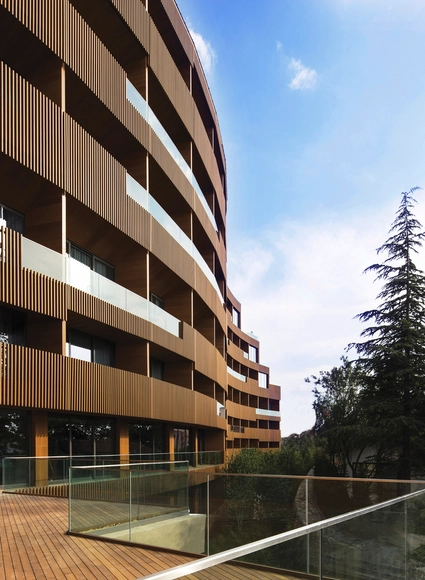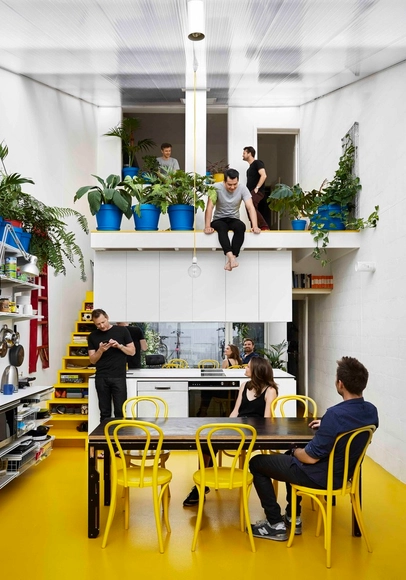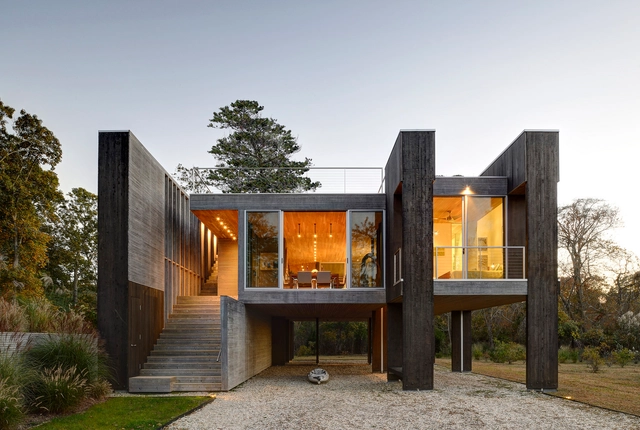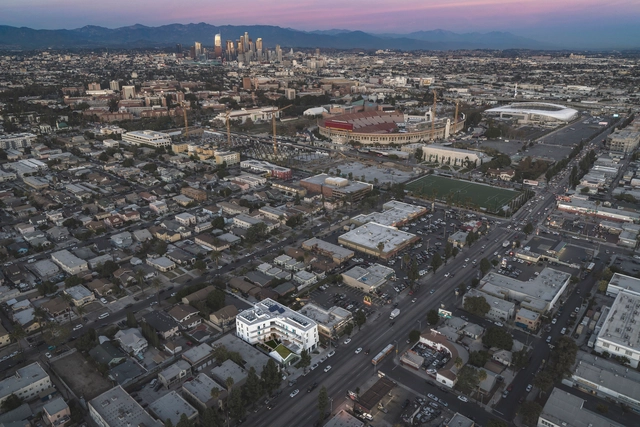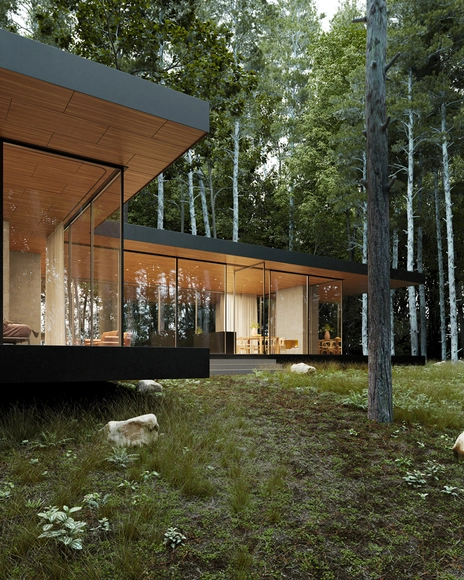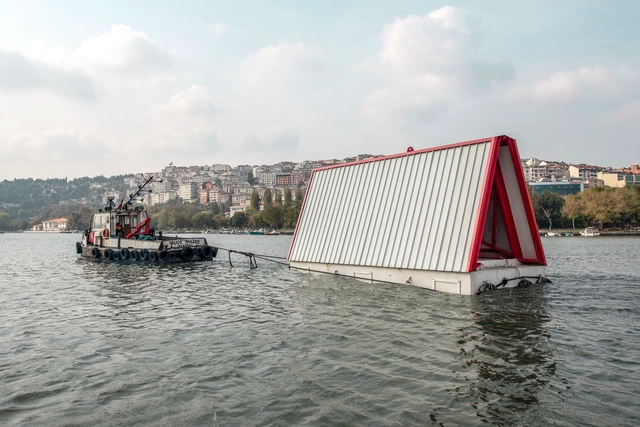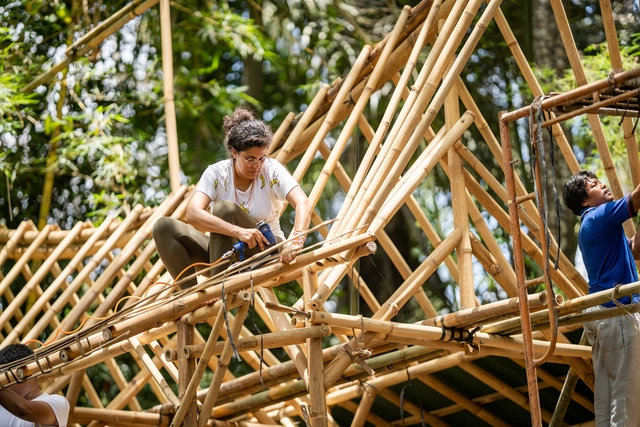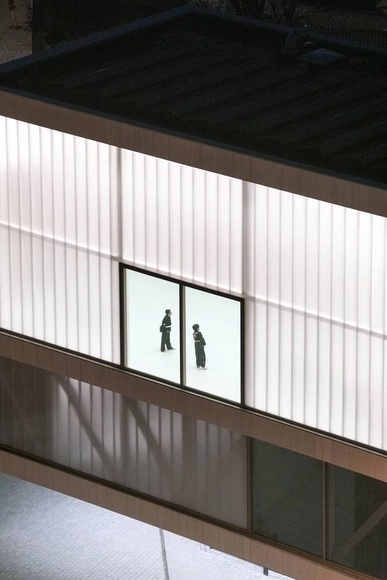
The window is the architectural element that satisfies our innate need to relate to the outside space, providing us with ventilation and light. The more extensive and clean the window is, the greater the sensation of "being outside". Consequently, opening up spaces to the outside has become a common requirement for people who want and need to inhabit flexible, adaptable spaces, in contact with the air and nature. There are many ways to do this, but not all of them allow an airtight enclosure to become fully open and continuous, clearing the boundaries between both spaces.
Yuval Noah Harari points out that, around 300 thousand years ago, Homo erectus, Neanderthals, and ancestors of Homo sapiens already used fire daily. According to the author of the international bestseller “Sapiens,” fire created the first significant gap between man and other animals. "By domesticating fire, humans gained control of an obedient and potentially limitless force." Some scholars even believe that there is a direct relationship between the advent of the habit of cooking food (possibly due to the domestication of fire) and the shortening of the intestinal tract and growth of the human brain, which allowed human beings to develop and create everything we now have.
In the Historic Center of Olinda, a Brazilian municipality in the state of Pernambuco, architecture borrows shapes and colors from nature; cobogós perforations on the balconies look like round leaves and fruits, while the railings spiral with a hint of twisted flowers. The colors of the earth and sky also reappear in the floors, backyards, kitchens, and rooms of colonial houses, coating them in shades of brown and blue.
“The whole hand will be the tenth part of the man; From the bottom of the chin to the top of the head is an eighth of its height; From the nipples to the top of the head it will be the fourth part of the height.” If you're still here without going to get a measuring tape, these phrases were written by Marcus Vitruvius Pollio, a Roman architect who lived in the 1st century BC, who delineated them in his influential treatise “De Architectura Libri Decem” – Ten Books on Architecture. The data presented by Vitruvius was compiled and depicted visually around fifteen hundred years later by Leonardo Da Vinci in his famous work “Vitruvian Man,” which is reproduced in all different contexts today, from book covers to kitchen aprons.
Cuisine, culture, sightseeing, and engaging with the locals are all reasons people like to travel. The common factor that draws us to explore new places, however, is simply the chance to experience cities and landscapes unlike our own familiar surroundings. For example, when Chinese tourists can again visit Copenhagen, they may admire the waterside capital’s winding bike paths, lush green parks, and the Scandinavian brick traditions on display in Nyhavn. Likewise, a Danish tourist would surely be blown away by the breathtaking scale of Beijing, with it’s 9 million+ bicycles and the display of ancient Chinese culture juxtaposed with modern society.
Fungi are everywhere. In the air, in the water, in our bodies, in the trees, in the ceilings of our bathrooms, underground. They can be mushrooms (edible, medicinal, hallucinogenic, or very poisonous), or take other simpler forms, such as molds. They can trigger illnesses, but they can also produce antibiotic remedies, such as penicillin, or help ferment amazing cheeses and breads. Could they also be the future of packaging and building materials?
Using unconventional materials in architecture requires a lot of creativity and experimentation in order to create new possibilities that are both efficient and innovative. Small-scale projects, in particular, offer great opportunities to explore these unusual materials because, among other factors, they provide fewer loads on the structures and, sometimes, also have a temporary nature. Nevertheless, using unconventional materials in small-scale architecture can help encourage its use in other projects, including larger constructions.
Emmi Pikler was a Hungarian pediatrician who introduced, in the years after World War II, a new philosophy on early childhood care and learning for children up to the age of 3. It was after the birth of her first child that she began to question: what happens when a child is allowed to develop freely? The observed results culminated in the introduction of a new methodology.
Everyone loves models, but not everyone loves making them. For some, models bring up memories of fingers full of dry glue, cuts from sharp pieces, wasted materials, and large doses of frustration. For others, with the unique ability to physicalize drawings easily and beautifully, making small-scale models can even be fun. But, of course, on the internet, there will always be someone who can take any activity to unbelievable levels of achievement. In model building, the OUROBOROS ARQ YouTube channel takes this role. With almost 2 million subscribers, and videos with over 50 million views, the channel documents the construction processes of highly complex miniature buildings.
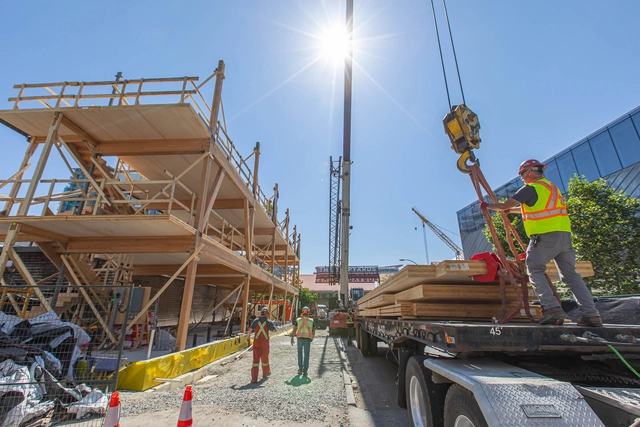
Timber trusses are wooden structural frameworks used to support roofs or other heavy structures. Fabricated from a series of triangles linked by a ridge beam and purlins, wooden trusses are structurally advantageous due to their high strength-to-weight ratios and corresponding ability to support long spans. However, these structural components can also be used for aesthetic ends, and when left exposed, can complexify, beautify, and open an interior space.
https://www.archdaily.com/948955/the-beauty-of-exposed-wooden-trussesLilly Cao
Between 1950 and 2011, the world's urban population increased fivefold. In 2007, for the first time, the number of people living in cities surpassed the number of people living in the country. In 2019, the urban population had already reached 55% of the total population, and by 2050, it is estimated that just over two thirds of the population will live in urban areas. However, this growth is not constant in all parts of the world: according to the UN World Urbanization Prospects 2018 Report, the global urban population is expected to grow by 2.5 billion inhabitants between 2018 and 2050, with almost 90% of this increase concentrated in Asia and Africa. As populations in these areas increase, so will the demand for energy, food, and water, making resources more scarce. This scarcity will be compounded by the negative impact of urbanization on the climate and the environment.
For many, the aesthetics of wood are powerfully enchanting. With a huge diversity of species and innumerable variations in colors, weights, and textures, wood is one of the most highly appreciated materials of all time. But the unrestrained logging of forests for use in construction has had and will continue to have enormous environmental impacts if precautions such as sustainable management, legitimate certification, or reforestation are not taken. Being an organic material, when used for construction, wood tends to morph under conditions of humidity, heat, and loads, and its fibers eventually deform over time. In addition, wood is a material that does not respond well to environments where it is soaked and dried repeatedly, which can cause it to rot after some time if it is not adequately waterproofed. Therefore, there are some situations where using wood may not be a good idea.
Hydraulic tiles are tiles produced entirely by hand with cement-based raw materials. Created in the mid-1800s in Spain, and widely used in Europe and America, it is a versatile option that can not only be applied in public areas, such as squares and sidewalks, but also interiors, including floors, walls, and furniture. Their versatility stems from the fact that they are highly customizable, from their colors and patterns to their geometry and dimensions. Read below a mostly technical explanation of these tiles, their manufacture, and their installation.
Diversifying the materials of an interior space can greatly improve its depth and visual interest. At the same time, adding partitions or other delineations of internal space can help organize flow, circulation, and visibility. Polycarbonate, a type of lightweight, durable thermoplastic, is an excellent medium for both functions.
https://www.archdaily.com/948075/polycarbonate-for-interiors-8-examples-of-translucent-architecture-indoorsLilly Cao
Residência Familiar / Ruetemple. Image Cortesia de Ruetemple
In early 2020, along with the implementation of worldwide social isolation measures, we published several articles in order to help our readers increase productivity and comfort in their home offices. After months of continued isolation, surveys show that more than 80% of professionals want to continue working from home even after quarantine ends. In addition, a good number of companies are similarly satisfied with current work practices, showing a high tendency to adopt this practice indefinitely, since the majority of companies observed that remote work was as or more productive than face-to-face work.
Corals are fundamental to marine life. Sometimes called tropical sea forests, they form some of the most diverse ecosystems on Earth. They serve as a refuge, breeding, and feeding area for dozens of species in the sea, and their absence can negatively affect local biodiversity to a tremendous degree. Yet just as humanity pollutes and destroys, it can also remedy and encourage the creation of more life. This is why shipwrecks of old vessels or the sinking of concrete structures for the creation of artificial reefs are frequently reported as providing immense potential. In Hong Kong, researchers have been developing 3D printed structures using organic materials that can lead to the creation of new opportunities under the sea.
The polished concrete technique is not only suitable for many different environments, but also harmonizes well with various building materials, and has been the material of choice for many Brazilian architects in housing designs in recent years.