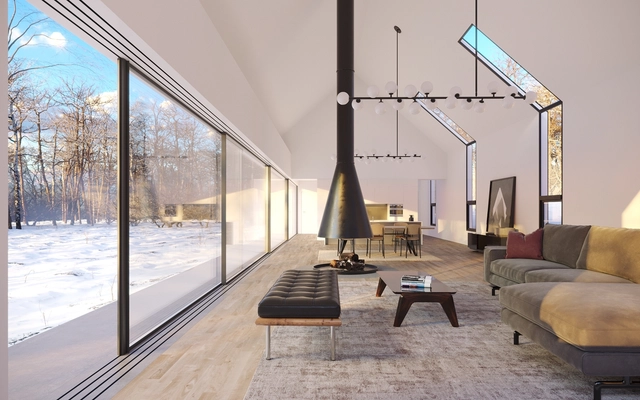
The Diverse Application of Frameless Windows in Creating Contemporary Spaces

 | Sponsored Content

A frameless window is exactly how it is described – a seamless glazing option that has no obvious frame around the perimeter. As a new design phenomenon, frameless glass panels are used for balconies, shower screens, glass doors, and bespoke conservatory windows, creating a ‘wall of glass’ effect, which is a hallmark of contemporary architectural design. Seamless glazing has a range of advantages, the first being the supreme stylistic feature it can create, letting the optimum amount of light into a room and provide a chic contemporary element to a building. Aside from the aesthetic appeal, frameless windows are simple and super-fast to install so homeowners can enjoy minimum disruption and lower installation fees.
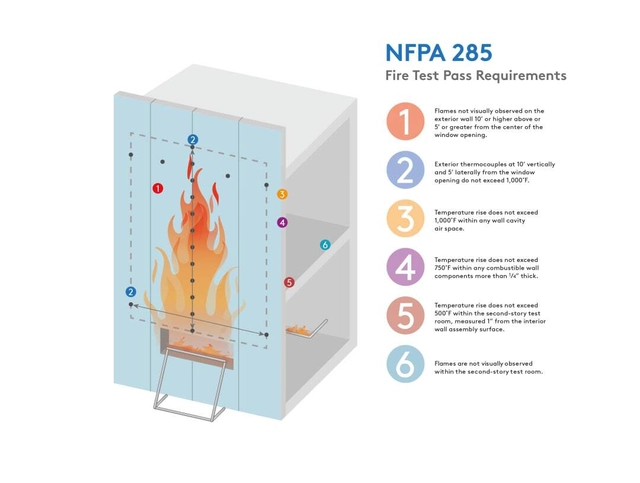
How an Insulated Metal Panel Envelope Can Meet Fire Safety Codes

 | Sponsored Content

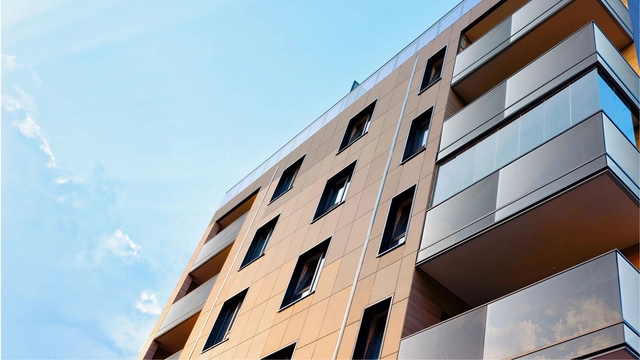
The way in which a fire evolves largely depends on the materials that constitute the building, as well as how it is designed. For this reason, there exist a number of fire safety requirements in building codes that must be followed during the initial design stages, as well as the physical construction of a building. In addition to these building codes, there are other considerations that must be taken into account such as thermal comfort, acoustics, and accessibility. When specifying a material or product for part of a building, the architect or design professional must pay close attention to meeting these demands. An example of a suitable material choice is the Insulated Metal Panel (IMP), which can have superior thermal properties, various appearance possibilities and good fire resistance.

10 Wooden Stilt Houses that are Lifting Architecture off the Ground

Subscriber Access | 

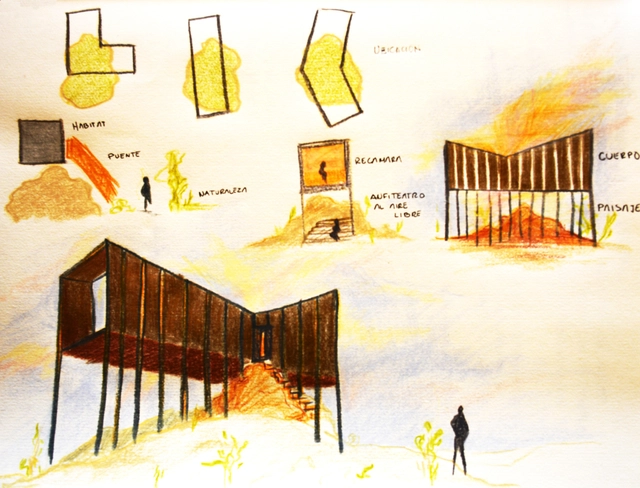
Stilt houses are houses raised on piles over the surface of the soil or a body of water. Dating back to the Neolithic and the Bronze Ages, a wide variety of raised dwellings have been identified in a variety of forms worldwide, designed with several diverse and innovative methodologies. Stilt houses are well suited to coastal regions and subtropical climates. More than just a distinctive structural design resolution, they also protect against floods, maximize views and allow homeowners to build on rocky, steep, or unstable land. They also serve to keep out animals and vermin, provide ventilation from underneath, and minimize a house’s ecological footprint. 

Passive Ventilation, Shade, and Unique Aesthetics: 3 Case Studies of Perforated Enclosures

 | Sponsored Content

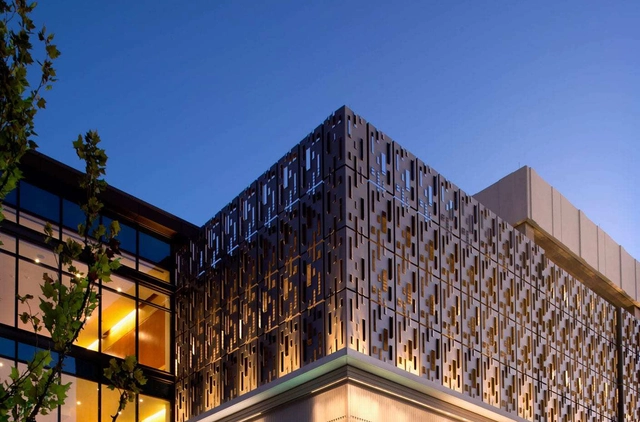
Perforated wall panels offer a variety of benefits: they can provide passive ventilation, shade, and unique aesthetics to any façade. In the case of companies like Dri-Design, which specializes in customizable and sustainable metal wall panels, perforated panels can be produced according to a wide variety of specifications, including different colors, materials, sizes, textures, shapes, and styles of perforation. Dri-Design’s perforated imaging series even allows architects to apply images onto their facades by varying the size, location, and density of the perforations.

How Black Concrete is Made (and its Application in 7 Projects)

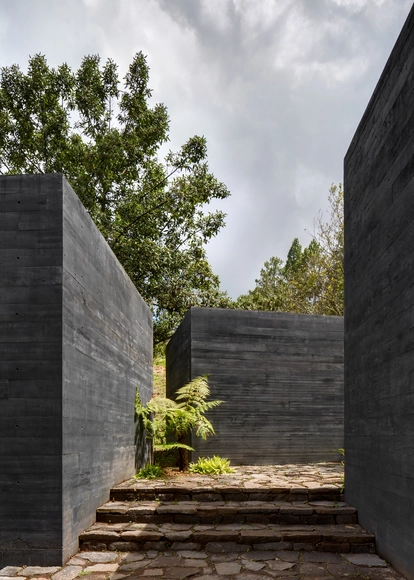
As cliché as it may sound, there are two things that architects really like: exposed concrete and the color black. While concrete offers a distinctive rough aesthetic, emphasizing the tones, textures, and surfaces that shape the concrete mixture, the sobriety that the color black provides allows the architect to highlight specific characteristics precisely. Combining the two seems natural. But black pigmented concrete is not as common as we might imagine. Below we talk a little about the black concrete production process and some projects that use it.

Holography: How It Could Change Architectural Space

Although holograms have been a possibility for decades—the first hologram was developed in the early 1960’s following the development of laser technology—many might still associate them more with science fiction, the term conjuring up images of high-tech superhero gadgets and spaceships in the distant future. Yet as we inch closer to the reality of a hyper-technologized future, and a variety of industries—including architecture and construction— begin to embrace new forms of increasingly advanced technology, holography, too, has a chance of completely reshaping the way we conceptualize and experience architecture. While it is impossible to predict exactly how holographic technology will be used in the future, below, we list several examples of existing projects that use holograms and other types of holography to create atmospheric environments, fantastical scenes, and practical visualizations. These examples move beyond the use of holograms to visualize structures and sites during the design phase; they utilize holography to shape the completed architectural space itself, completely altering the sensory and spatial experience of their environment.

No More Waste: 10 Ways to Incorporate the Circular Economy into an Architectural Project

A circular economy is an economic system aimed at eliminating waste and the continual use of resources. Looking beyond the current take-make-waste extractive industrial model, a circular economy aims to redefine growth, focusing on positive society-wide benefits. It entails gradually decoupling economic activity from the consumption of finite resources and designing waste out of the system. Underpinned by a transition to renewable energy sources, the circular model builds economic, natural, and social capital.

Cyclopean Concrete and Its Many Diverse Uses and Applications in Architecture

Subscriber Access | 

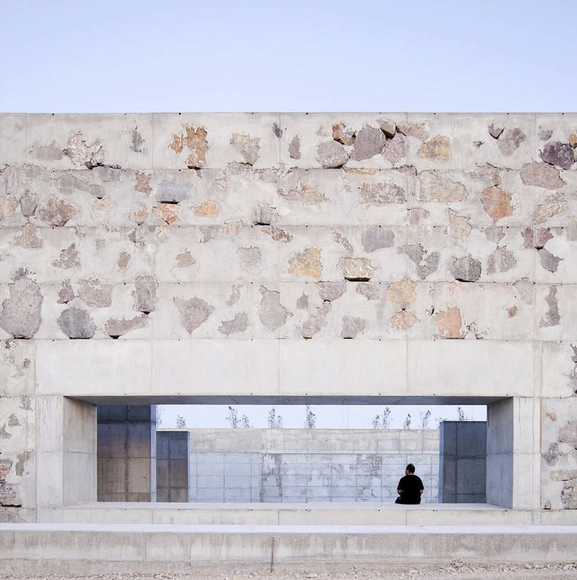
Historically, "cyclopean" referred to a building technique that superimposed large stone blocks together without any mortar. This allowed for a diverse array of structures across various civilizations, including defensive walls, talayots, navetas, nuraghes, temples, tombs, and forts. Nowadays, the term applies to any ancient structure consisting of large stones superimposed to form a polygonal shape.

5 Ways that Custom Ceiling Features Can Enhance an Interior Space

 | Sponsored Content

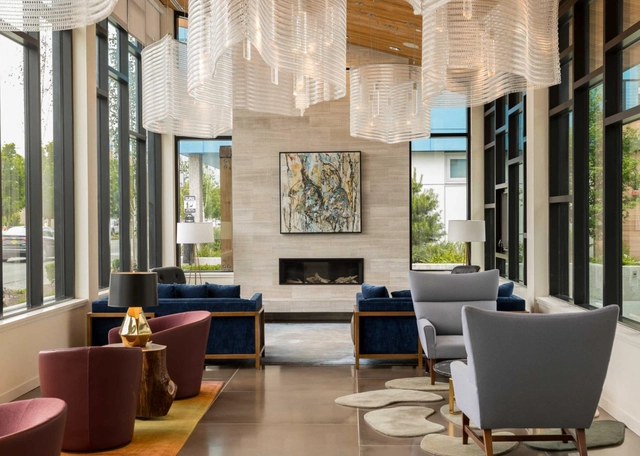
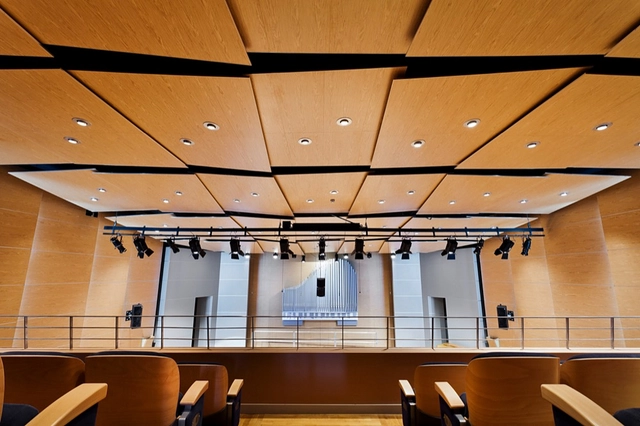
The ceiling – commonly referred to as "the fifth wall," – has the potential to transform an interior space from average into extraordinary. When it comes to design, the ceiling is often forgotten, and there are many missed opportunities to create moments of visual interest and delight. 

Roofing Systems for Bamboo Buildings

Subscriber Access | 

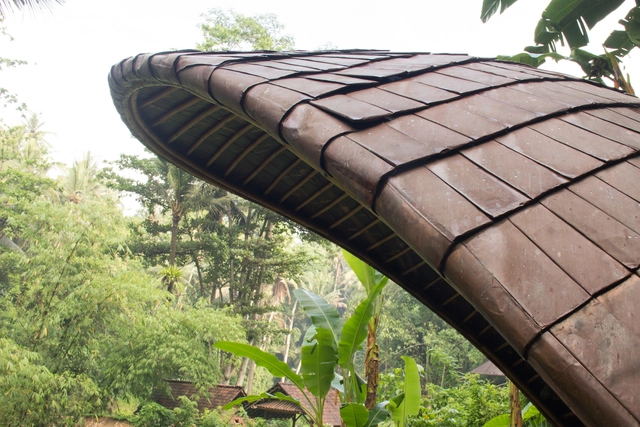
Roofings are perhaps the most fundamental architectural element of bamboo buildings (together with foundations). Well-designed and built roofs play a key role in protecting a bamboo structure whilst adding to the beauty and experience of the space. What qualifies as a well-designed bamboo roof? 

Integrating Solar Technology into Facades, Skylights, Roofing, and Other Building Elements

 | Sponsored Content

Climate change remains a foremost concern in global politics, economics, and scientific research, particularly as it pertains to the architecture and construction industries. This heightened culpability for the field of architecture stems from the fact that the construction industry contributes to 40% of global emissions, and the demand in the building sector is only projected to increase by 70% by 2050. Renewable energy is part of a 21st-century sustainability paradigm that responds to climate change and environmental degradation, strengthening the momentum for global energy transformation. Renewable energy production strategies are necessary to mitigate future energy security issues as traditional sources of fuel become increasingly scarce, and an indispensable part of designing for sustainability in architecture.

How Can We Make Future Megacities Become Smart as Well?

Cities are so deeply rooted in the history of mankind that we hardly ask ourselves why we live in them or what the reason is for us to group together in urban settlements. Ciro Pirondi, Brazilian architect, points out that we live in cities because we like to have someone to talk to, while Paulo Mendes da Rocha classifies the city as “the supreme work of architecture.” The city is the world that man builds for himself. These are immense collective constructions, palimpsests, and collages of stories, achievements, and losses.

Poorly Designed Acoustics in Schools Affect Learning Efficiency and Well-being

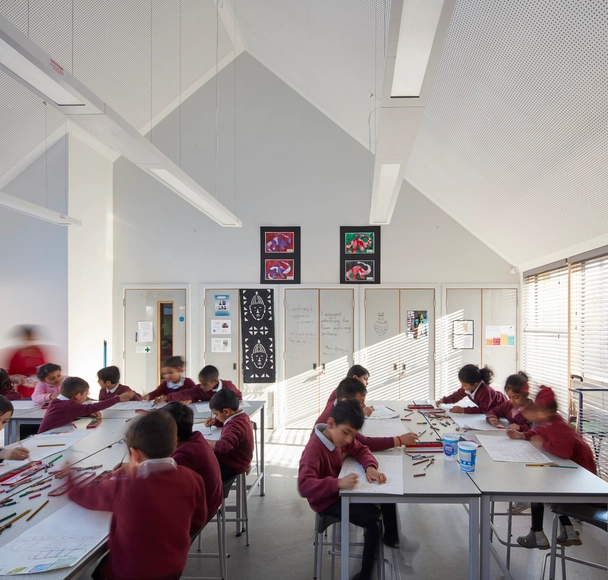
Few things irritate us more than exposure to excessive noise or inability to hear what we need to hear. Whether it's a nearby construction site, highway traffic, air conditioning, or a neighbor learning saxophone, research shows that noise can contribute to cardiovascular disease, high blood pressure, headaches, hormonal changes, sleep disturbance, reduced physical and mental performance, and the reduction of well-being. On the other hand, in an acoustically "comfortable" environment, in addition to listening to what we want, we focus better and feel calmer.

Vertical Partitions Redefine Spaces Quickly, Easily, and with Style

 | Sponsored Content

The ability to detach dividing walls from fixed structural frameworks has been one of the most notable contributions of modern architecture. The moment came when Le Corbusier's conceived the Dom-ino system, in 1914, and was brought to life in the Villa Savoye, where the structural lattice of pillars contrasted with an independent and even organic distribution of the interior partitions. The so-called open plan has been used and reinvented by architects since then for multiple scales and programs, with a flexibility that allows for the creation of large spaces with or without partitions. But one important nuisance that plagues the open plan it that is often difficult to create closed spaces when necessary, which can improve acoustic qualities and the possibility of natural light. Operable partitions serve this purpose through various mechanisms, such as sliding, folding, or wheeled panels, but they do not always facilitate the necessary conditions. Directly addressing these issues, Skyfold has developed the solution: operable walls that fold vertically and remain hidden when retracted.

Materials at the Intersection of Nature, Technology, Art and Architecture

Popularly known as the lotus, the aquatic species Nelumbo nucifera has a useful particularity. Its leaves are self-cleaning, or ultra-hydrophobic. This means that no particles of dirt or water adhere to its leaf, which is especially useful in the humid and muddy environments where the plant typically grows. However, this effect does not derive from a perfectly smooth surface or a resinous layer on the leaves. The lotus is, in fact, full of tiny folds that reduce the area of the contact surface and repel all the particles that try to adhere there. The lotus effect has been studied by nanotechnologists in order to apply this same effect to products, such as surfaces, paints, fabrics, and tiles that can easily clean themselves. As trivial as this may seem, when we think of the resources applied to cleaning skyscraper glass or even of the reduction in photovoltaic energy generation due to dust on solar panels, we can get a sense of the infinite possibilities that hydrophobic surfaces could represent.

How To Improve the Acoustics of a Room

If you live in an apartment, you may unintentionally know the details of your neighbor's life by overhearing conversations through your shared walls. Or you keep awake when the dog that lives in the apartment above decides to take a walk in the middle of the night. If so, you may live in an apartment with inadequate sound insulation in its walls and/or slabs. As cities grow increasingly dense and builders seek to increase their profit margins, it is not uncommon for acoustic comfort to be overlooked in many architectural projects. When the resulting noise is excessive or unwanted, it impacts the human body, the mind, and daily activities. While not all spaces need to seal all types of sound, creating spaces with an adequate degree of soundproofing improves the quality of life of all users.

Why Should Architects Understand and Care About Carbon and Life Cycle Assessment?

Subscriber Access | 

Yes, we know. We have been talking a lot about carbon. Not only here, but everywhere people seem to be discussing the greenhouse effect, carbon dioxide, fossil fuels, carbon sequestration, and several other seemingly esoteric terms that have increasingly permeated our daily lives. But why is carbon so important and why do we, as architects, architecture students, or architecture enthusiasts, have to care about something that seems so intangible?

How Did Materials Shape the Case Study Houses?

Subscriber Access | 

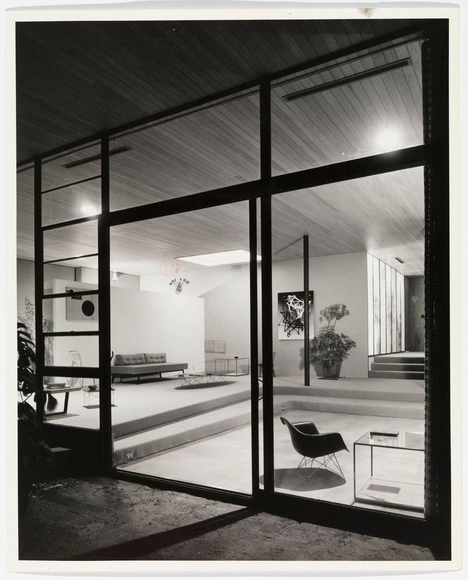
The Case Study Houses (1945-1966), sponsored by the Arts & Architecture Magazine and immortalized by Julius Shulman’s iconic black-and-white photographs, may be some of the most famous examples of modern American architecture in history. Designed to address the postwar housing crisis with quick construction and inexpensive materials, while simultaneously embracing the tenets of modernist design and advanced contemporary technology, the Case Study Houses were molded by their central focus on materials and structural design. While each of the homes were designed by different architects for a range of clients, these shared aims unified the many case study homes around several core aesthetic and structural strategies: open plans, simple volumes, panoramic windows, steel frames, and more. Although some of the Case Study Houses’ materials and strategies would become outdated in the following decades, these unique products and features would come to define a historic era of architectural design in the United States.