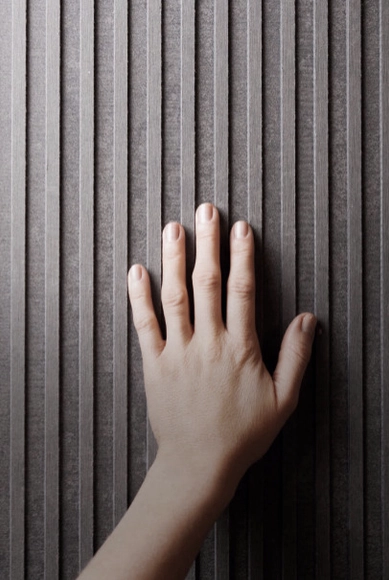
Claude Monet and Vincent van Gogh used the impasto technique extensively in their paintings. Both applied thick layers of oil paint over the canvas, usually one shade at a time, and it was up to the viewer's brain to mix the colors and create the desired effects. When dry, the paint forms reliefs and textures on the canvas, evoking a sense of movement. Even without being able to touch the screen, the texture of the brushstrokes gives a three-dimensionality to the painting, something that can only be fully observed by seeing the artwork live, looking at it from more than one angle and actually experiencing it.
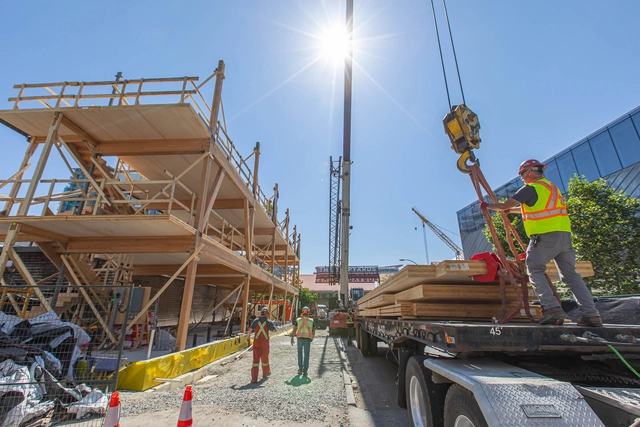
Mass timber components for this project were prefabricated offsite which not only aids in the ability for on-site assembly but also aids in the disassembly of projects in the future if needed. Timber's versatility allows it to be disassembled and then reassembled into other buildings and furnishings, sequestering carbon for longer so long as it stays out of the landfill. Photo: PH1 construction by Naikoon Contracting, KK Law. Image Cortesia de naturallywood.com
The first Shikinen Sengu was held in the year 690, in the city of Ise, Mie Prefecture, Japan. It consists of a set of ceremonies lasting up to 8 years, beginning with the ritual of cutting down trees for the construction of the new Ise Shrine and concluding with the moving of the sacred mirror (a symbol of Amaterasu-Omikami) to the new shrine by Jingu priests. Every 20 years, a new divine palace with exactly the same dimensions as the current one is built on a lot adjacent to the main sanctuary. Shikinen Sengu is linked to the Shinto belief in the periodic death and renewal of the universe, while being a way of passing on the ancient wood construction techniques from generation to generation.
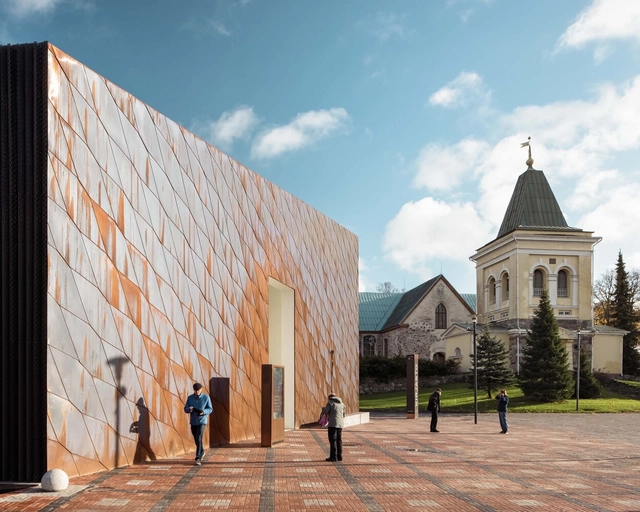
It is believed that copper was the first metal to be found by men and used in the manufacture of tools and weapons. This occurred in the last period of prehistory, more than 10,000 years ago, in the so-called Metal Age, when groups, until then nomadic, started to become sedentary, developing agriculture and starting the first urban settlements. Copper has since been used in diverse ways. Used for decorative objects, jewelry, automotive parts, electrical systems, and even for dental amalgams, the material has had huge demand. In architecture, copper coatings are greatly appreciated for their aesthetics and durability. But a factor worth mentioning is that copper can be recycled infinitely, practically without losing its properties.
Vertical Glass House / Atelier FCJZ. Image Cortesia de Atelier FCJZ
When water runs down the drain or we flush it down the toilet, we usually don't care where it ends up. This is because with adequate basic sanitation, wastewater shouldn't be a concern. Yet, although humanity has already taken man to space and plans to colonize Mars, it continues to fail to provide basic living conditions for a large part of its population. A comprehensive study estimates that 48% of global wastewater production is released into the environment untreated. The UN, in turn, presents a much less encouraging figure, citing that 80% of the world's sewage is released without treatment. But returning to the question of the title, there are basically two destinations for sewage if it is not being released directly into the natural environment: it can be treated locally through septic tanks, or connected to a sewage treatment plant through the sewage network, eventually returning to nature after a series of treatment processes.
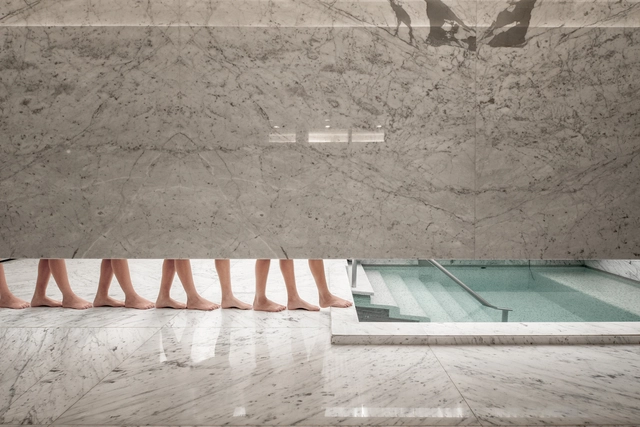
The study of rocks allows us to understand the formation of our earth. Its types, the formed designs, the layers, all reveal the story. Along with the atmosphere and the hydrosphere, the lithosphere is one of the great pieces of the earth system, supporting the biosphere. This outermost solid layer of the planet is made up of rocks and soils; as for rocks, there are several ways to classify them. The most common is to separate them according to their formation processes, such as igneous, sedimentary, or metamorphic. While sedimentary rocks constitute about 5% of the earth's crust, the remaining 95% are igneous or metamorphic rocks.
Choice of building materials and the inherent continuous reflection about the reach and capabilities of architecture are an interesting alternative way to approach this issue. The materials used in social housing should address local and economic possibilities and the real needs for access to housing in the contemporary context.
Briefly, structural masonry is a construction system in which the walls of the building perform a structural function, using masonry units arranged in a way that is self-supporting and load-bearing. The walls will evenly distribute the load to the foundation and later into the ground.
Products with natural germ-repelling properties—like certain woods and copper—and those with textures that help avoid bacterial growth will be common materiality considerations for commercial interiors specification following the COVID-19 pandemic.. Image Courtesy of Marin Architects
In this week's reprint from Metropolis, Amanda Schneider, president of ThinkLab, the research division of SANDOW, explores how "designers can help create healthy, safe interiors with thoughtful surface and filtration selections". Asking how we can have sanitized surfaces, without having to deep clean them regularly, the author discusses the materiality of healthy safe interiors.
HANNAH office, founded by Leslie Lok and Sasa Zivkovic, is a US-based architecture and research practice that has been experimenting with digital design and fabrication techniques across all types of projects ranging from furniture to urbanism. Both professors at Cornell University College of Architecture, Art, and Planning, Leslie and Sasa lead a studio with a focus on innovative design, where technology plays a crucial role in their work, combined with a sharp study of materials, new applications, and construction techniques, resulting in highly creative projects.
Curved shapes have always sparked architects' fascination for evoking nature's beauty, fluidity, dynamism, and complexity. To replicate these shapes, however, is no easy task. From their two- or three-dimensional representation to their execution in their final materials, this represents an enormous difficulty, which requires technical expertise and a great amount of knowledge to achieve strong results. Thinking of new ways to produce organic shapes from natural materials is even more complicated.
Caius Sergius Orata is credited, by Vitruvius, with inventing the hypocaust. The word, from the Latin hypocaustum, in a literal translation, means access from below. The hypocaust is a raised floor system on ceramic piles where, at one end, a furnace—where firewood is burned uninterruptedly—provides heat to the underground space, which rises through walls constructed of perforated bricks. Hypocausts heated, through the floor, some of the most opulent buildings of the Roman Empire (including some residences) and, above all, the famous Public Baths.
A frameless window is exactly how it is described – a seamless glazing option that has no obvious frame around the perimeter. As a new design phenomenon, frameless glass panels are used for balconies, shower screens, glass doors, and bespoke conservatory windows, creating a ‘wall of glass’ effect, which is a hallmark of contemporary architectural design. Seamless glazing has a range of advantages, the first being the supreme stylistic feature it can create, letting the optimum amount of light into a room and provide a chic contemporary element to a building. Aside from the aesthetic appeal, frameless windows are simple and super-fast to install so homeowners can enjoy minimum disruption and lower installation fees.
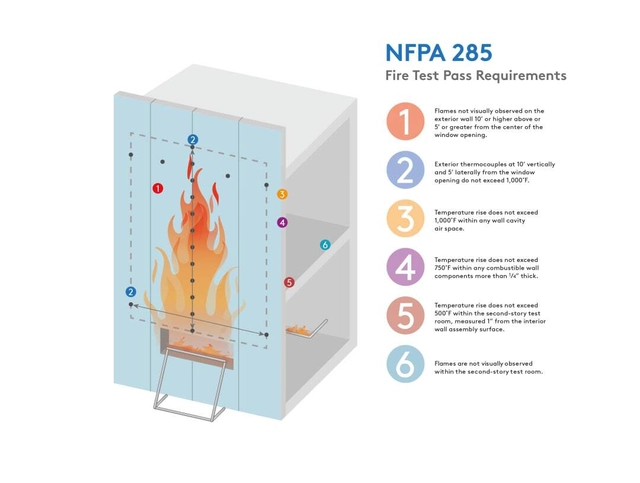
The way in which a fire evolves largely depends on the materials that constitute the building, as well as how it is designed. For this reason, there exist a number of fire safety requirements in building codes that must be followed during the initial design stages, as well as the physical construction of a building. In addition to these building codes, there are other considerations that must be taken into account such as thermal comfort, acoustics, and accessibility. When specifying a material or product for part of a building, the architect or design professional must pay close attention to meeting these demands. An example of a suitable material choice is the Insulated Metal Panel (IMP), which can have superior thermal properties, various appearance possibilities and good fire resistance.
Stilt houses are houses raised on piles over the surface of the soil or a body of water. Dating back to the Neolithic and the Bronze Ages, a wide variety of raised dwellings have been identified in a variety of forms worldwide, designed with several diverse and innovative methodologies. Stilt houses are well suited to coastal regions and subtropical climates. More than just a distinctive structural design resolution, they also protect against floods, maximize views and allow homeowners to build on rocky, steep, or unstable land. They also serve to keep out animals and vermin, provide ventilation from underneath, and minimize a house’s ecological footprint.
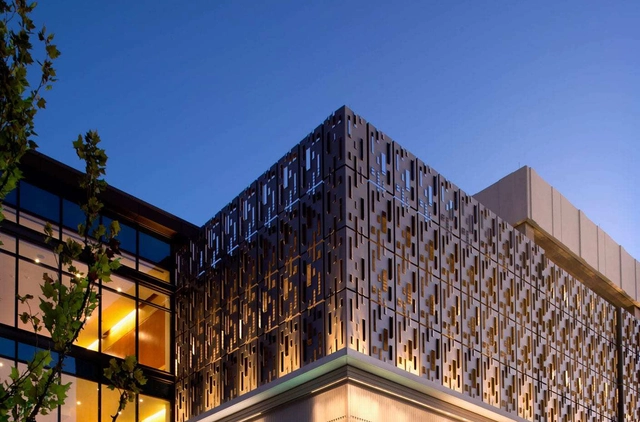
The Shops at Clearfork / Nelsen Partners. Image Courtesy of Dri-Design
Perforated wall panels offer a variety of benefits: they can provide passive ventilation, shade, and unique aesthetics to any façade. In the case of companies like Dri-Design, which specializes in customizable and sustainable metal wall panels, perforated panels can be produced according to a wide variety of specifications, including different colors, materials, sizes, textures, shapes, and styles of perforation. Dri-Design’s perforated imaging series even allows architects to apply images onto their facades by varying the size, location, and density of the perforations.
https://www.archdaily.com/962711/passive-ventilation-shade-and-unique-aesthetics-3-case-studies-of-perforated-enclosuresLilly Cao
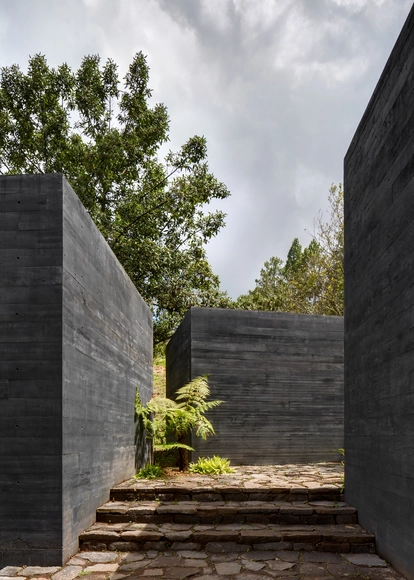
As cliché as it may sound, there are two things that architects really like: exposed concrete and the color black. While concrete offers a distinctive rough aesthetic, emphasizing the tones, textures, and surfaces that shape the concrete mixture, the sobriety that the color black provides allows the architect to highlight specific characteristics precisely. Combining the two seems natural. But black pigmented concrete is not as common as we might imagine. Below we talk a little about the black concrete production process and some projects that use it.
https://www.archdaily.com/934531/how-black-concrete-is-made-and-its-application-in-7-projectsEduardo Souza e Matheus Pereira
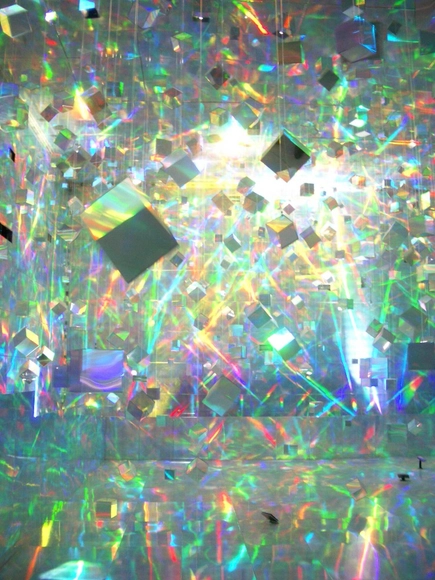
Although holograms have been a possibility for decades—the first hologram was developed in the early 1960’s following the development of laser technology—many might still associate them more with science fiction, the term conjuring up images of high-tech superhero gadgets and spaceships in the distant future. Yet as we inch closer to the reality of a hyper-technologized future, and a variety of industries—including architecture and construction— begin to embrace new forms of increasingly advanced technology, holography, too, has a chance of completely reshaping the way we conceptualize and experience architecture. While it is impossible to predict exactly how holographic technology will be used in the future, below, we list several examples of existing projects that use holograms and other types of holography to create atmospheric environments, fantastical scenes, and practical visualizations. These examples move beyond the use of holograms to visualize structures and sites during the design phase; they utilize holography to shape the completed architectural space itself, completely altering the sensory and spatial experience of their environment.
https://www.archdaily.com/963011/holography-how-it-could-change-architectural-spaceLilly Cao
A circular economy is an economic system aimed at eliminating waste and the continual use of resources. Looking beyond the current take-make-waste extractive industrial model, a circular economy aims to redefine growth, focusing on positive society-wide benefits. It entails gradually decoupling economic activity from the consumption of finite resources and designing waste out of the system. Underpinned by a transition to renewable energy sources, the circular model builds economic, natural, and social capital.



.jpg?1626079817&format=webp&width=640&height=580)
.jpg?1625518957&format=webp&width=640&height=580)

.jpg?1620086762&format=webp&width=640&height=580)