1. ArchDaily
  2. Highway Interchange

Highway Interchange: The Latest Architecture and News

The Embarcadero Freeway: Elevated Infrastructure and Urban Regeneration in San Francisco

Subscriber Access | 

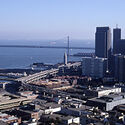
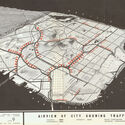
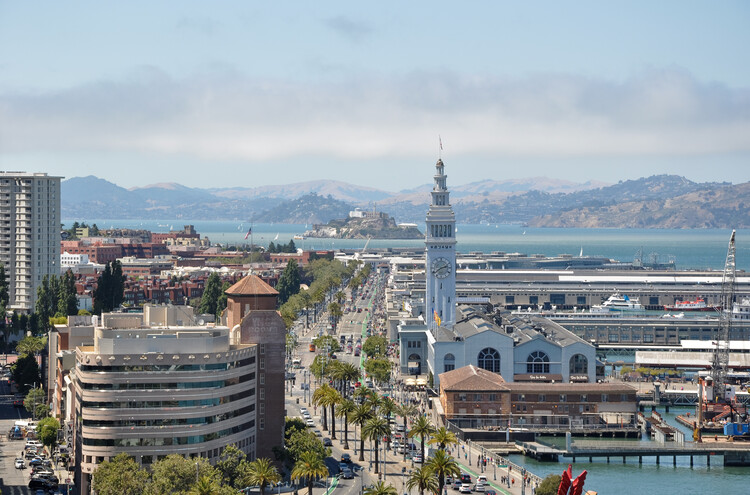
In recent decades, cities across the world have seen an increase in the demolition of elevated concrete freeways. Taipei, Seoul, Portland, and Boston, for example, have all seen the rise and fall of these infrastructures to give way to parks and new urban regeneration ideas. In other cases, like Montreal in Canada, some people opposed the freeways even before they were built, effectively rerouting viaducts, preserving heritage, and freeing waterfront views. For San Francisco, in the United States, the story of the Embarcadero Freeway is one of those narratives that serves as a case study of the city's mid-century infrastructural ambition, people's reaction to the project, and its eventual reversal in favor of urban connectivity.
The Embarcadero Freeway: Elevated Infrastructure and Urban Regeneration in San Francisco - Image 1 of 4The Embarcadero Freeway: Elevated Infrastructure and Urban Regeneration in San Francisco - Image 2 of 4The Embarcadero Freeway: Elevated Infrastructure and Urban Regeneration in San Francisco - Image 3 of 4The Embarcadero Freeway: Elevated Infrastructure and Urban Regeneration in San Francisco - Image 4 of 4The Embarcadero Freeway: Elevated Infrastructure and Urban Regeneration in San Francisco - More Images+ 3

Toronto Appoints Field Operations and Brook McIlroy to Reimagine the Bentway Traffic Islands

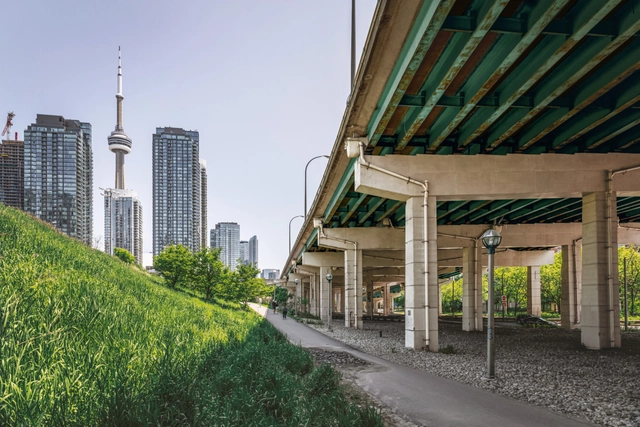
New York-based office Field Operations, renowned for their work on Seattle's waterfront and New York's High Line, along with Toronto's Brook McIlroy, have been tasked with transforming underutilized lands beneath the Gardiner Expressway in Toronto. The project was launched by The Bentway Conservancy, in partnership with the City of Toronto, and represents the second phase of the development aiming to revitalize underutilized spaces along the expressway. The initiative set out to transform three large traffic islands between Dan Leckie Way and Spadina Avenue into an 11,500-square-meter public space for recreation and community activities.

Toronto Appoints Field Operations and Brook McIlroy to Reimagine the Bentway Traffic Islands - Image 1 of 4Toronto Appoints Field Operations and Brook McIlroy to Reimagine the Bentway Traffic Islands - Image 2 of 4Toronto Appoints Field Operations and Brook McIlroy to Reimagine the Bentway Traffic Islands - Image 3 of 4Toronto Appoints Field Operations and Brook McIlroy to Reimagine the Bentway Traffic Islands - Image 4 of 4Toronto Appoints Field Operations and Brook McIlroy to Reimagine the Bentway Traffic Islands - More Images+ 5

Confronting the Racist Legacy of Urban Highways

Highways, in their inanimate state, cannot be racist. However, the forces that located them and the consequences of their placement are inextricably connected to race. Deborah Archer, a law professor and civil rights lawyer, captures the central concept: “Highways were built through and around Black communities to entrench racial inequality and protect white spaces and privilege.”

In the new book, Justice and the Interstates: The Racist Truth About Urban Highways, editors Ryan Reft, Amanda Phillips du Lucas, and Rebecca Retzlaff explore racial injustice and the interstate highway system. They collect essays that address the dislocation caused by interstates. The book came out of a series of articles in Metropole, a publication of the Urban History Association.

What are the Spatial Possibilities for Enclosures Within the Highway Interchange?

Subscriber Access | 

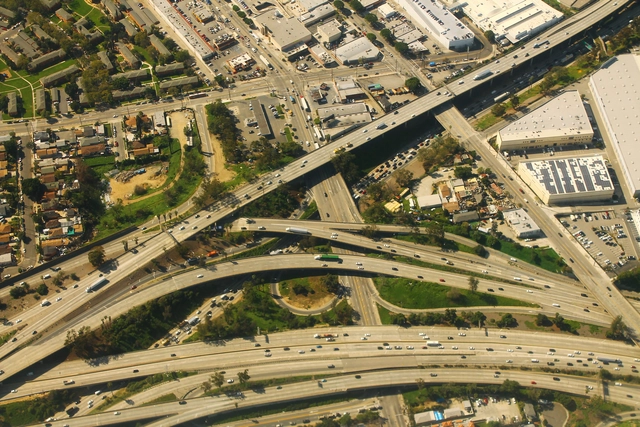
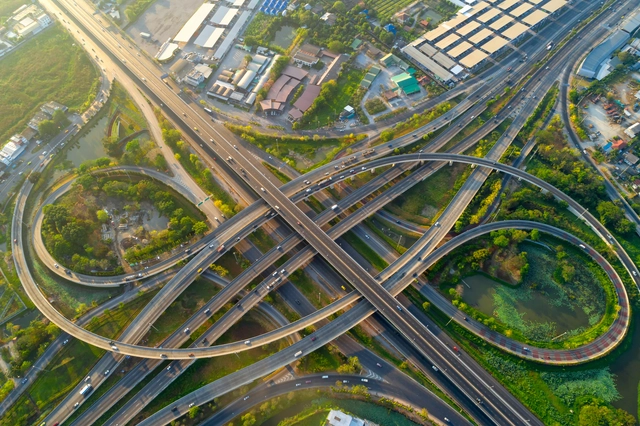
Highway interchanges have evolved from important infrastructures that help distribute traffic to unique landmarks that define cities. As multiple road networks embrace and form distinctive sculptures, these road intersections range from singular bridge connections and roundabouts to numerous, layered and multi-layered interchanges. They twist, turn, loop, and wrap around sparse land, vegetation, or existing structures in a bid to transfer travelers from one roadway to another. However, they also create a moment of enclosure, forming partially bounded areas and a sense of space. These spaces could be viewed as liminal and transitional, with no fixed typology able to be hosted. But that blurring character calls for ideas of urban intervention to disrupt the notion of what these spaces can be. They can be readapted from car-dominant sculptures into more human-friendly places and re-integrated as extended schemes of the city's architecture.  

What are the Spatial Possibilities for Enclosures Within the Highway Interchange? - Image 1 of 4What are the Spatial Possibilities for Enclosures Within the Highway Interchange? - Image 2 of 4What are the Spatial Possibilities for Enclosures Within the Highway Interchange? - Image 3 of 4What are the Spatial Possibilities for Enclosures Within the Highway Interchange? - Image 4 of 4What are the Spatial Possibilities for Enclosures Within the Highway Interchange? - More Images+ 9