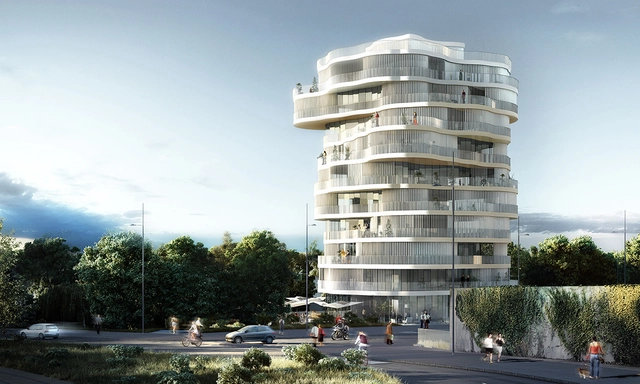
This unconventional stack of shifting floor plates forms what will soon be a new, 36-unit apartment block in French city of Montpellier. City officials released the news this week, naming Farshid Moussavi Architecture as winner of the Jardins de la Lironde competition.
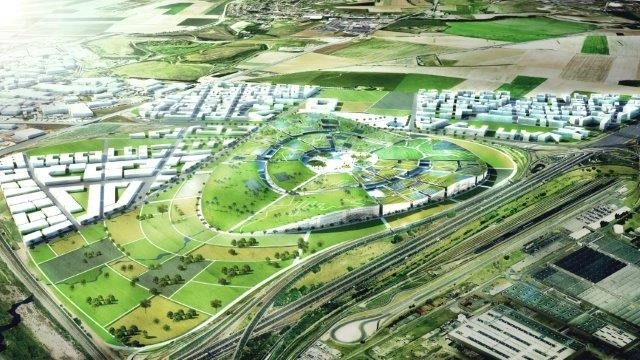
Danish architecture firm, BIG - led by Bjarke Ingels - has been announced as the winner of an international invited competition for the design of Europa City, a 800,000 square meter cultural, recreational and retail development in Triangle de Gonesse, France. Combining city development with an open landscape, Europa City creates a dynamic center of activity for visitors and residents, appealing to the variety of functions of city life. Europa City is situated along the route from Charles de Gaule Airport to Paris and has a wide range of programs that is part of a larger initiative to attract international tourism into the northern parts of Paris.
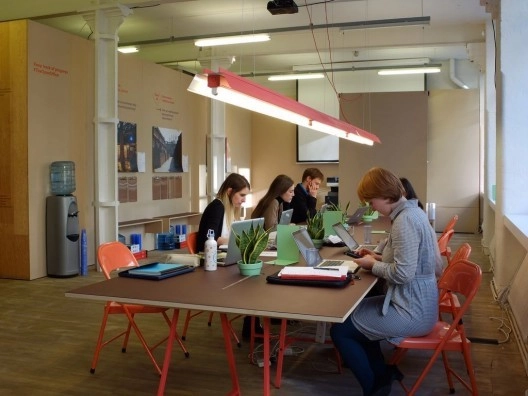
The Architecture Foundation recently launched their annual international Open Call for innovative independent exhibitions and installations for its central London Project Space. Intended as an incubator for independent positions and architectural experimentation, projects selected through the Open Call will punctuate the AF’s ongoing curated program. This program, competitively selected through a jury process, will give space to individuals or organizations to activate the AF Project Space as a testing ground for modes of exhibition and 1:1 scale spatial experimentation, an open studio, a public residency or other diverse formats. The foundation's recent initiative, 'We Made That', was a project selected through the 2012 Open Call. The deadline for submissions is May 10. For more information, please visit here.
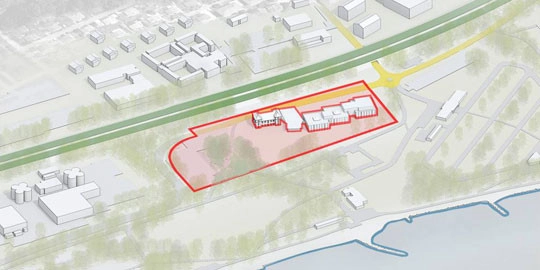
The International Olympic Committee (IOC) has launched an open and international architecture competition for their new headquarters in Lausanne, Switzerland. With the volume of the planned building at roughly 70,000m3, with a ground surface area of 18,000m2, the development will include headquarters for 450 staff members, “Olympic campus” housing administrative buildings, and possible accommodation and services. This will allow the IOC to benefit from two Olympic sites in Lausanne: one in Ouchy around The Olympic Museum, to host the general public; and the other in Vidy for the whole administrative staff and to host its institutional partners. The deadline for submissions is May 15. For more information, please visit here.
The G Project; G Adventures and The Planeterra Foundation
The G Project, hosted by G Adventures and The Planeterra Foundation, is giving four lucky innovators, inventors, visionaries and designers the opportunity to bring a humanitarian and forward-thinking project to fruition. The G Project is inviting anyone to submit a design idea of any scale that will have a "positive impact on your planet". The idea must be a proposal that falls into one of four categories: freedom, beauty, knowledge or community. It is a crowd-sourcing exercise that seeks to engage ideas of any variety and asks the global community to contribute to deciding which projects deserve to be realized.
Organized by ORLI (Operation Resilient Long Island), a student-led grassroots committee of architecture, interior design, and construction management students from New York Institute of Technology, the 3C Comprehensive Coastal Communities Competition aims to catalyze the discussion of rezoning towns that are vulnerable to coastal storms. The post-Sandy rebuilding process has already begun, yet there are no strategies on how rebuilding communities can accommodate transforming coastal housing typologies. In effort to help local communities preserve the value of their neighborhoods, the challenge is to create a vision for a specific northeastern coastal community. Participants should design a resilient housing typology and integrate it into the community master plan. Submissions are due no later than July 25. To register, and for more information, please visit here.
Organized by Manifesto Architecture, in collaboration with Modern Atlanta (MA), the third annual MA Prize competition entries will be carefully selected to be displayed at this year's MA13 “Design in Human Week”. The event will be held from the June 1-9 in Atlanta, Georgia. This year, MA Prize highlights bold and innovative design projects that allow us a fresh perspective on the idea of 'SHARE', or ‘SHIFT’ the way we perceive ‘SHARE’. We commonly understand the idea of share as a fairly simple concept: when two different parts interact with each other to produce a new outcome. But, what does sharing mean to design; or what can design provide to sharing? Submissions are due no later than May 7. For more information, please visit here.
Striving for a diverse and international response, Storefront for Art and Architecture recently launched the Competition of Competitions. The intent of the competition is to provide and deliver new and relevant forms of engagement and content to the economic, politic and social systems that currently act as the voice of authority for the development of our cities. They are asking architects, artists, economists, philosophers, writers, and citizens at large to create interdisciplinary teams to formulate the questions of our time and define the agents that should pursue the task to ask and commission the visions for the future in the form of a competition brief. The deadline to register is May 22 and submissions are due by June 22. For more information, please visit here.
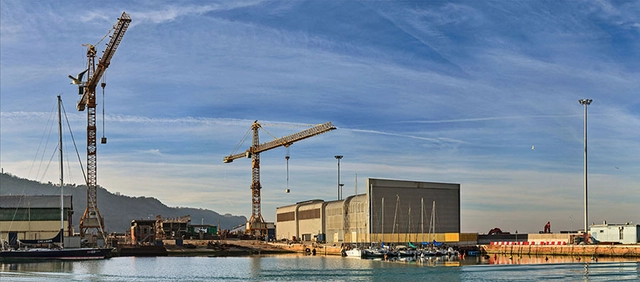
Young Architects Competitions (YAC) recently launched their latest challenge, 'Smart Harbor', which calls all architects, students, and designers 35 years and younger to create an urban transformation of dismissed shipyards. Deep and controversial economical transformations have been hitting Europe. On one side they show a highly destructive potential; on the other side they are the key to undiscovered scenarios once unimaginable. Beneath the remains of ancient systems often lays the opportunity to write new cultures. YAC aims to promote a field of research focusing on such contemporary living axioms: in synthesis it shall be smart. Modern technologies can provide users quick information and discretional points of view like never before. The deadline for submissions is June 24. To register, and for more information, please visit here.
Bringing together the new producers of emergent architecture in a space for experimentation, display and debate, eme3 just launched the period for the submission of projects to take part in the 8th edition of eme3 Festival to be held in Barcelona from June 27th to 30th at Fabra y Coats. Inviting architects, designers and artists to present innovative and unconventional projects that go beyond common trends in urban planning and construction, they are searching for projects that are product of a critical reflection to reality, with an eye on the political, economic and social context. Submissions are due no later than April 19. For more information, please visit here.
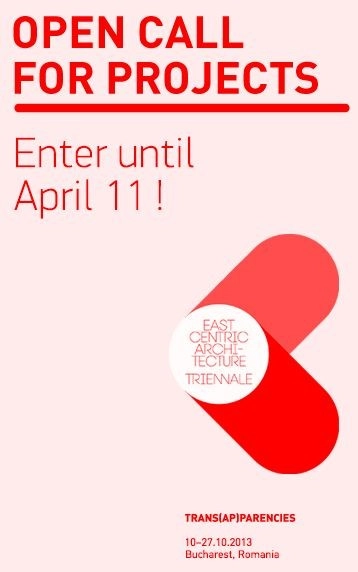
Open to all architects, designers, urban planners, and landscape architects from any of the countries of Central and Eastern Europe, Arhitext design Foundation, editor of Arhitext magazine, recently launched an open call for projects to be presented at the Trans(ap)parencies Thematic Exhibition, at the 2013 East Centric Architecture in Bucharest, Romania. Inheriting a common history, the architecture of this region defines its identity today by making renewed use of local resources and by taking a critical stance with respect to international mainstream trends. For this reason they feel the need for a thematic exhibition. The deadline for submissions is April 11. For more information, please visit here.
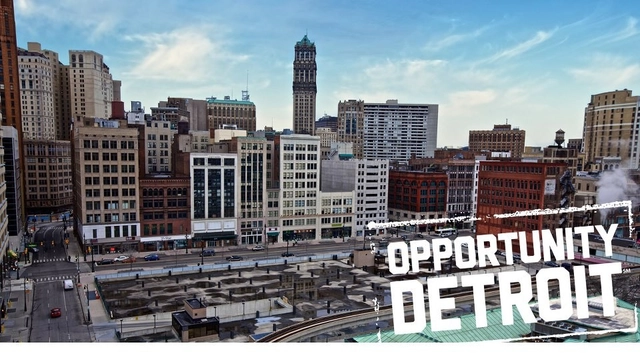
In an effort to generate innovative ideas for the re-use of one of the most important building sites in Detroit’s redeveloping downtown, Rock Ventures LLC has collaborated with Opportunity Detroit to launch the open ideas competition Redesigning Detroit: A New Vision for an Iconic Site. Entrants are challenged to create compelling visions for a new urban development on the famous 92,421 square foot Hudson's site that would play a significant role in the regeneration of downtown Detroit.
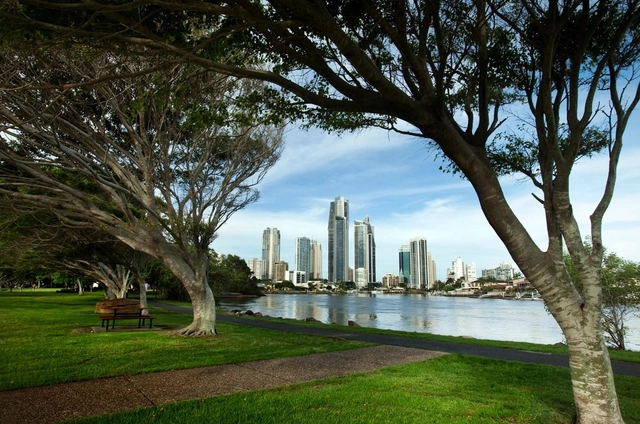
Launching Tuesday, March 26, Council of the City of Gold Coast is calling participants to compete for the opportunity to design a landmark cultural ‘heart and soul’ on 11 hectares of the stunning Evandale site on Australia’s Gold Coast. The Council’s vision for the site includes a Living Arts Centre, for performing arts and cinema; a New Arts Museum for media, art and design; a stunning outdoor garden Artscape and a green bridge to adjacent Chevron Island. Concepts will need to be distinctive and innovative and will have to respond to a comprehensive design brief. The winning design will evolve into the city’s creative commons, a place loved by residents and a must-see visitor destination. For more information, please visit here.
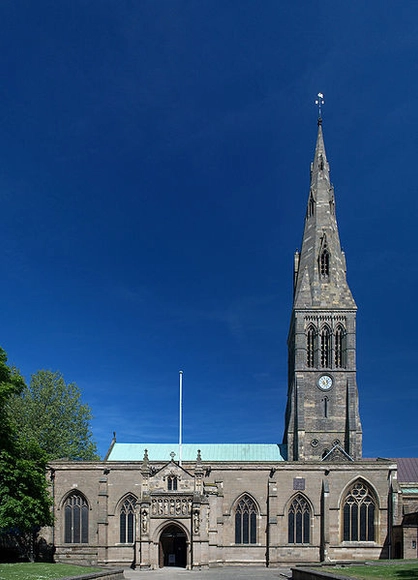
Since the remains of Richard III were discovered beneath a car-park near Leicester Cathedral last year, the local church has been left with a perplexing question: what to do with him now? The King's remains are an important part of English history, and an important tourist attraction, but how should they mark his final resting place?
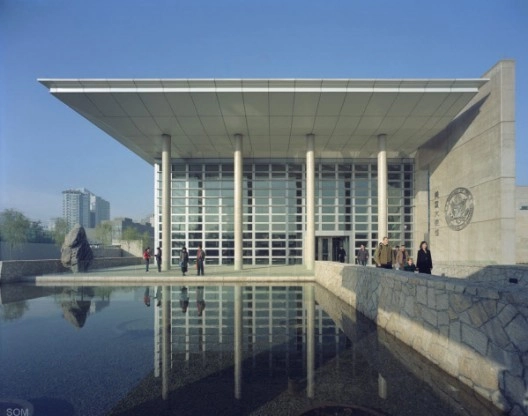
The Department of State’s Bureau of Overseas Buildings Operations (OBO) has selected five design teams in a worldwide Architecture/Engineering Design Services solicitation to rehabilitate/renovate facilities that "represent American values and the best in American architecture, engineering, technology, sustainability, maintainability, art, culture, and construction execution."
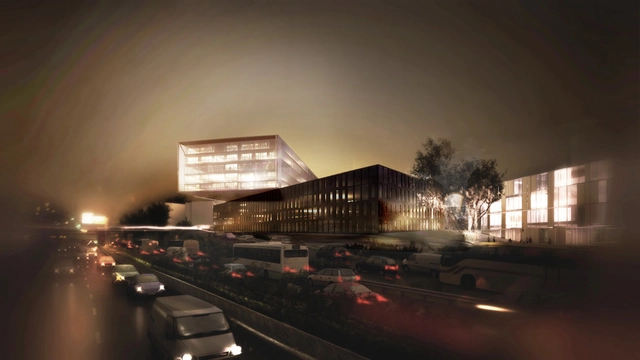
Development corporation ADIM Nord with MVRDV and de Alzua+ have been announced the winners of an urban renewal competition in the French town of Villeneuve d’Ascq. Dubbed ‘The Beam’, the winning proposal will transform a cluster of disused parking lots and a former petrol station into a dense, pedestrianized haven, whose 15,000 square meters of offices, retail space and lodging will hover over the adjacent motorway as a icon of a larger urban regeneration effort for the town center.
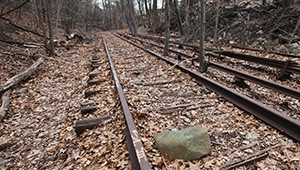
The New York office of The Trust for Public Land recently issued an RFP for a feasibility study, framework plan, and conceptual design for the QueensWay--a potentially transformative 3.5-mile project which will enhance quality of life in central and southern Queens, New York by reclaiming the abandoned Rockaway Rail Line, a largely elevated rail corridor. The project, which includes a pedestrian and bicycle pathway connecting the communities of Rego Park, Forest Hills, Richmond Hill, and Ozone Park, will provide a new public green space, celebrating the cultural diversity of Queens with art, sculpture, and food from around the world. There is a mandatory Pre-Submittal Meeting March 28, and the proposal submittal deadline is April 23. For more information, please visit here.