1. ArchDaily
  2. Bioregional Mapping

Bioregional Mapping: The Latest Architecture and News

Reimagining Lisbon’s Azulejos: Regenerative Biomaterial Tiles from the Tagus River

Subscriber Access | 

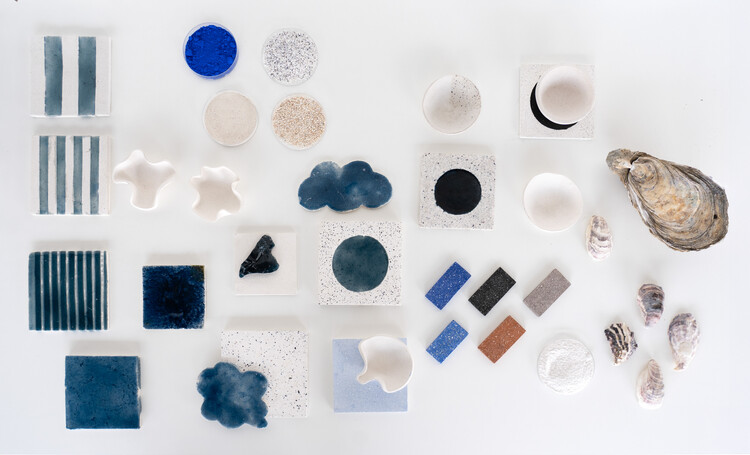
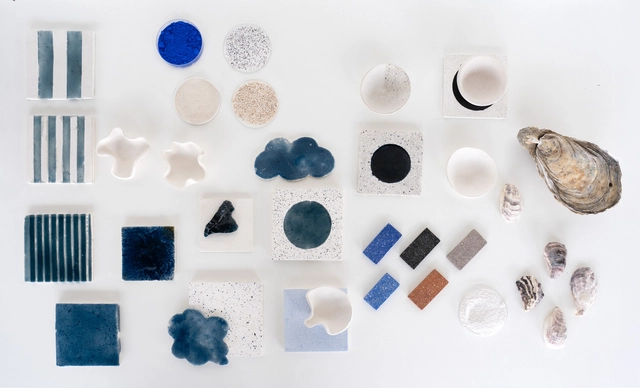
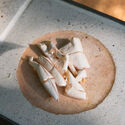
All materials come from somewhere, embedded in a chain of extraction, supply, production, and disposal that, depending on its scale, leaves more or less significant marks on the environment. In architecture, we usually approach this trajectory through the lens of materials' circularity, considering how they can re-enter production cycles rather than become waste. Yet, broadening our view to unexpected places reveals parallel systems where by-products from one industry become resources for another. This approach has found fertile ground in organic waste transformed into biomaterials, with one of the most recent examples being the work of Fahrenheit Works. Through their installation, "From the Tagus to the Tile", they repurpose oyster shells initially discarded by food systems to create a reinterpretation of Lisbon's iconic tiles.

Reimagining Lisbon’s Azulejos: Regenerative Biomaterial Tiles from the Tagus River - Image 1 of 4Reimagining Lisbon’s Azulejos: Regenerative Biomaterial Tiles from the Tagus River - Image 2 of 4Reimagining Lisbon’s Azulejos: Regenerative Biomaterial Tiles from the Tagus River - Image 3 of 4Reimagining Lisbon’s Azulejos: Regenerative Biomaterial Tiles from the Tagus River - Image 4 of 4Reimagining Lisbon’s Azulejos: Regenerative Biomaterial Tiles from the Tagus River - More Images+ 10

Mapping as Design: A Resource-Based Approach to Rural Design in the United States

In 1982, at a conference on earth building in Tucson, Arizona, an unusual presentation challenged everything architects thought they knew about rural resources. Instead of focusing on construction techniques, the presenter, architect Pliny Fisk III, spread out a series of hand-drawn maps that revealed something extraordinary - rural Texas wasn't resource-poor, as conventional wisdom suggested, but material-rich beyond imagination. The maps showed volcanic ash perfect for lightweight concrete, caliche deposits stretching across vast territories, and mesquite forests that could supply both hardwood flooring and insulation. The revelation redefined prevailing notions of value in architecture.

Mapping as Design: A Resource-Based Approach to Rural Design in the United States - Image 1 of 4Mapping as Design: A Resource-Based Approach to Rural Design in the United States - Image 2 of 4Mapping as Design: A Resource-Based Approach to Rural Design in the United States - Image 3 of 4Mapping as Design: A Resource-Based Approach to Rural Design in the United States - Image 4 of 4Mapping as Design: A Resource-Based Approach to Rural Design in the United States - More Images+ 1