
1. ArchDaily
  2. Archive

Archive: The Latest Architecture and News

MoMA Launches Online Database of 3,500 Past Exhibitions

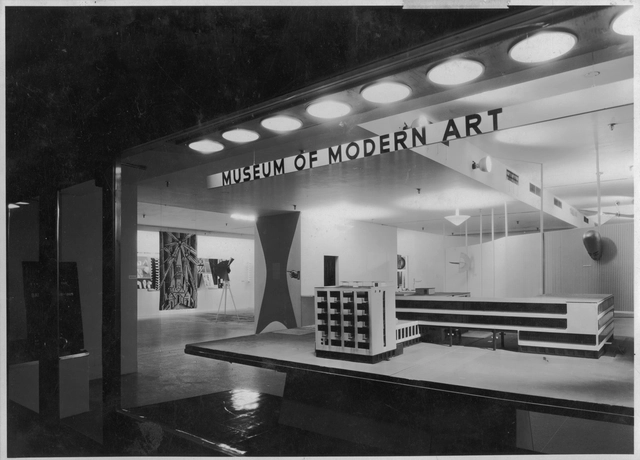
The Museum of Modern Art in New York (MoMA) has released an online archive of over 3,500 of the museum’s past exhibitions from its founding in 1929 to today. Free and available to the public, the database contains photographs, press releases, checklists, catalogues and lists of featured artists.

The archive contains 660 entries tagged under “architecture” and includes some of architectural history’s greatest exhibitions: the Modern Architecture International Exhibition by Philip Johnson and Henry-Russell Hitchcock in 1932; Herbert Bayer’s exhibition Bauhaus 1919-1928 in 1938; Thresholds/O.M.A. at MoMA: Rem Koolhaas and the Place of Public Architecture in 1994; and, most recently, A Japanese Constellation: Toyo Ito, SANAA, and Beyond, which wrapped up its run this past July.

RIBA Makes 90,000 Archival Images Available to View Online

The Royal Institute of British Architects (RIBA) have made 90,000 unique images from their visual archive available online. Architecture.com/images (also known as RIBApix) hosts the world's largest collection of 16th century drawings by Palladio, as well as drawings by Sir Christopher Wren, Erno Goldfinger, Augustus Pugin, Denys Lasdun, and Edwin Lutyens. In addition, many original London Underground station designs sit alongside collections of some of the world’s leading photographers, including John Maltby, Edwin Smith, Henk Snoek, John Donat, Dell & Wainwright, Martin Charles and Tony Ray-Jones.

Peter Williams for Architecture for Health in Vulnerable Environments (ARCHIVE)

Peter Williams is the founder and executive director of an organization whose goal is to improve global health, using design to create healthier environments as preventative measures for tuberculosis, AIDS and malaria. Architecture for Health in Vulnerable Environments, or ARCHIVE for short, has projects in countries all over the world, including Haiti, Cameroon, and Ethiopia. ARCHIVE identifies and addresses the causes of poor health in disadvantages communities and uses strategies related to housing design improvements to create environments that promote better health.