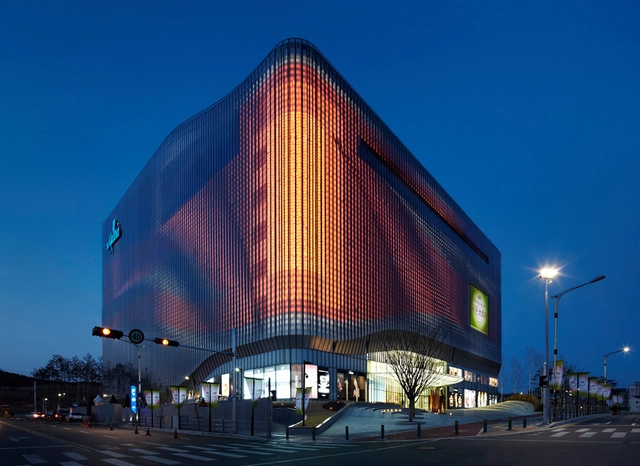
For most of the history of architecture, interesting facades were achieved through materiality or ornamentation. From the elaborately painted friezes of the Parthenon to the glass exteriors of modern skyscrapers, architecture was primarily static, only ‘changing’ as the environment would change and affect the material of the façade in differing ways, be it rain, light, rust, etc.
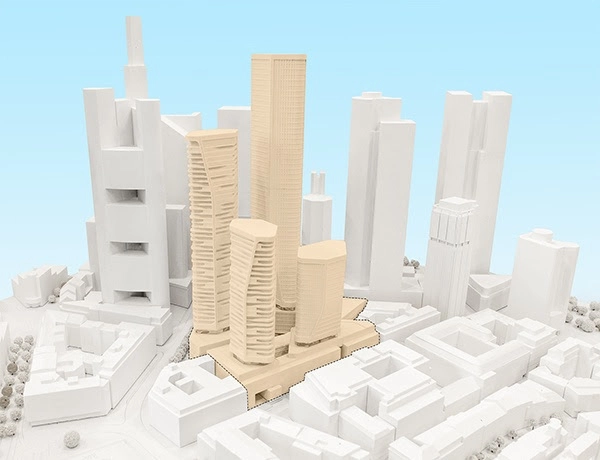
UNStudio has won a competition to transform the former Deutsche Bank site in Frankfurt's financial district into a lively mixed-use site comprised of offices, apartments, hotels, retail, gastro and open public spaces. With four high-rise towers reaching up to 228-meters-tall, the proposal plans to feature the city's highest residential and office buildings.
“Bringing a mixed-use project into this financial district will not only enliven the area during daytime, but it will also introduce evening programs and create an essential form of social sustainability to this part of the city," says Ben van Berkel of UNStudio. "The introduction of the residential and the leisure components are key to this strategy. This sculptural family of towers will also create the suggestion of a cohesive neighborhood within the skyline and emphasize the importance of this part of the city within the whole."
For decades, one of the most pressing questions surrounding architecture and urban planning has been "who gets to decide what is built?" Various systems have been tried, but one of the most popular strategies to emerge in recent years has been "The Public Vote." Thanks to the new possibilities afforded by the internet, it's becoming increasingly common to display all the entries to competitions to the public, as in the Guggenheim Helsinki competition, and even to have the public vote for their favorite, as in the recent competition to design Den Bosch's city centre theatre, or even Karim Rashid's informal poll of his Facebook followers to choose a facade for one of his designs. In some ways these approaches seem like the perfect response to years of complaints that decisions are made behind closed doors, away from the people who they affect.
Residents of 's-Hertogenbosch have been asked to vote on proposals by UNStudio and Ector Hoogstad Architectento decide who will design their new City Center Theater. Though vastly different, both proposals promise to provide a timeless main theater and flexible performance hall that connects to an inviting foyer and seamlessly merges with the adjacent public plaza.
The public's vote will count towards 50 percent of the final decision. Ground breaking is expected to occur in 2017, with completion scheduled for 2020. Read on for a preview of both proposals.