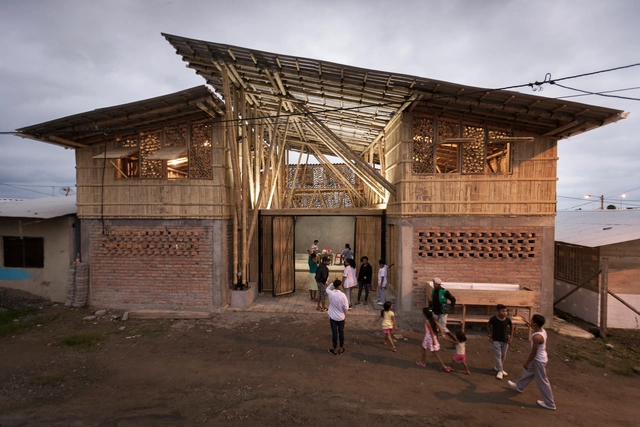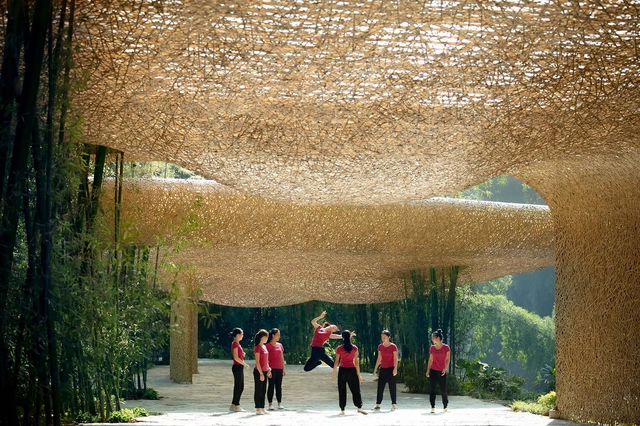
Bamboo is a very resistant, versatile, and sustainable natural building material, which can be used to build structures and decorative elements. This article explores its diverse applications in a selection of projects for public spaces.
Bamboo is a very resistant, versatile, and sustainable natural building material, which can be used to build structures and decorative elements. This article explores its diverse applications in a selection of projects for public spaces.
A project of relevant scale is rarely a single Man’s work. From the village barn raising events done in the 18th and 19th century to the standard taskforce that a project developer engages nowadays, a build structure requires many hands on-board, bringing forth different inputs and expertise to shape and execute it.
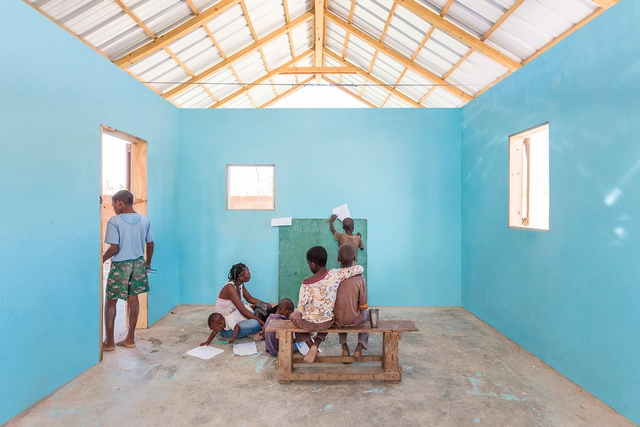
“These types of projects are of vital importance because they seek to reverse social, economic, urban, and political instability, providing organized attention to community needs and creating built platforms that serve as a bridge between the intrapersonal and intra-institutional scales.” Excerpt from the project description of the Community Development Center / OCA + BONINI
Since 2008, World Social Justice Day has been observed every February 20 to support and promote the international community's efforts to achieve sustainable development, poverty eradication, the promotion of full employment and decent work, universal social protection, gender equality, and access to social well-being and justice for all. According to the United Nations, “Social justice is an underlying principle for peaceful and prosperous coexistence within and among nations," representing the core of its mission to promote development and human dignity.

When discussing bioclimatic architecture, the focus is primarily on practices that reduce energy consumption and the environmental impact of buildings, both during construction—for example, by using materials with a low carbon footprint or incorporating responsible processes tailored to the site—and during their lifespan. This approach results in passive architecture designed to minimize long-term energy use. This is achieved—either by supplementing mechanical ventilation, heating, and cooling systems with passive methods, or by relying entirely on alternative systems—by adapting the design, geometry, and orientation to the topography, climate, natural vegetation, solar radiation, and prevailing winds of the site.