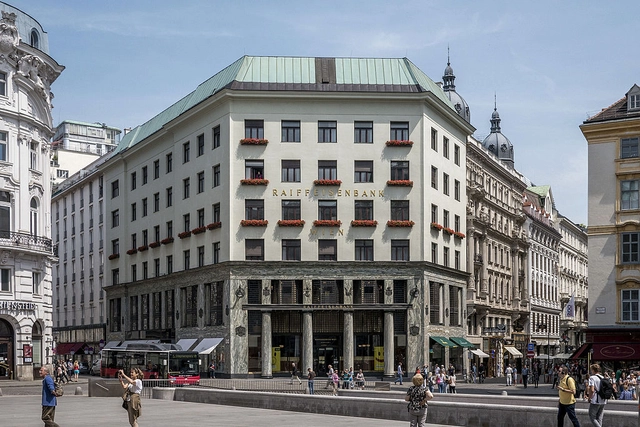
Adolf Loos (December 10, 1870 – August 23, 1933) was one of the most influential European architects of the late 19th century and is often noted for his literary discourse that foreshadowed the foundations of the entire modernist movement. As an architect, his influence is primarily limited to major works in what is now Austria and the Czech Republic, but as a writer he had a major impact on the development of 20th century architecture, producing a series of controversial essays that elaborated on his own architectural style by decrying ornament and a range of social ills. Adolf Loos’s minimalist attitudes are reflected in the works of Le Corbusier, Mies van der Rohe, and many other modernists and led to a fundamental shift in the way architects perceived ornamentation.