Nicolas Valencia

BROWSE ALL FROM THIS PHOTOGRAPHER HERE
↓

On International Day of the World's Indigenous Peoples: Toward a Deeper Understanding of Ancestral Constructive Culture

Audio available

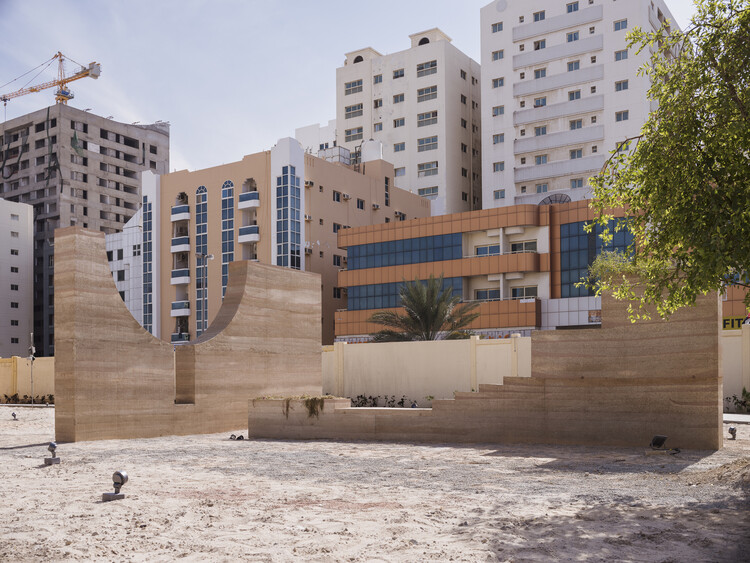
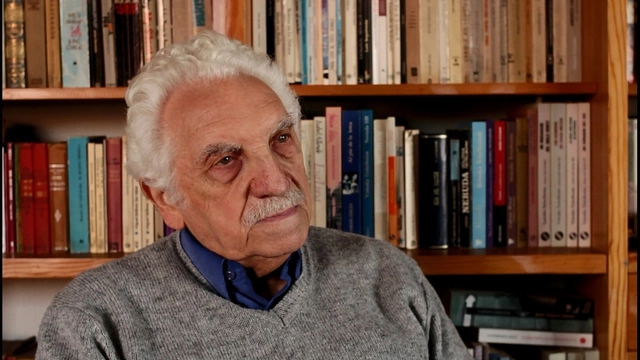
Every year on August 9, and since 1994, UNESCO has commemorated the International Day of the World's Indigenous Peoples. The United Nations has not yet adopted an official definition for the term 'Indigenous peoples,' but considers, for social recognition, self-identified non-dominant groups of society, with distinct language, culture, and beliefs, organized in separate social, economic, and political systems. From a territorial perspective, the UN understands the term through historical continuity with pre-colonial or pre-settler societies, and the group's strong links to territories and surrounding natural resources. The persistence in maintaining and reproducing ancestral environments and systems is also recognized as an element of identity, encompassing other designations such as first peoples/nations, aboriginals, or ethnic groups. Following the occasion's aim to raise awareness, in this article we present contemporary reflections, regional cases, and interviews about ancestral constructive knowledge and how it can build the future.

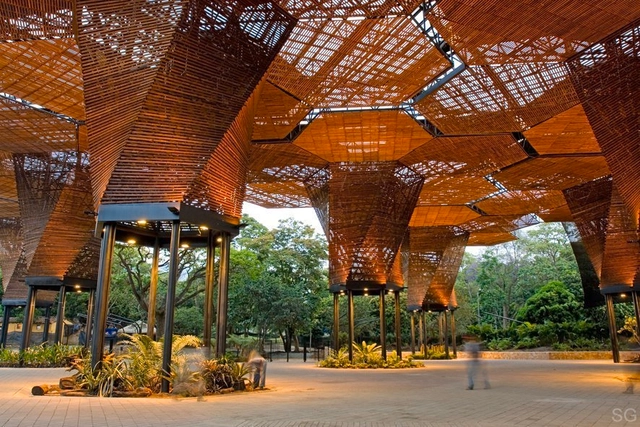
On International Day of the World's Indigenous Peoples: Toward a Deeper Understanding of Ancestral Constructive Culture - More Images+ 13

Miguel Lawner on stalled real estate projects: 'Who is the Chilean Association of Architects defending?'

Last November, the Comptroller General of Chile ordered the halt of construction of the so-called vertical ghettos in the municipality of Estación Central (Santiago). In response, on Friday, December 14, a group of real estate developers filed a series of injunctions against the resolution, while the Chilean Chamber of Construction raised concerns regarding the suspension of projects, as reported by the Chilean newspaper El Mercurio.

At the same time, the Colegio de Arquitectos de Chile (Chilean Association of Architects), the Association of Architectural Offices (AOA), the Association of Works Directors and Municipal Works Department Professionals of Chile, the Association of Independent Reviewing Architects of Chile, and the National Association of Independent Reviewers issued a document obtained by El Mercurio. In it, they claim they "have seen [their] right to practice their profession with confidence affected [...] due to the legal uncertainty currently facing our field."

Subscriber Access

What can architecture students learn from a community in the Peruvian highlands?

On the occasion of the recent edition of the Latin American Social Workshop in Chucuito, Peru —XV TSL Puno—, ArchDaily en Español and the Latin American Coordinator of Architecture Students (CLEA) invited all participating students to reflect on their personal experience in a recent call for articles. The text, originally titled "Construyendo Lazos" (Building Bonds) by Indira Fernández and Diana Hernández—members of the Puma Workshop led by Lucio Torres and students at the Universidad Veracruzana in Mexico—was selected as the winner of this open call.

Indira and Diana focus on the challenge that the TSL has faced in recent years: it is no longer merely a construction workshop, but also a platform for future architects to practice different methodologies of citizen participation and integration during the design process, while simultaneously discussing the challenges and threats facing so-called social architecture.

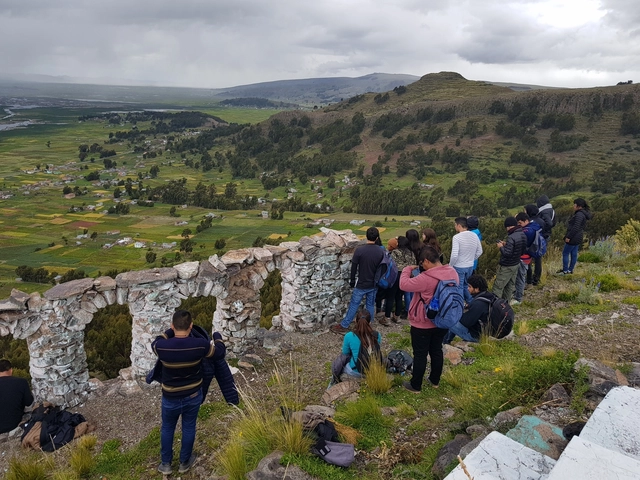
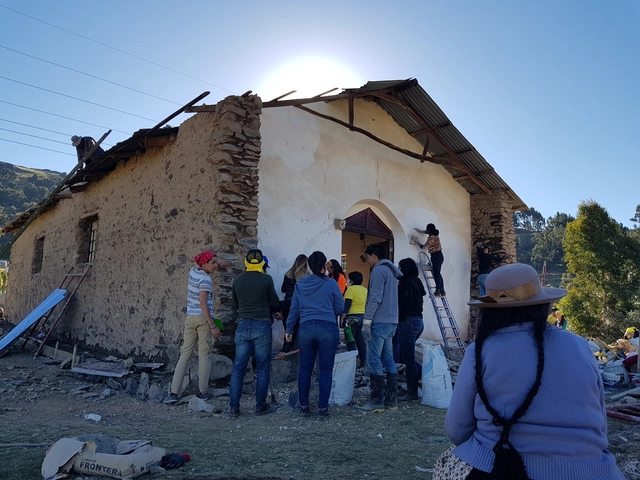
Being part of a team dedicated to understanding emotions, traditions, and cultures is deeply rewarding, but it also prompts you to question the ultimate purpose of practicing architecture. What could we expect from a social workshop in a country other than our own, Mexico? What can be learned from a community located 3,870 meters above sea level? What can we, as students, contribute?

Subscriber Access

Hatun Tinkuy: A Project That Was Always There, in the Peruvian Highlands

It is another freezing night in Chucuito, and in the restaurant where all the participants of the XV TSL Puno are dining, Jhony Chaves—better known as "El Gato"—tells us stories about impossible places, like Cerro de Pasco, a Peruvian mining settlement even higher, colder, and harsher than Chucuito. He then recalls a village lost in the Peruvian jungle that can only be reached by boat, where the mosquitoes seem as large as birds. Next, he jumps to describing Andean villages that flood and freeze almost year-round, until the weather finally gives a few months of respite to the families who live there simply in houses made of mud.

As El Gato goes through his inventory of Peruvian towns, it is impossible not to think of the magical realism of Macondo. Is all of this real? Indeed, it fits perfectly that this is also a concept coined decades ago, before García Márquez, by a European, for whom his own continent's nature had been entirely domesticated. Of course, Latin America remains a landscape, and our great victory is that we manage to live within it, despite nature and its disasters. Thus, the villages El Gato evokes bring a certain comfort to our shared table, even as the cold and altitude threaten to take their toll on us. "It could be worse," we think before spooning the steaming soup in front of us.

How, then, can we intervene and propose public space in rural, predominantly Aymara settlements like Chucuito, where nature constantly reminds us that it is the main protagonist?

250 students from across Latin America inaugurate the 15th Latin American Social Workshop in Peru

On the shores of Lake Titicaca, nearly 250 students from 15 countries kicked off TSL Puno 2018 in Peru, marking the 15th edition of the Latin American Social Workshop, led by the Latin American Coordinator of Architecture Students (CLEA) and the Peruvian Organization of Architecture Students (OPEA).

Continuing a tradition that began in 2002, architecture students from across Latin America are joining forces with public and private entities, architecture collectives, workshop leaders, faculty, and members of civil society to conceptualize, design, and build public amenities across the Spanish-speaking world.

These are the ten booming tourist cities in South America, according to Tripadvisor

As is tradition, digital travel platform TripAdvisor has released the results of the 2018 Travelers' Choice awards. These accolades are determined by millions of reviews posted on the website, measuring "the year-over-year increase in positive traveler review ratings," the company explains. Additionally, these cities "have also experienced an increase in search traffic and booking interest" for accommodations.

According to Brooke Ferencsik, communications director at TripAdvisor, the selected cities share the fact that "they all have excellent accommodations, wonderful restaurants, and exceptional attractions for every travel budget."

In South America, six countries are represented on this year's list. Below, discover the ten cities chosen by TripAdvisor users:

Subscriber Access

XV TSL Puno: Latin American Architecture at an Altitude of 3,800 Meters

At the end of March, 250 students from across Latin America gathered to reflect, share, design, and build three projects in the town of Chucuito, Peru. This was the 15th edition of the Latin American Social Workshop (TSL), a workshop organized by the Latin American Coordinator of Architecture Students (CLEA) and partnered on this occasion with the Peruvian Organization of Architecture Students (OPEA).

Over ten days, the students worked intensively alongside architects Enrique Villacís (ENSUSITIO, Ecuador), Juliana López and Daniel Buitrago (Ruta 4, Colombia), Jhony Chávez (Peru), and Lucio Torres (Peru). Divided into three teams, the students and workshop leaders addressed issues related to heritage restoration, landscape, and public space, while also learning about the places, traditions, and inhabitants of the region known as the folklore capital of Peru.

Biennials, academia, management, publishing, and parametricism at the 2018 XFORMAS closing in Chile

Two architects who curate the Chilean Architecture Biennial (and do not build), an architect involved in parametric design, and an architect from Concepción working in the publishing world will be the guests for the fourth session and 2018 closing event of the #XFORMAS project. The event will take place in the heart of Santiago on Thursday, December 6, at 7:00 p.m. at AriztiaLAB.

To celebrate the end of 2018, the event will feature an after-party hosted by DJ Xico and will also give away 20 copies of the book ‘Arquitectura no es solo obra’, edited by Juan Pablo Urrutia, Cristina Núñez, and Sebastián Simonetti.

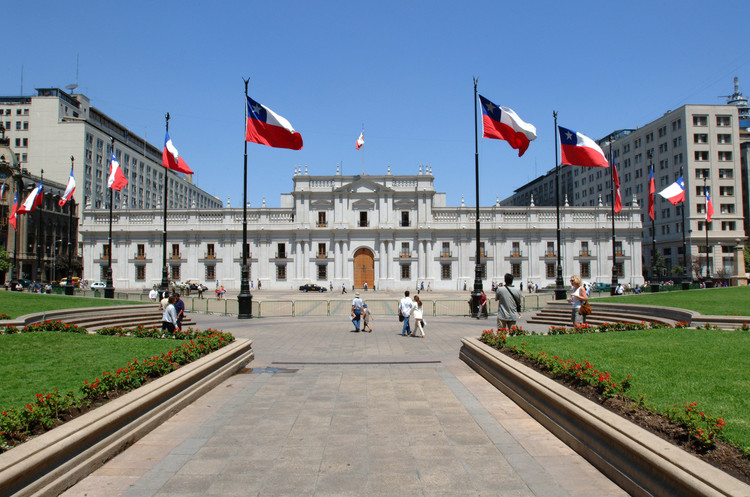
AD Classics: Palacio de La Moneda / Joaquín Toesca

Originally built to house the first Mint of the Kingdom of Chile in the late 18th century, La Moneda Palace has served as the seat of the executive branch of the Republic of Chile since 1845. Today, it houses the offices of the President of the Republic, along with the Ministry of the Interior and Public Security, the General Secretariat of the Presidency (SEGPRES), and the General Secretariat of Government.

Thirty years after the first coin was minted in Chile featuring the image of King Ferdinand VI, colonial governor Agustín de Jáuregui commissioned the construction of a dedicated building for the Mint in 1780. During its first three decades, the Mint had been managed by the perpetual treasurer Francisco García Huidobro, who had purchased the Palacio Viejo (Old Palace)—now the southwestern corner of Huérfanos and Morandé streets—in the heart of Santiago's historic center. Following his death, minting operations were relocated to a former Jesuit college adjacent to the Church of the Company, where the former National Congress now stands.

AD Classics: Palacio de La Moneda / Joaquín Toesca - More Images+ 7

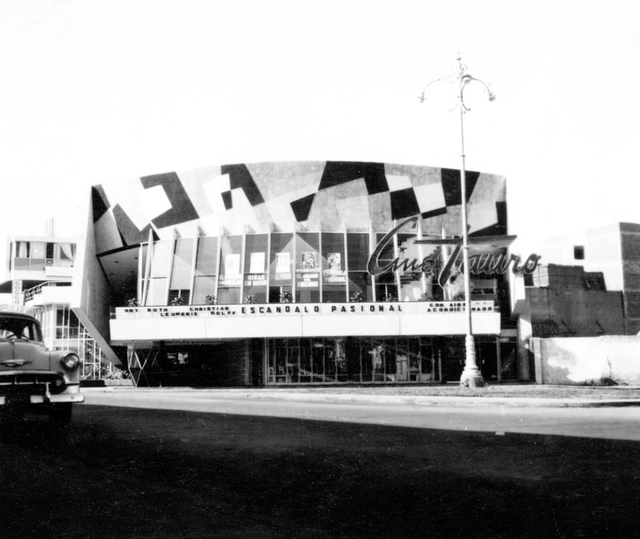
Architecture Classics: Cine Tauro / Walter Weberhofer

The Tauro Cinema is a forgotten architectural gem in the historic center of Lima.

Built between 1957 and 1959, this work by Walter Weberhofer—a tireless modern architect of the 1950s and 60s—was conceived as a mixed-use complex of entertainment, commerce, and offices planned as part of a 10-story tower system. Of the original project, initially named "Cine Washington," only three commercial floors and their basement were built, along with the cinema complex. The cinema's facade faced a triangular plaza, giving the corner of Washington and Delgado streets a cinematic urban image that broke with the everyday.

Architecture Classics: Cine Tauro / Walter Weberhofer - More Images+ 9

Subscriber Access

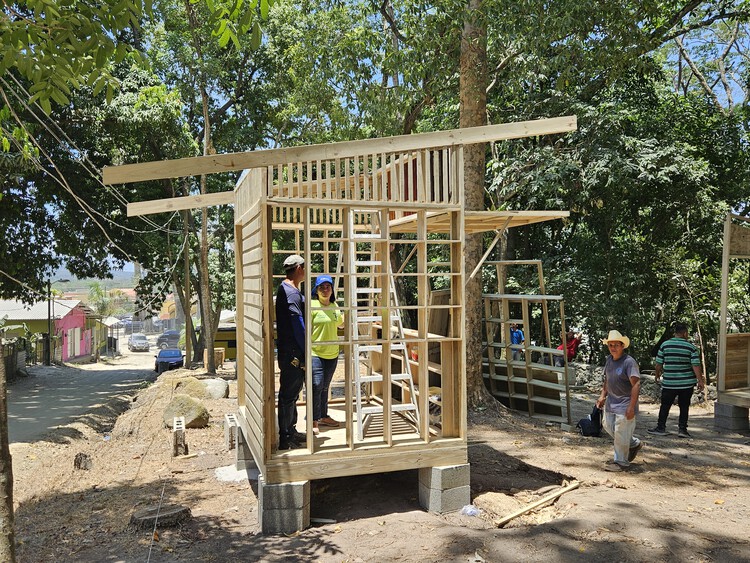
Armenta Resurge: Community Architecture by the River in Honduras

Audio available

It is eight in the morning, and the car's dashboard display reads 36°C on the streets of San Pedro Sula, Honduras. The sky is almost clear: an intense blue with a few bright, drifting clouds. The air conditioning in the cars—all with tinted windows—makes you forget that upon stepping out, the warm, humid air will immediately weigh on your shoulders and break a sweat.

Puerto Cortés on the Caribbean coast is too far away for a quick dip, but in the neighborhood of Armenta, the eponymous river flows almost silently down from the Sierra del Merendón, running from west to east through gray stones. On the northern bank, tall, leafy trees along the upper edge of the ravine shade a long, dry, and dusty plaza, while thick, exposed roots give texture to the ground. The sun is less punishing.

Armenta Resurge: Community Architecture by the River in Honduras - Imagen 1 de 4Armenta Resurge: Community Architecture by the River in Honduras - Imagen 2 de 4Armenta Resurge: Community Architecture by the River in Honduras - Imagen 3 de 4Armenta Resurge: Community Architecture by the River in Honduras - Imagen 4 de 4Armenta Resurge: Community Architecture by the River in Honduras - More Images+ 11

Subscriber Access

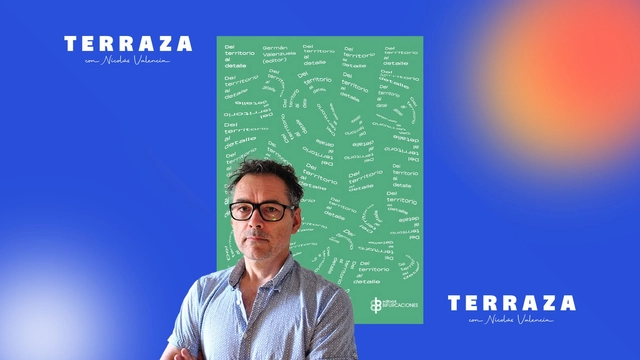
Germán Valenzuela: "The global does not exist without the local in architecture"

Nicolás Valencia speaks with Chilean architect Germán Valenzuela about the book ⁠Del territorio al detalle⁠ (Bifurcaciones), a selection of the most interesting contemporary architects in Latin America, from Al Borde to Rozana Montiel, including Mauricio Rocha, Inés Moisset, and Solano Benítez.

Subscriber Access

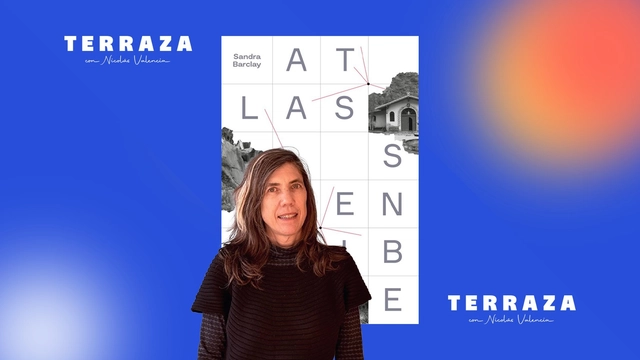
Sandra Barclay: “How do you understand a landscape if you don't traverse it?”

Nicolás Valencia speaks with Peruvian architect Sandra Barclay, founding partner of Barclay & Crousse Architecture, about the book ⁠Atlas Sensible: tiempo, memoria y recorrido en la construcción del paisaje⁠, published by Publicaciones Arquitectura PUCP and Fondo Editorial PUCP.

Subscriber Access

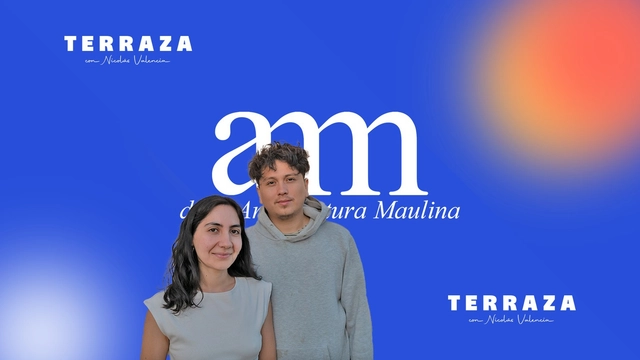
Architecture from the south of the world with Matías González and Sofía Carrión

Nicolás Valencia speaks with Chilean architects Matías González Ulloa and Sofía Carrión Bobadilla, creators of Área Verde and leaders of ⁠Arquitectura Maulina⁠, a digital platform focused on the architecture, territory, and reflections of Chile's inspiring Maule region.

Subscriber Access

Formal and Material Experimentation: Key Lessons from Modernist Architecture Pioneers

Wars, decolonization, economic crises, civil movements, and industrial-technological revolutions: the 20th century was a period of radical and far-reaching transformations. These upheavals reshaped societies and redefined how people expressed their evolving aspirations, with architecture leading the way. Machines and industrialization promised technological progress and modernization, advocating for a clean break from the ornamented, historically rooted styles of the past while embracing a vision focused on functionality, efficiency, and innovation. This shift, embodied by modernism, introduced new concepts, methods, and material uses—all shaped through experimentation.

Subscriber Access

Sandra Iturriaga: "The city must be thought of as an ecosystem"

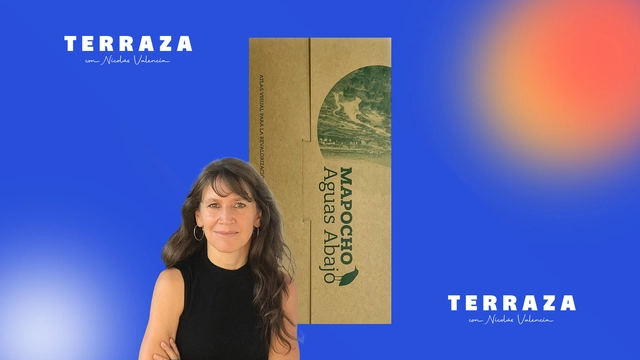
On this week's episode of the TERRAZA podcast, Nicolás Valencia speaks with Chilean architect Sandra Iturriaga about the book ⁠Mapocho Aguas Abajo⁠ (Ediciones ARQ), a publication developed by the Mapocho 42K Lab at the Pontificia Universidad Católica de Chile that proposes revaluing the heritage and landscape of the downstream stretch of the Mapocho River in Santiago, Chile.

Subscriber Access

Elisa Silva: "Spontaneous settlements do not need to be integrated because they are already part of the city"

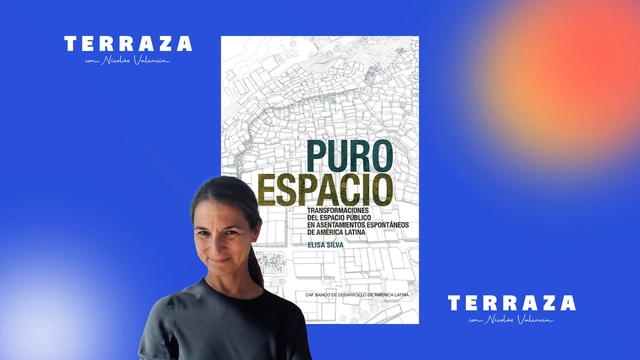
This week on the TERRAZA podcast, Nicolás Valencia talks with Venezuelan-American architect Elisa Silva about her book, "Pure Space: Public Space Transformations in Latin American Spontaneous Settlements" (Actar Publishers), an analysis of a series of public space interventions in communities across Mexico, Colombia, Venezuela, Brazil, Argentina, Peru, and Chile.

Subscriber Access

What are performative spaces in architecture according to Rodrigo Tisi?

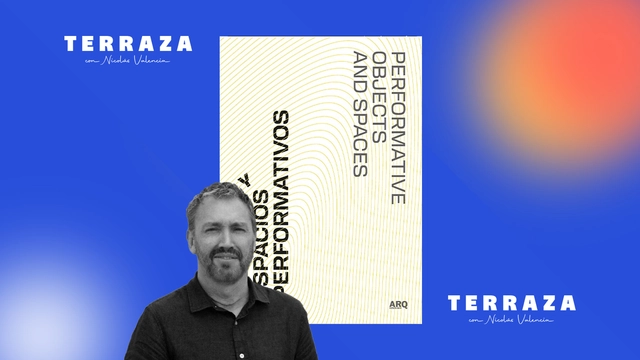
Nicolás Valencia talks this week on the TERRAZA podcast with Chilean architect Rodrigo Tisi about his book ⁠Objetos y espacios performativos⁠ (Ediciones ARQ), research that examines key moments to observe, explain, and establish the possibilities of certain performance practices in academia and creative environments.