KliwadenkoNovas

BROWSE ALL FROM THIS PHOTOGRAPHER HERE

Bamboo in Ecuador: Contemporary Projects Built with Cane

Subscriber Access | 
Bamboo in Ecuador: Contemporary Projects Built with Cane - Image 20 of 4
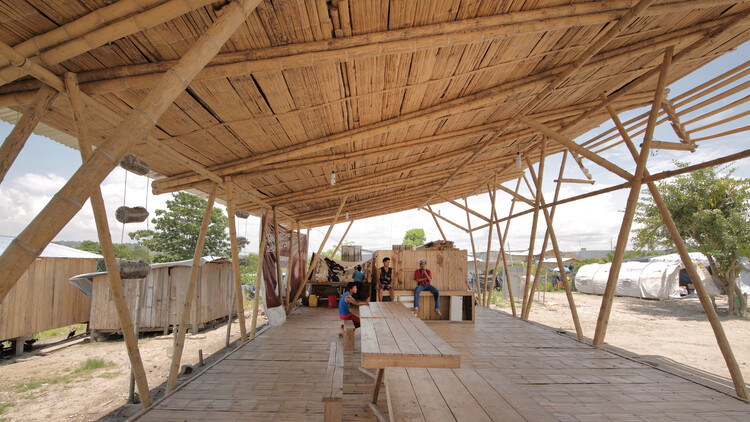
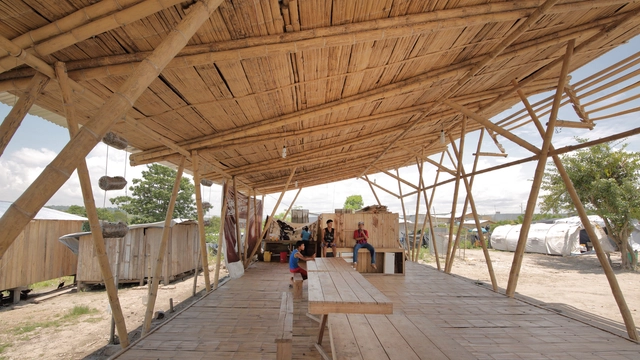
Guadurnal Dining Hall / Al Borde + Taller General. Image © JAG Studio

Bamboo in Ecuador: Contemporary Projects Built with Cane - More Images+ 16

Due to its climate and territorial characteristics, Ecuador possesses an immense diversity of bamboos: it has 6 genera and 42 identified species, of which 11 are endemic. Among them, Guadua angustifolia cane is considered the most important species in terms of abundance and physical and mechanical properties. The indigenous term guadua was used by the native communities of Ecuador and Colombia to designate this species of "native bamboo," which was later renamed "Guadua angustifolia"—meaning "narrow leaf"—and taxonomically belongs to the Poaceae family and the Bambusoideae subfamily. The use of this material is so ancient that, according to the book *Nuevas técnicas de construcción en bambú* (1978), remains have been found in buildings in Ecuador estimated to be 9,500 years old.

On International Migrants Day: A Look at Architectural Responses to Displacement

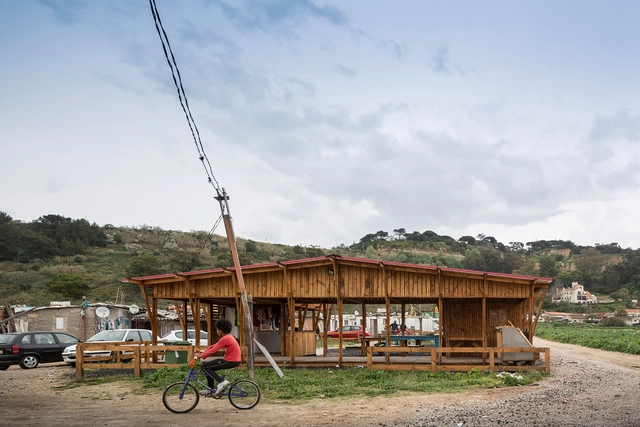
December 18 marks the United Nations' International Migrants Day, which aims to highlight the need for safer, fairer, and more inclusive migration systems. Proclaimed on December 4, 2000, the day seeks to recognize the multiple dimensions of migration beyond its economic and humanitarian aspects. According to the UN, mounting evidence indicates that international migration is beneficial for both countries of origin and destination. In this sense, International Migrants Day offers an opportunity to spotlight the value of the possibility to migrate and the contributions of millions of migrants worldwide to the cities and cultures in which they are integrated.

Aligned with this perspective, the UN's 2025 theme, "My Great Story: Cultures and Development," emphasizes how human mobility drives growth, enriches societies, and helps communities connect, adapt, and support one another. At the same time, International Migrants Day also acknowledges the increasingly complex environment in which migration occurs. Conflicts, climate-related disasters, and economic pressures continue to force millions of people from their homes in search of safety or opportunity. From both perspectives, it is essential to recognize the role of architecture in building integrated, multicultural communities and in responding to the conditions that lead people to migrate from their territories in the first place.

On International Migrants Day: A Look at Architectural Responses to Displacement - More Images+ 6

Designing with Kids: 5 Participatory Projects that Empower Young Users

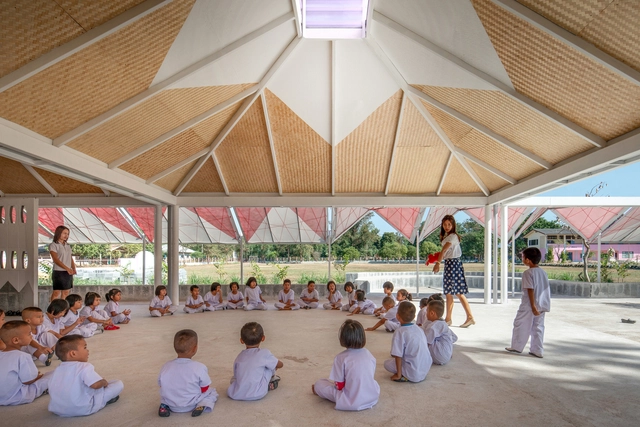
A good design should be adapted to the user's needs, and participatory design aims to reduce the distance between architects and those for whom the project is made. In this sense, projects for children that welcome them as central actors in the design process demonstrate how the potential of active listening and co-designing is reflected in spaces adapted to a smaller scale and to an audience in a phase of intense learning.

Whether they are kindergartens, schools, community centers, or public spaces, participatory projects with children show how the design process can be an enriching exchange for both sides. On the one hand, children can learn about materials, scales, decision-making, and develop spatial awareness. On the other hand, the architects responsible for making the desires and needs of the young users concrete can learn to exercise sensitivity and imagination and recognize a different worldview focused on discovery. All of this is possible through listening and open dialogue between different age groups.

Designing with Kids: 5 Participatory Projects that Empower Young Users - More Images+ 6

Community Kitchens: The Challenge of Generating Roots in Displaced Communities

Displacement implies uncertainty, uprooting, and instability, in addition to the loss of community, privacy, and physical and emotional orientation. Addressing these needs through appropriate architectural responses can help displaced communities regain social, economic, and environmental well-being. In this context, community kitchens are designed to help generate a sense of belonging and "normality" in domestic lives.

Renacer de Chamanga Community House / Actuemos Ecuador

Renacer de Chamanga Community House / Actuemos Ecuador - More Images+ 16

  • Architects: Actuemos Ecuador
  • Area Area of this architecture project Area:  180
  • Year Completion year of this architecture project Year:  2016