Gerry O’Leary, Rami Mansour

BROWSE ALL FROM THIS PHOTOGRAPHER HERE

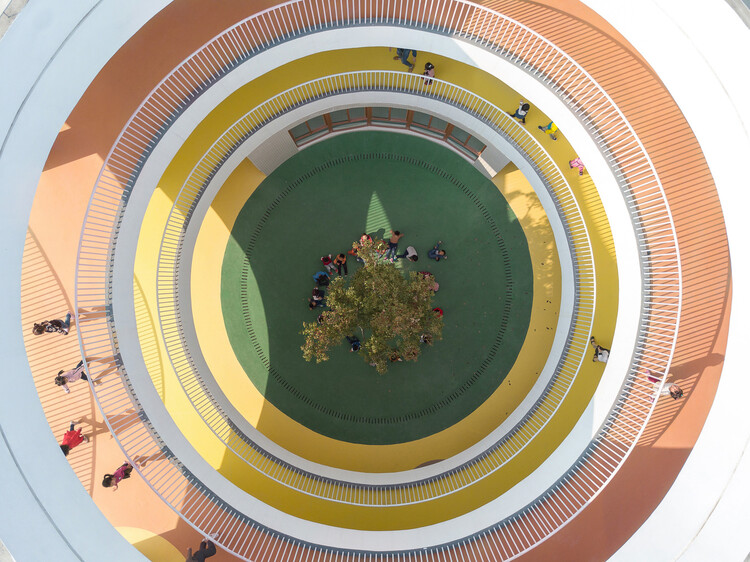
The Center as Strategy: 8 Projects Built Around a Void

Subscriber Access | 
Audio available

The center of a plan is never simply empty space. Once rooms and routes begin to organize around it, the center starts to structure the entire plan. It may contain a courtyard, a stair, a garden, or a shared room. It can also preserve something already present on the site or support a process that architecture does not fully control. What occupies this position determines how the surrounding spaces are arranged, connected, and used.

In A Pattern Language, Christopher Alexander, Sara Ishikawa, and Murray Silverstein describe shared spaces as most effective when they sit at the center of gravity of everyday life and remain connected to the routes people use most. Their argument suggests that a center matters not because it occupies the geometric middle, but because the surrounding rooms, paths, and activities give it spatial weight. The projects included here extend that idea beyond communal space, showing how the center can organize circulation, collective use, environmental systems, and the relationship between architecture and what already exists on the site.

The Center as Strategy: 8 Projects Built Around a Void - More Images+ 31

Reframing Cultural Landmarks: A Local Approach to Architecture in the Middle East

Subscriber Access | 

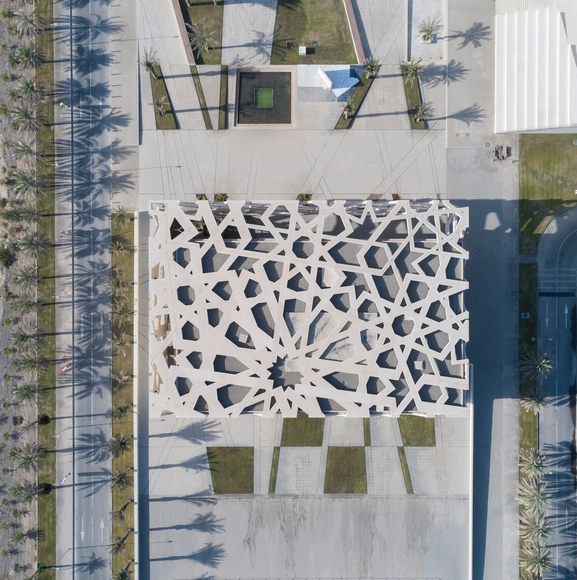
A previous exploration of cultural landmarks in the Middle East designed by international architects highlighted recurring themes such as architecture as an extension of the landscape, climate-responsive design, and abstraction of traditional forms. These projects often introduced high-tech environmental solutions, used monumental forms to reinterpret local identity, or positioned themselves as landmarks within the broader urban or desert landscape. While these approaches have defined many of the region's most recognizable cultural institutions, they represent just one side of the architectural discourse. An equally significant yet distinct trajectory emerges from local architects, who work within existing structures, historical contexts, and lived environments to create institutions that feel deeply embedded in their surroundings. This approach prioritizes continuity, transformation, and accessibility, ensuring that architecture remains an evolving part of the cultural fabric rather than a self-contained object.

Reframing Cultural Landmarks: A Local Approach to Architecture in the Middle East - More Images+ 10

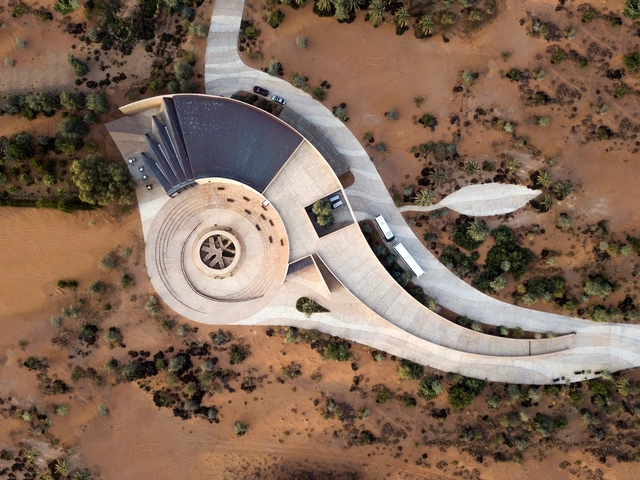
Mleiha Archaeological Centre / Dabbagh Architects

Mleiha Archaeological Centre / Dabbagh Architects - More Images+ 14

  • Architects: Dabbagh Architects
  • Area Area of this architecture project Area:  2000
  • Year Completion year of this architecture project Year:  2016