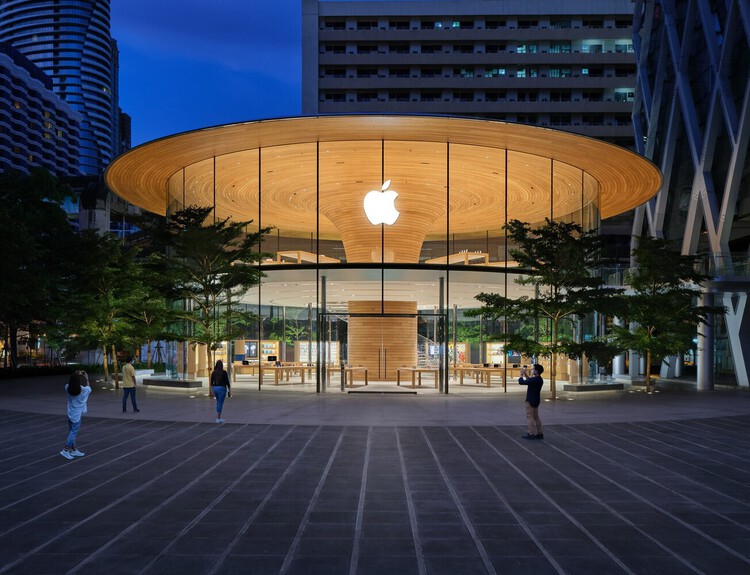
Flickr user Maurizio Mucciola

BROWSE ALL FROM THIS PHOTOGRAPHER HERE
↓
Subscriber Access

Learning from Capitalism: How Postmodern Architecture Became the Language of American Business

Audio available

In 1972, Robert Venturi, Denise Scott Brown, and Steven Izenour published Learning from Las Vegas, challenging architects to reconsider the underappreciated, largely dismissed commercial landscape in the United States. Their storied distinction between the "duck," a building whose form communicates its meaning, and the "decorated shed," an ordinary structure whose identity is conveyed through signs and symbols, questioned a widely accepted modernist assumption that architectural expression should emerge from form and function. By examining billboards, neon lights, casinos, and the commercial strips of Las Vegas, the authors argued that architecture should study the visual languages of American consumer culture.

Learning from Capitalism: How Postmodern Architecture Became the Language of American Business - More Images+ 22

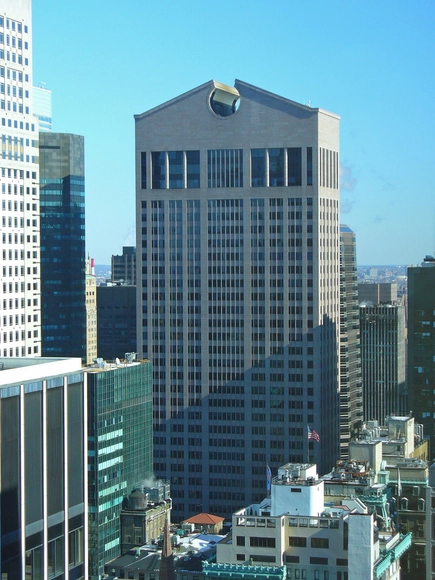
Architecture Classics: AT&T Building / Philip Johnson + John Burgee

It may be the single most important architectural detail of the last fifty years. Emerging bravely from the glassy sea of Madison Avenue skyscrapers in midtown Manhattan, the open pediment atop Philip Johnson and John Burgee’s 1984 AT&T Building (now the Sony Tower) singlehandedly turned the architectural world on its head. This playful deployment of historical quotation explicitly contradicted modernist imperatives and heralded the mainstream arrival of an approach to design defined instead by a search for architectural meaning. The AT&T Building wasn’t the first of its type, but it was certainly the most high-profile, proudly announcing that architecture was experiencing the maturation of a new evolutionary phase: Postmodernism had officially arrived to the world scene.