Columbia University

BROWSE ALL FROM THIS PHOTOGRAPHER HERE

What 2019 Meant for 3D Printing in Architecture

At the beginning of 2019, we identified 3D printing as a trend that would influence architecture in 2019. This was not a difficult prediction to make. Aside from noting a 70% increase in reader interest in 3D printing throughout the previous year, we saw how the architectural community has had a long-running engagement with 3D printing, from using the technology to tackle homelessness, to creating affordable yet complex structural connections.

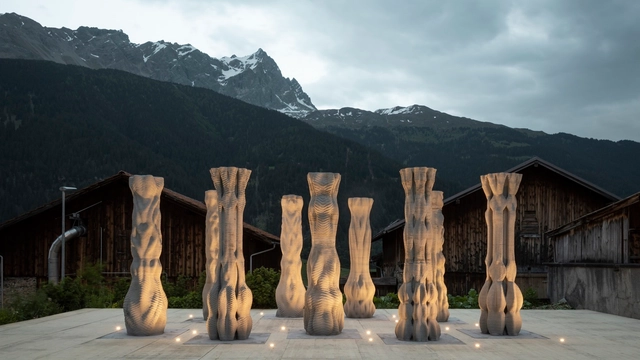
This does not mean that 2019 was a "boring" year in the 3D printing world. In fact, while the influence of the technology in the architecture of 2019 was predictable, the various ways in which this influence manifested was not. Throughout the year, 3D printing seemed to appear everywhere, from spanning a canal to replicating timber, and imagining neighborhoods for Texas and Mars. 

What 2019 Meant for 3D Printing in Architecture - More Images+ 5

Columbia University Creates 3D-Printed Timber Lookalike with Internal Grain Pattern

Columbia University Creates 3D-Printed Timber Lookalike with Internal Grain Pattern - Image 1 of 4
© Columbia University

Researchers at New York’s Columbia University have unveiled a method of vibrantly replicating the external and internal structure of materials such as wood using a 3D printer and specialist scanning techniques. While conveying the external profile and patterns of natural objects is tried and tested, a major challenge in the 3D printing industry has been replicating an object’s internal texture.

In their recent study “Digital Wood: 3D Internal Color Texture Mapping” the research team describes how a system of “color and voxel mapping “led to the production of a 3D printed closely resembling the texture of olive wood, including a cut-through section.

Columbia University Creates 3D-Printed Timber Lookalike with Internal Grain Pattern - More Images+ 1

10 Modernist Buildings Receive Conservation Grants from Getty Foundation

The Getty Foundation has named the first 10 recipients of its philanthropic “Keeping It Modern” initiative, which aims to advance the understanding and preservation of 20th-century modern architecture. From Louis Kahn’s Salk Institute to Le Corbusier’s Parisian apartment, each recipient has been chosen for their architectural significance and potential to advance conservation practices related to modern architecture.

View all 10 projects, after the break...

AD Classics: AD Classics: Lever House / SOM

AD Classics: AD Classics: Lever House / SOM - More Images+ 10

AD Classics: Frederick C. Robie House / Frank Lloyd Wright

AD Classics: Frederick C. Robie House / Frank Lloyd Wright - More Images+ 6