AWP

BROWSE ALL FROM THIS PHOTOGRAPHER HERE
↓

From Hiding to Civic Presence: How Wastewater Plants Entered the City

Audio available

When London's main drainage was completed north of the Thames in 1868, the Metropolitan Board of Works marked the occasion with a banquet held inside a sewage pumping station. Abbey Mills had been built over the previous three years by the engineer Joseph Bazalgette, working with the architect Charles Driver, laid out on a cruciform plan with eight beam engines, two on each arm. Its style has been read as Byzantine, Italian Medieval, Russian, Ruskinian Gothic and Moorish, and its twin ventilation chimneys, richly ornamented, rose more than sixty meters. The builder called it an elegant structure in a swamp and thought it might pass for a mosque or a temple.

Almost everything else Bazalgette built was buried, and the exception did not last the century. Steam gave way to electric motors at Abbey Mills in 1933, and the chimneys, redundant since then, were demolished in 1941 out of fear that a bomb strike would topple them onto the station. Sanitary engineering consolidated around criteria that could be measured, among them throughput, discharge quality and hydraulic gradient, and appearance registered in none of them. Treatment moved outward to floodplains, estuaries and municipal edges where land was cheap, and gravity did useful work.

From Hiding to Civic Presence: How Wastewater Plants Entered the City - More Images+ 7

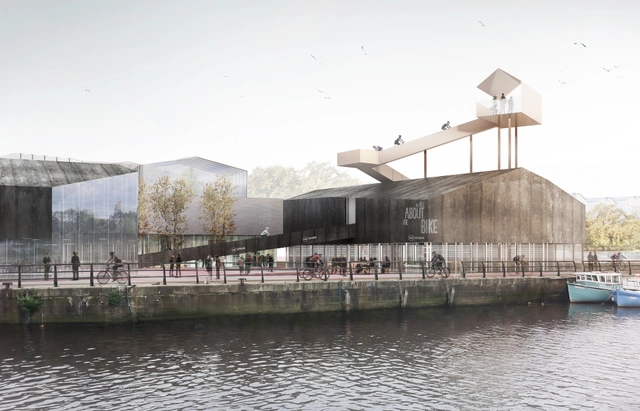
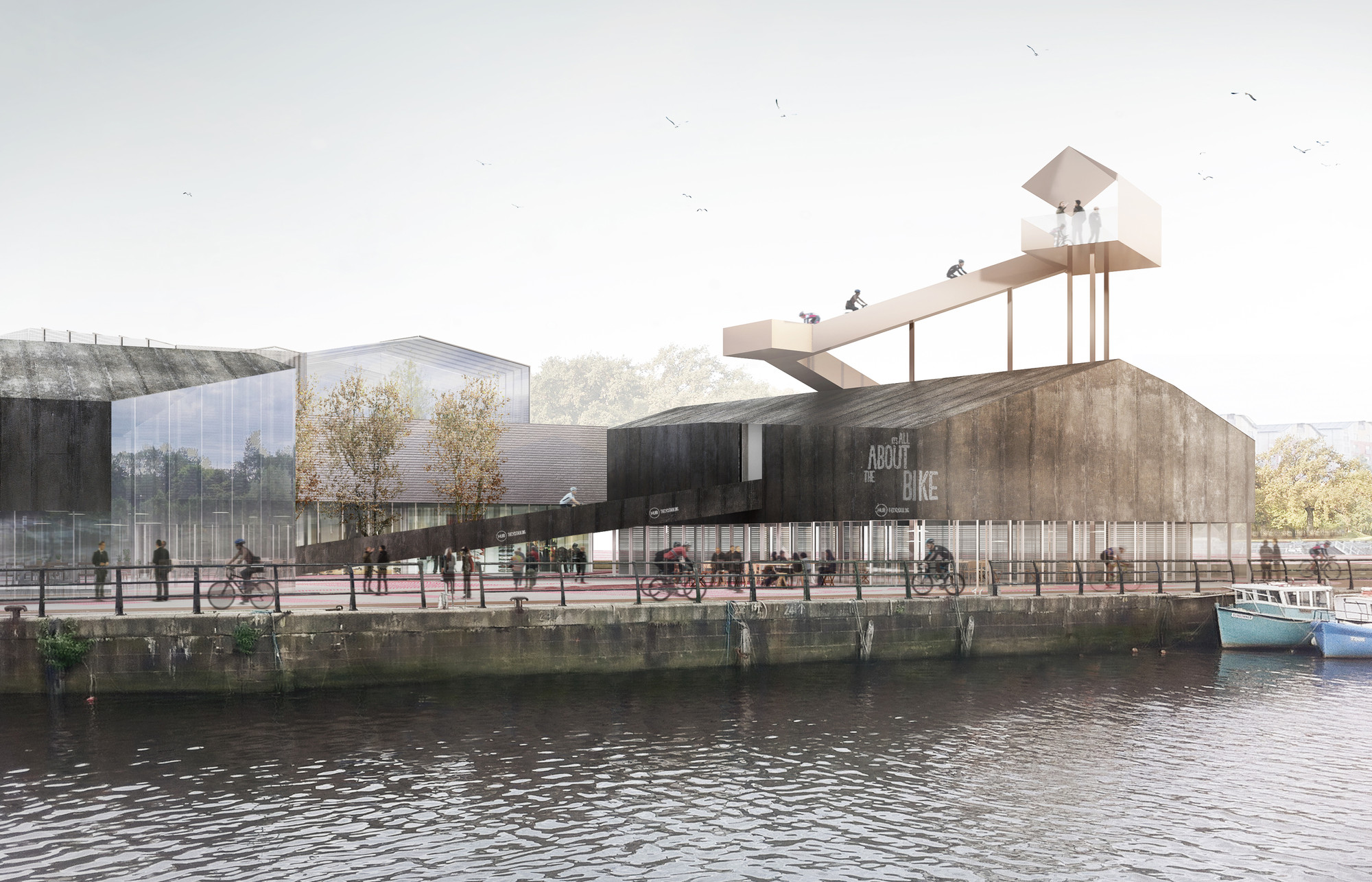
AWP Designs Cycle Centre Lookout for Newcastle's Malmo Quay

As part of the Newcastle-upon-Tyne's Malmo Quay development masterplanned by URBED, AWP Office for Territorial Reconfiguration has designed a cycle hub and community hall with a gradually ascending ramp that leads to a lookout platform with views of the surrounding Newcastle Quayside and Ouseburn Valley. Though this distinctive ramp and lookout will be a landmark at a prominent location on the Tyne river, AWP states that "by revealing a new perspective of the city and the Valley, the cycle hub will become a landmark celebrated precisely for the view it creates," rather than merely for its striking appearance above the roofline of the cycle hub below.

AWP Designs Cycle Centre Lookout for Newcastle's Malmo Quay - More Images+ 4

Future Fitting / Urbanista and Lime Wharf Gallery

Future Fitting / Urbanista and Lime Wharf Gallery - Image 3 of 4
La Defense Masterplan. Image Courtesy of AWP

"I have a lot of big plans for the gallery, but every idea is an experiment; I don't necessarily want to enforce what it will be, but rather find out what it wants to be." This is how Thomas Ermacora described his vision of the Lime Wharf Gallery, a largely hidden series of spaces squeezed between Vyner Street and Regents Canal in the middle of Hackney's burgeoning creative quarter.

Ermacora hopes the gallery will become an "accelerator of change through culture", bringing arts, technology and social enterprise together for projects which generate optimism for the future. All of these traits made Lime Wharf Gallery the perfect space to present "Future Fitting." This evening of talks, orchestrated by Ermacora and Lucy Bullivant (editor of the new webzine Urbanista), focused on urban design that has the foresight and flexibility to deal with the needs of the future.

Read about the ideas presented at the Future Fitting event after the break...

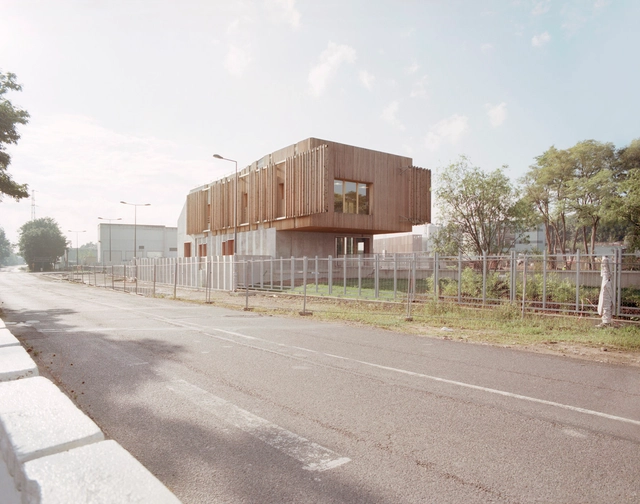
Water Treatment Plant / AWP

Water Treatment Plant / AWP - More Images+ 14

  • Architects: AWP
  • Area Area of this architecture project Area:  6 m²
  • Year Completion year of this architecture project Year:  2012